

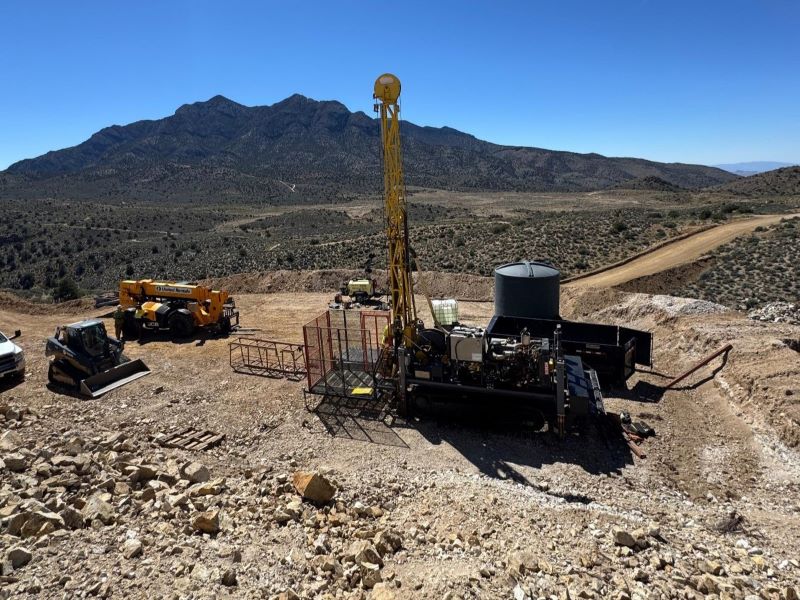
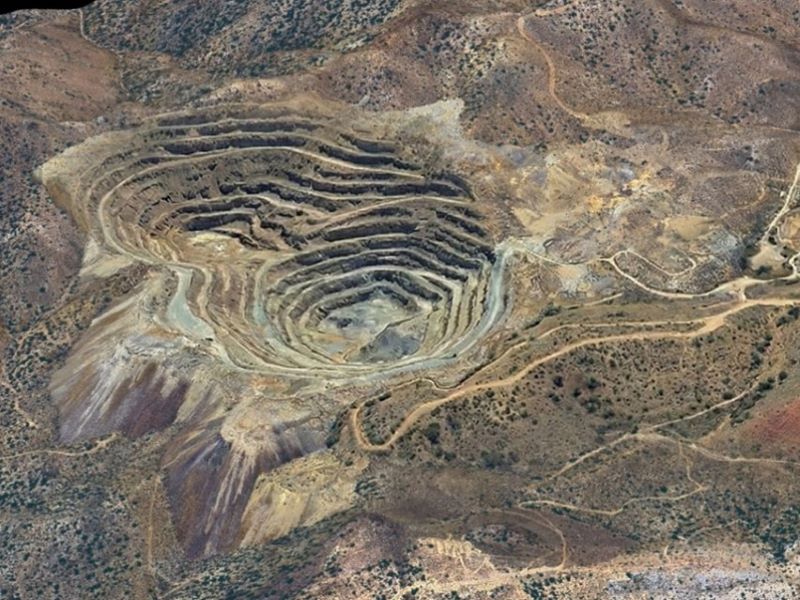
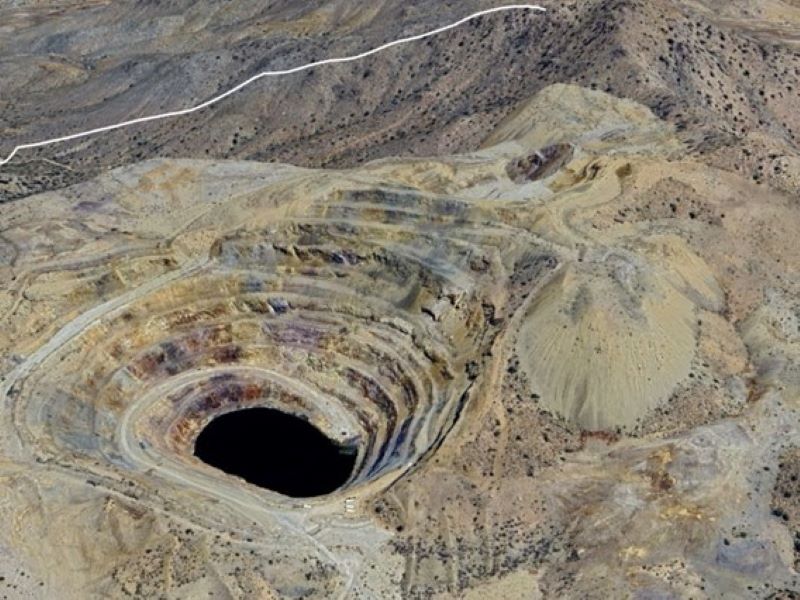
The Colosseum Gold Project is an open-pit mine in California, US and is being developed by Dateline Resources.
A former producing mine, Colosseum halted operations in 1993 after delivering 344,000oz of gold. Mining ceased in 1992, after which the operation processed stockpiles for its final six months.
Recommended Buyers Guides

Dateline Resources acquired full ownership of the asset from Barrick in February 2021 and has since progressed the first contemporary exploration and development work on the site.
A bankable feasibility study (BFS) completed in May 2026 outlined a 10.4 year mine life with capital expenditure of $274.6m.
Following the study, the company announced plans to fund development through a combination of project finance and available cash. Average annual production is forecast at 75,400oz in years one to six, with life-of-mine output estimated at 573,000oz.
Early works are scheduled to begin in June 2026. Dry commissioning is planned for August 2027, with practical completion expected the following month.
Colosseum Gold Project location
The Colosseum gold mine is situated in San Bernardino County, California, around 14km from the California Nevada border. The land package covers approximately 1,381 acres (559 hectares) and includes 80 unpatented lode mining claims and mill sites, along with two patented mining claims, Colosseum No. 1 and Colosseum No. 2.
The unpatented claims sit on federal land and provide a possessory mineral interest subject to federal and state compliance, while the patented claims are freehold and include parts of the established project footprint, including legacy infrastructure areas.
The project has an approved plan of operations, confirmed by the US Department of the Interior and the Bureau of Land Management.
Geology and mineralisation
The Colosseum deposit sits at the southern end of the Walker Trend within the Clark Mountain Mining District, in the north-east of the Clark Mountain Range. Gold is typically sub-microscopic and linked to sulphide mineralisation, mainly pyrite, occurring as free gold with minor alloyed silver.
Mineralisation is largely associated with pyrite contacts, fractures and grain margins, and appears as isolated particles in quartz and other gangue minerals near pyrite. The deposit is interpreted as a hydrothermal breccia pipe, combining epithermal mineralisation at higher levels with mesothermal mineralisation at depth.
Colosseum Gold Project reserves
The proven and probable mineral reserves at the Colosseum Gold Project were estimated at 20.6 million tonnes (mt), grading 0.95 grams per tonne gold with 630,000oz in contained metal.
Mining methods
The Colosseum Gold Project is due to be developed as a contractor-operated open-pit operation, with mine planning and geological control managed by Dateline staff.
Most material is expected to require drilling and blasting, apart from sections where mining cuts through existing waste rock emplacements.
Benches are planned at 20ft (6.1m), with blasted material mined in either three 8ft flitches or four 6ft flitches, depending on selectivity and face stability and a mining strip ratio of 3:1. Mining will target two mineralised breccia pipes, referred to as the North and South Pipes.
Operations are scheduled to start in the North Starter Pit, with a pushback to the North Final Pit commencing in month one of year one to maintain ore supply once the starter pit is exhausted in month 11 of year two. Mining in the South pit, a pushback of the existing pit, is scheduled to begin in month nine of year one and continue until depletion in month three of year six.
Loading and haulage is based on a mining fleet centred on a 120t-class hydraulic excavator and 60–100t payload trucks, with the excavator operating in backhoe configuration to support improved selectivity.
Ore processing
The processing flowsheet is based on a two million tonnes per annum conventional milling and carbon-in-leach (CIL) circuit using cyanide leaching. The plant is designed for a nominal treatment rate of 250 tonnes per hour (tph), while the crushing circuit is designed at 304tph.
The run-of-mine ore will be crushed in a single-stage jaw crusher in open circuit, then sent to a two-stage grinding circuit comprising an open circuit grate discharge semi-autogenous grinding (SAG) mill with pebble crushing, followed by a ball mill in closed circuit with cyclones.
The SAG discharge will be screened on a horizontal wet vibrating screen with 10mm × 40mm apertures, with oversize directed to a pebble circuit using a short head cone crusher before returning to the mill feed. Screen undersize will be combined with ball mill discharge in the mill discharge hopper and pumped to a cyclone cluster for classification.
The cyclone overflow will report to the trash screening, then thickening, before cyanide leaching in a seven-stage CIL circuit. Pregnant eluate is processed through three parallel electrowinning cells, with recovered gold washed, filtered, dried and smelted to produce doré.
Colosseum site infrastructure
Access to the project site is via a 16.5km road from Interstate Route 15, comprising 6.2km of sealed road and 10.3km of unsealed road.
Raw water required for the project is due to come from two existing wells near the Ivanpah substation, with water quality reported as suitable for process use without additional treatment and suitable for potable use after ultra filtration and sterilisation.
Grid power is expected to be supplied from Southern California Edison at 34.5kV, with access near the Ivanpah substation through an overhead line running roughly 10km along the main access road to site. On-site distribution is planned at 13.8kV.
Contractors involved
The BFS was prepared by GR Engineering Services, which was also responsible for process engineering and infrastructure design and cost estimation.
Agapito Associates was responsible for geotechnical assessment for the mine and process plant, including stability assessment for the mine waste rock and dry-stacked tailings, a site water management plan and mine closure requirements.
Groundwater modelling was undertaken by HRS Water Consultants, while Tundra Resource Analytics provided financial modelling.
