

For decades, pebble recirculation has been treated as an unavoidable feature of hard-rock grinding circuits. In large copper and gold operations, coarse, competent fragments that resist breakage are routinely returned to the mill, either directly or after passing through pebble crushers.
The approach is standard across the mining industry. It is also increasingly being questioned.
As miners confront rising energy costs, declining ore grades and mounting pressure to improve productivity from existing assets, attention is shifting towards inefficiencies embedded deep within comminution circuits. Among them is the growing recognition that not all pebbles carry sufficient value to justify repeated processing.
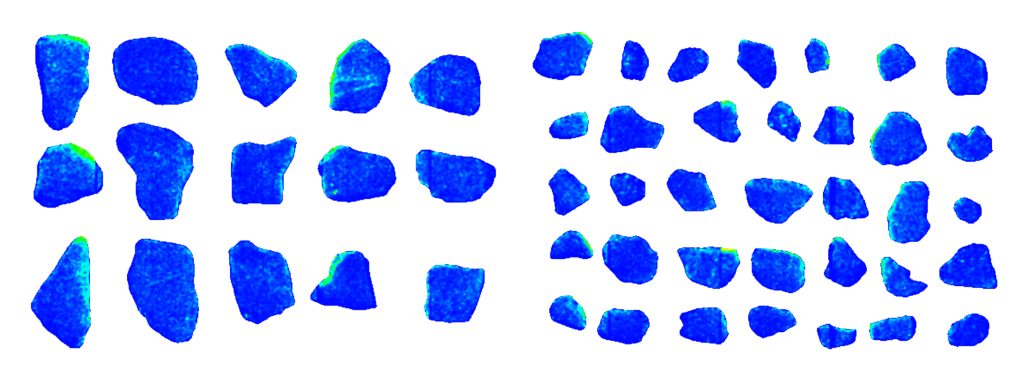
According to analysis from SRK Consulting and TOMRA Mining, between 5% and 30% of mill feed in some operations can report back as pebbles — coarse, hard fragments that resist further breakage and are repeatedly recirculated through the grinding circuit.
While often treated as a routine operational issue, the implications can be substantial.
Pebbles occupy mill volume, consume additional energy during regrinding and reduce the amount of fresh ore a circuit can process. In high-pebble operations, every tonne of recirculated material can displace between 0.4 and 0.7 tonnes of new feed, according to the companies.
The result is a compounding efficiency problem: more energy consumption, greater wear on crushers and mills, higher water demand and reduced throughput.
The challenge is especially pronounced in large copper operations processing hard ore bodies, though similar dynamics are increasingly recognised in gold and polymetallic mines.
From bulk processing to selective processing
The issue reflects a broader shift underway across the mining sector. Historically, mineral processing plants were designed around maximising total material throughput, with limited ability to discriminate between valuable and low-value particles once ore entered the circuit.
That assumption is changing.
Across the industry, technologies such as bulk ore sorting, coarse particle flotation and sensor-based preconcentration are encouraging operators to think more selectively about how material moves through the plant.
The emerging argument around pebble streams follows the same logic: if some particles contain little recoverable value, processing all of them may no longer make economic sense.


Adrian Dance, principal consultant at SRK Consulting’s Vancouver office, argues that pebble streams are often more heterogeneous than operators assume.
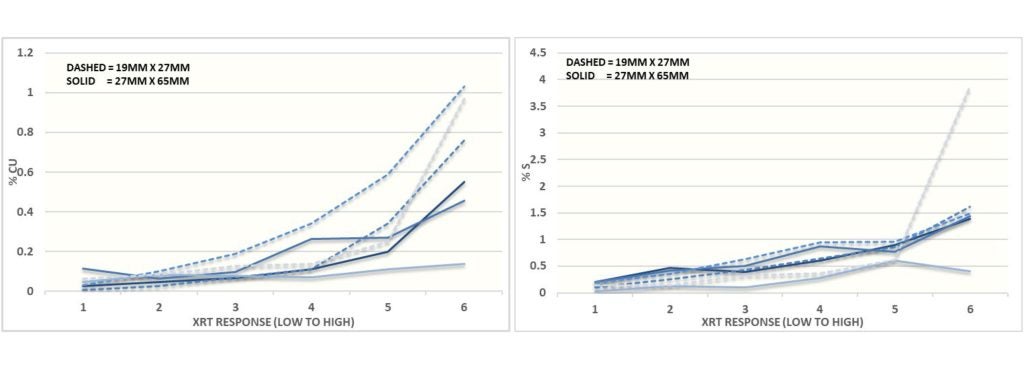
Pebbles are commonly assessed as a single bulk stream, typically averaging around 60% of feed grade. However, particle-level analysis shows significant variability in metal content, with some pebbles carrying little or no value while others contain substantially higher grades.
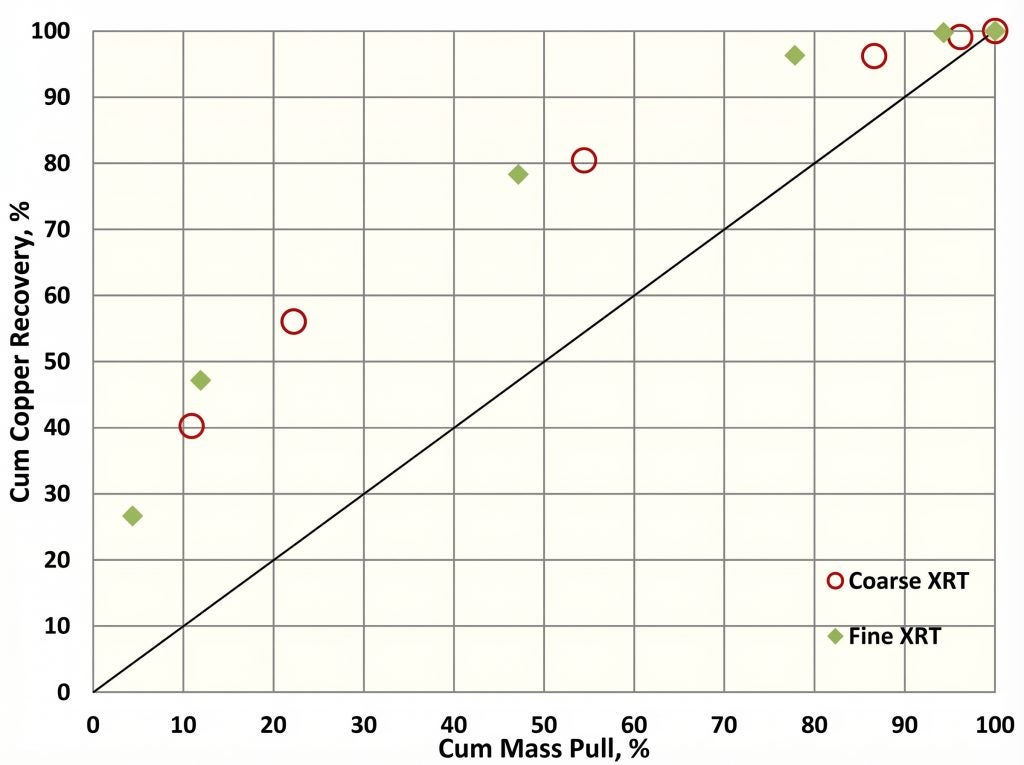
According to SRK, test work indicates that up to 80% of contained metal may be concentrated within roughly half of the pebble mass, leaving the remaining fraction below cut-off grade.
If accurate at operating scale, the implication is significant: large volumes of low-value material may be consuming energy and occupying grinding capacity without materially contributing to recovery.
Why sensor-based sorting is moving into grinding circuits
The proposed solution is sensor-based sorting applied directly to pebble streams before material re-enters the mill.
Traditionally, ore sorting technologies have been deployed upstream as preconcentration tools, removing waste before milling begins. The extension of sorting into circulating loads inside grinding circuits marks a notable evolution in how the technology is being positioned.
Fernando Romero-Lage, area sales manager at TOMRA Mining, said X-ray Transmission (XRT) systems can analyse individual pebble particles according to atomic density, separating higher-value material from low-grade or barren rock in milliseconds.
Unlike conventional screening systems, which classify particles by size alone, XRT sorting attempts to distinguish material according to internal composition.
Pebble streams present favourable operating conditions for this type of technology because the material has already been screened, washed and conveyed, creating relatively stable feed characteristics.
In practical terms, this allows lower-value pebbles to be rejected before they consume further grinding energy, while higher-grade material continues through the circuit.
The broader objective is not simply recovery improvement, but reduction of circulating load across the plant.
The economics of incremental throughput
The mining industry’s growing interest in comminution optimisation reflects the economic leverage associated with even modest throughput improvements.
Grinding circuits are among the most energy-intensive parts of mineral processing operations, often accounting for more than half of a concentrator’s total energy consumption. Expanding milling capacity typically requires major capital investment and long lead times.
As a result, technologies capable of delivering incremental throughput gains from existing infrastructure attract disproportionate interest.
SRK and TOMRA cite examples from copper operations in Canada and Peru where selective pebble rejection reportedly improved both throughput and feed grade. In one Canadian operation, the companies claim rejecting lower-grade pebbles increased throughput by up to 6%, equivalent to an estimated $21m in additional annual revenue.
However, the examples remain anonymised and independently verified operating data has not been publicly released.
That leaves important unanswered questions around deployment economics, sorting accuracy, recovery trade-offs and long-term operating performance.
There are also practical constraints. Sensor-based sorting systems introduce additional circuit complexity, require stable material presentation and depend heavily on orebody characteristics. In highly variable deposits, maintaining consistent separation performance may prove difficult.
Moreover, rejecting material earlier in the circuit inherently carries metallurgical risk if valuable particles are incorrectly discarded.
Still, the direction of travel across the sector is becoming clearer.
Rather than maximising tonnes processed at all costs, mining companies are increasingly exploring how to maximise value per tonne processed. In that context, pebble streams — long regarded as an unavoidable nuisance within grinding circuits — are starting to be viewed as another opportunity for selective optimisation.
