


In modern mining applications, operators are under constant pressure to maximize reliability while minimizing total cost of ownership. Water consumption has become an increasingly important factor in this equation over the past decade, driven in part by stronger environmental regulation and a greater focus on sustainability. Especially in arid regions where access to water is limited, water usage and treatment represent a significant operating cost for mining sites. At the same time, operators are expected to increase site throughput, streamline maintenance schedules, and extend equipment life. These priorities have drawn greater attention to areas of slurry pump performance where reducing water use and maintenance demands can also lower total cost of ownership.
Flush water, maintenance, and the cost of conventional sealing
Shaft sealing is one such area. Many traditional shaft sealing arrangements rely on continuous flush water to lubricate and cool the seal area during pump operation, helping to prevent slurry solids from damaging the seal interface. However, maintaining a continuous supply of flush water adds a significant cost, especially at sites where water is limited or requires filtration and desalination.
In addition to creating a dependency on flush water, traditional stuffing box designs often need ongoing operator intervention to perform properly. Frequent packing adjustment, replacement, and flush water management may require downtime and make maintenance schedules more difficult to coordinate. When pumps operate as critical system components, even routine shaft seal maintenance can become a meaningful disruption.
Shaft sealing decisions can also affect total cost of ownership when a shaft seal is not well integrated with the larger pump assembly. In cases where the pump and shaft seal are sourced from different OEMs, this lack of integration can create added complexity around seal installation, maintenance, and repair. If component failures occur, customers are often caught in the “blame game” between suppliers and must work with two different entities to isolate the cause of the failure and arrange for component repair or replacement. The process can be slow and complicated, creating added operational friction and a greater risk of downtime if the issue is not resolved quickly. Maintenance teams may spend valuable time and labor resolving problems that could be avoided with a more integrated solution.
Mechanical seals and the path to lower TCO
Rethinking shaft sealing to improve total cost of ownership starts with seal design. Replacing a traditional stuffing box with a mechanical seal opens up a range of opportunities to control day-to-day costs. Because a mechanical seal requires little or no flush water, it substantially decreases water use over the life of a pump. This can represent a significant cost savings, especially in areas where water is scarce or heavily regulated. The more controlled sealing interface of a mechanical seal also offers a longer service life and better reliability, reducing maintenance costs.
However, using a mechanical seal does not necessarily eliminate the complexities that come with sourcing a pump and shaft seal from different suppliers. If issues arise, operators may still need to coordinate between suppliers for seal troubleshooting, repair, or replacement. As a result, the risk of slow problem resolution and additional maintenance and downtime costs remains.
Designing the seal as part of the system: reducing TCO through engineering and integration
Mechanical seals deliver the greatest value when they are designed as part of the pump system. Seal performance depends on system variables such as alignment, shaft movement, vibration, solids handling, and installation geometry. When the seal and pump are designed to work as an integrated unit, these variables can be managed more effectively. This integrative approach improves seal wear life, performance, ease of maintenance, and overall pump reliability. Sourcing the seal and pump from the same supplier also eliminates the coordination challenges that can arise when third-party seal providers are involved.
This design philosophy informed the development of the LAPIS slurry seal, KSB’s proprietary mechanical seal designed exclusively for GIW® slurry pumps. KSB has been designing and producing mechanical seals since 2012 and has seals available across more than 40 different product lines. LAPIS is KSB’s first mechanical seal for heavy duty slurry service, engineered in collaboration between the product development teams from KSB GIW and KSB Pegnitz. Built on KSB’s mechanical seal expertise and KSB GIW’s nearly 100 years of slurry pump engineering experience, LAPIS combines slurry-specific design with full pump integration, delivering the benefits of mechanical sealing along with a single source for products, expertise, and lifecycle support.
The LAPIS slurry seal was designed to address the specific demands of slurry applications, informed by field experience and customer feedback on third-party mechanical seals. Thicker seal faces, larger O-rings, and more robust metallic components improve the seal’s tolerance to movement and misalignment while larger, protected springs that sit outside the pumping fluid help prevent blockage. LAPIS also features an innovative quench design that actively clears solids from internal springs, resulting in more consistent seal face pressure and reduced clogging during operation. A clamp collar locking mechanism provides strong torque-carrying capacity while allowing for easier adjustment during installation and maintenance.
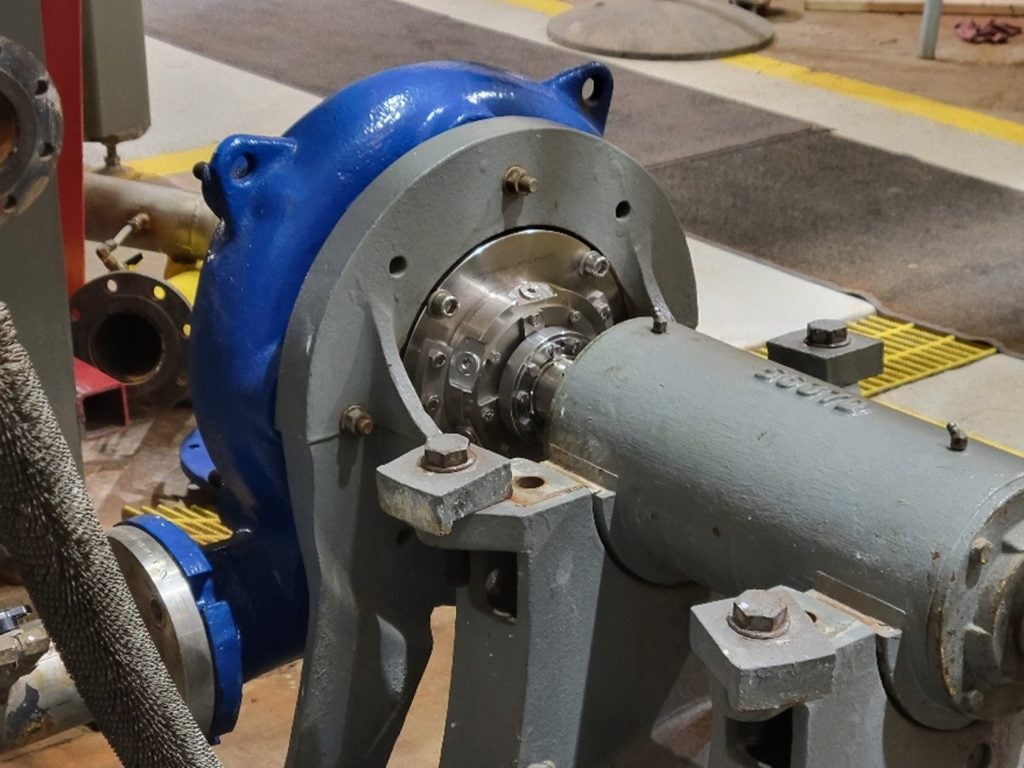
In addition to improving performance, the LAPIS mechanical seal was purpose-designed to integrate with GIW® LCC Gen1, GIW®LCC Gen2, and GIW®LSA slurry pumps rather than adapted from a general-purpose platform.For GIW®LCC Gen2 pumps, the adapter plate has been eliminated altogether, allowing the seal to be mounted from the suction side for simplified installation and reduced maintenance costs.Additional features such as centering mechanisms and dedicated tools help to improve installation precision.Through KSB SupremeServ, KSB’s global aftermarket service provider, pump operators also have access to installation support, repairs, refurbishment services, spare parts, and ongoing reliability expertise.
The LAPIS mechanical seal has demonstrated strong results through both lab testing and field installations. Testing has shown excellent performance in high-density slurries up to 70% by weight, with median solids diameters ranging from 2 to 200 microns. Field experience has borne out these results with measurable improvements in both performance and ease of use. “Users are reporting longer service life as well as easier installation and operation when compared to previous seals,” said Leo Perry, P.E., Head of Product Management for GIW® Slurry Pumps, Engineering at KSB Mining. In one case, a user replaced a competing mechanical seal that consistently lasted fewer than 2,000 hours. The LAPIS replacement exceeded 3,000 hours and continues to operate successfully, demonstrating improved durability and long-term value.
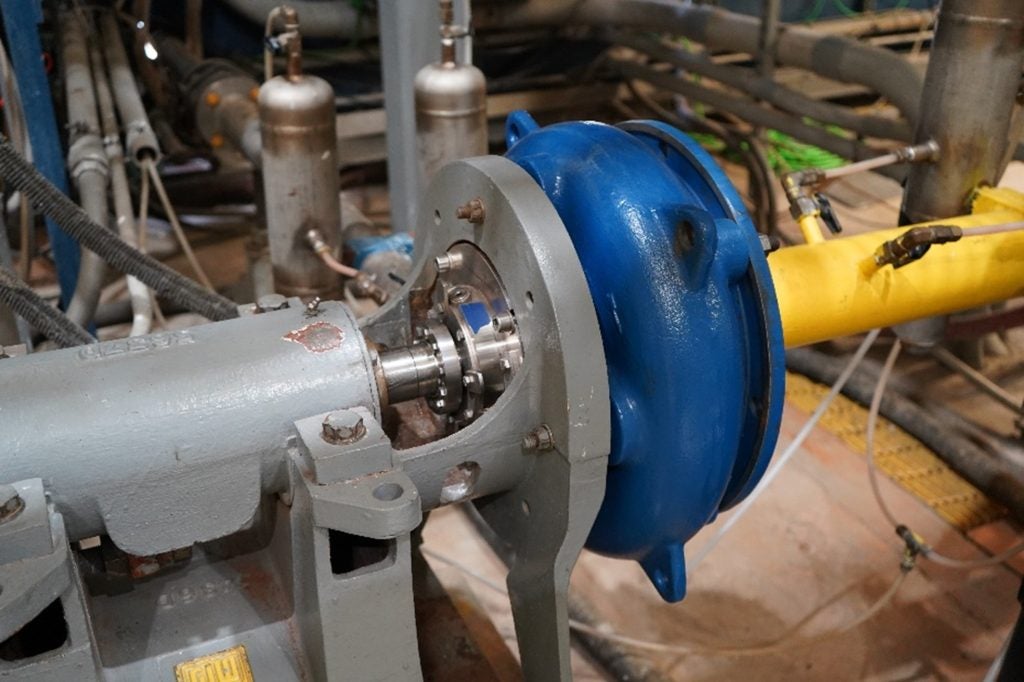
More than 75 LAPIS units have been deployed across multiple mining regions and service conditions, with installations continuing to come online. Based on testing and field experience to date, LAPIS has proven to be a strong fit for service class 1 and 2 applications, as well as for service class 3 and 4 conditions where water savings is a priority.
Sealing as part of the pump system: what comes next
As slurry pump systems continue to evolve, sealing technology is shifting from a focus on reliability alone to helping operators better understand and manage seal performance over time. To support this shift, KSB is introducing condition monitoring into its mechanical seal designs, enabling predictive and preventive maintenance that minimizes unplanned downtime and reduces risk.
At the same time, as slurry pumps grow larger and mining systems become more complex, the need for integrated sealing solutions will continue to increase. While LAPIS is currently available for integration with GIW® LCC and GIW® LSA pumps, KSB Mining is actively exploring expanded applications for severe duty pumps and higher operating pressures, including GIW® MDX and GIW® WBC pumps.The future of slurry pumping will see mechanical seals increasingly function as part of a broader system designed to improve reliability, reduce water use, and optimize total cost of ownership. “Mechanical seals are a relatively small part of the overall pump system, but their role in reducing water use, improving performance, and lowering total cost of ownership makes them a key design consideration for modern mining operations,” Perry explained. Beyond water conservation, choosing a mechanical seal designed for longer wear and higher reliability reduces the time and labor needed to maintain the pump. When the seal is also designed as an integrated part of the pump, it simplifies installation and maintenance and gives operators a single source for support, repairs, and lifecycle expertise. Together, these advantages can significantly reduce total cost of ownership for slurry pump operators, making shaft sealing decisions a strategic opportunity for mining sites.
