

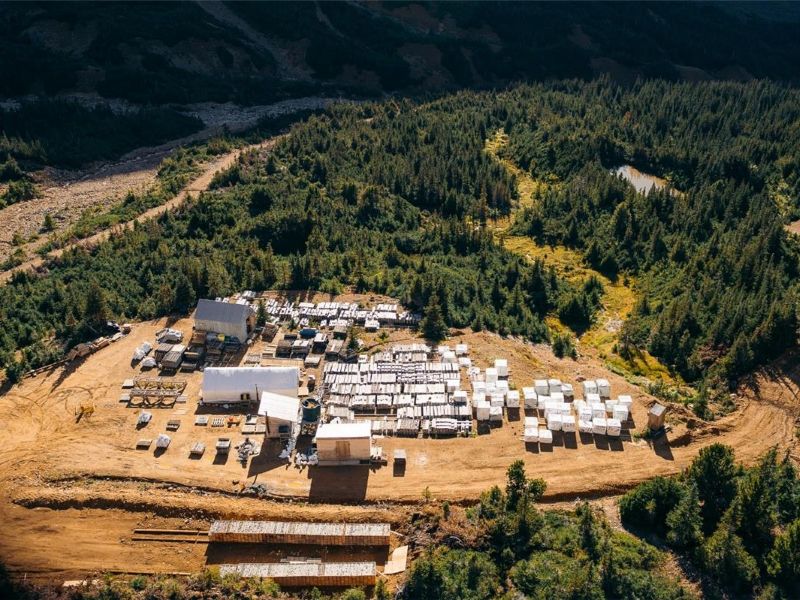
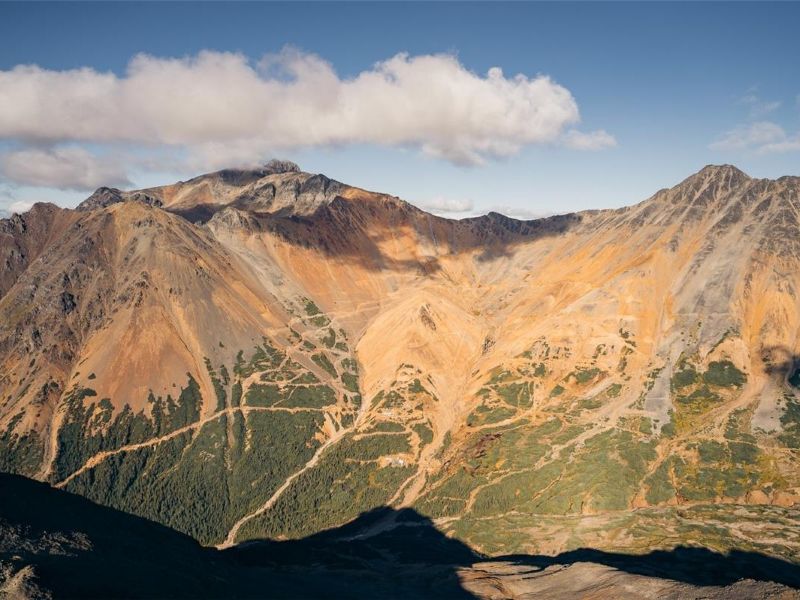
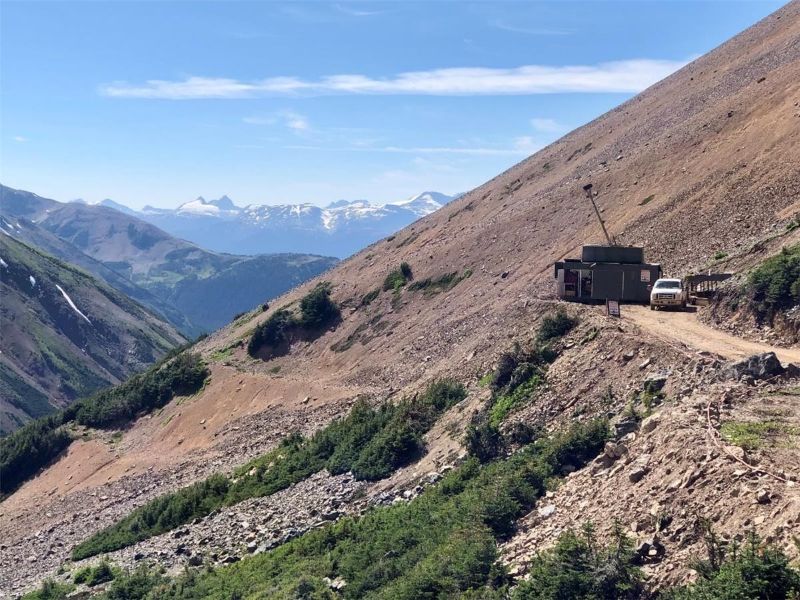
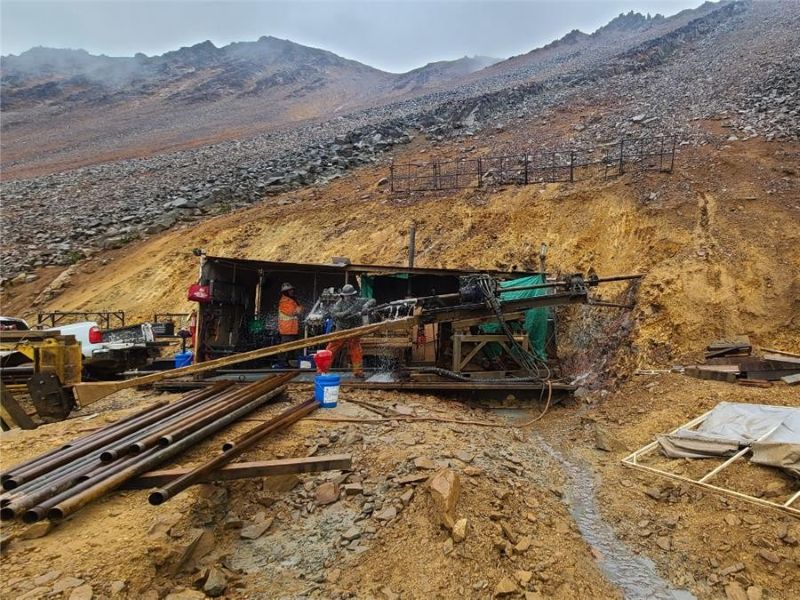
The Berg copper project is Surge Copper’s wholly owned flagship copper-molybdenum-silver asset in central British Columbia (BC), Canada.
A technical report for the project was released in May 2021 and a preliminary economic assessment (PEA) was completed in June 2023.
Recommended Buyers Guides

A pre-feasibility study (PFS) was completed in June 2026, outlining a 28-year life of mine based on an estimated investment of approximately $3.3bn (C$4.7bn).
Over the mining life, average annual output is projected at 308 million pounds (mlb) of copper equivalent, comprising 176mlb of copper, 21mlb of molybdenum and three million ounces (moz) of silver.
In September 2026, the project was included in the 2026 Canada Investment Summit Dealbook, which highlights Canadian investment opportunities for global investors as part of the Government of Canada’s wider efforts to encourage new investment into the country.
Berg copper project location
The Berg property is situated in west-central BC within the Tahtsa Ranges, a mountainous belt 15–20km wide in the Hazelton Mountains.
The property comprises 112 mineral claims and one mining lease covering 41,894.96 hectares (ha), or 103,524 acres, and is wholly owned by Surge Copper. It also includes two mining claims totalling 6,323.72ha, over which Surge holds an option to acquire a 100% interest.
Geology and mineralisation
The Berg deposit comprises two main intrusive bodies: Unit QDR and Berg Stock.
Unit QDR is a north-trending, elongated quartz diorite that cuts across the Hazelton Group–Skeena Group contact immediately east of the mineralised zone, while Berg Stock is a multi-phase composite quartz monzonite stock that cuts into andesite units within the Hazelton Group.
Copper and molybdenum mineralisation is generally concentrated in potassically altered rocks linked to the earlier phases of the Berg Stock. Most hypogene mineralisation occurs within several generations of quartz-sulphide veins.
Reserves
The proven and probable mineral reserves at the Berg copper project were estimated at 1.21 billion tonnes (bt) grading 0.22% copper and 0.026% molybdenum, 4.1 grams per tonne (g/t) silver and 0.02g/t gold, with a total contained metal of 5.8 billion pounds copper, 687mlb molybdenum, 160moz silver and 844,000oz gold as of June 2026.
Mining methods
The Berg copper project is set to be developed as a stand-alone open-pit mine, using conventional drill, blast, load and haul methods.
The Berg pit is divided into six phases, beginning in the central part of the deposit, with subsequent phases expanding the walls to the east, north, south, north-east and west, respectively. The pit designs use 15m bench heights with minimum effective berm widths of 8m on each bench.
Two-way 35m-wide in-pit haul roads are planned to accommodate 360t haul trucks. Access ramps are not included for the last bench at the pit bottom, on the assumption that the lower ramp sections will be removed using a form of retreat mining. The bottom two ramped benches will use one-way 25m-wide haul roads at a 12% grade.
Mining will be undertaken using an electric and diesel-driven fleet comprising tracked rotary drill rigs able to drill 305mm-diameter holes, 49m³ electric rope shovels, 600t-class diesel hydraulic shovels, 25m³ wheel loaders, together with a range of supporting, ancillary and service units.
Hydraulic excavators with 4.5m³ and 3m³ buckets will support pit operations, including grade control and mining activities. Articulated haul trucks with a 40t payload are included to haul overburden and to operate in smaller pit areas, such as pit bottoms during initial bench access and when bench diving.
Mined ore will be placed in a low-grade ore stockpile located directly south of the run of mine (ROM) pad. This material is expected to supplement mill feed at start-up and to be managed throughout the remainder of the mine life, with ore added to and reclaimed from the stockpile as required. All stockpiled ore is scheduled to be rehandled back to the crusher by the final year of pit mining.
Processing methods
The ROM ore will pass through a two-stage crushing circuit, comprising a primary gyratory crusher followed by secondary cone crushers. Crushed ore will then feed three identical grinding lines, each with a feed conveyor, a semi-autogenous grinding mill and a ball mill operating in closed circuit with hydrocyclones.
Primary cyclone overflow will pass through a trash screen before entering bulk copper-molybdenum flotation. The flotation circuit will run on three parallel lines and include rougher flotation, pyrite scavenging, coarse and fine regrinding, three cleaning stages and scavenger flotation.
Rougher concentrate will be coarsely reground in a ball mill and returned to the cyclone feed pump box. Cyclone overflow will then feed the first copper-molybdenum cleaning stage. Concentrates from the first cleaning and scavenging stages will be finely reground before moving through the second and third cleaning stages. Concentrate from the third cleaning stage will report to an elevated copper-molybdenum concentrate thickener. Cleaner scavenger tailings will be combined with pyrite rougher concentrate for separate disposal.
Bulk concentrate will then enter a molybdenum separation circuit comprising conditioning, rougher and scavenger flotation, two cleaning stages and cleaner scavenging. First-stage cleaner concentrate will feed the second cleaner stage, and the resulting concentrate will report to the molybdenum concentrate thickener. Tailings from the second cleaner stage will be returned to the first cleaner feed.
Copper concentrate slurry will be thickened to 60% weight by weight (w/w) solids in a high-rate copper concentrate thickener and then filtered to produce a cake with 8% w/w moisture. Molybdenum concentrate will be thickened to 60% w/w solids in a high-rate molybdenum concentrate thickener and filtered to produce a cake with less than 15% w/w moisture.
Berg copper project infrastructure
The Berg site can be reached by road via an all-season gravel route by travelling south along the Morice Nadina FSR, also known as Huckleberry Mine Road, which connects to BC Highway 16 near Houston.
Freshwater will be sourced from Nanika Lake and transported by pumps. A 4,200m overland pipeline will run from the lake to the process plant, where freshwater storage tanks will be installed. The water supply will support potable requirements and will also be used for site facilities and the process plant.
The project has a total installed load of 261MW. Permanent power will be provided by a transmission line connected to the BC Hydro grid. A 230kV line will connect to the BC Hydro Telkwa substation at the site and will then be stepped down to 25kV for distribution across the site to meet varying demand.
Permanent on-site accommodation is planned in a camp comprising 450 individual dormitories. The modular multi-level facility will include a kitchen, dining area and recreation room. It will initially house the construction workforce and will later be converted for operational personnel.
Contractors involved
The technical report for the Berg copper project was prepared by Tetra Tech Canada.
The PEA and PFS were prepared by Ausenco Engineering Canada and Moose Mountain Technical Services.
