

The Pilot Mountain project is an open-pit tungsten mining development by Guardian Metal Resources, a Nevada, US-focused tungsten exploration and development company.
A pre-feasibility study (PFS) for the project was completed in June 2026, which highlighted an eight-year life of mine (LOM) for an investment of approximately $288.7m.
Recommended Buyers Guides

The project is estimated to have an annual dry concentrate production capacity of 61,063 short tonnes with 50% tungsten concentrate at a recovery rate of 78.5%.
Pilot Mountain tungsten project location
The Pilot Mountain tungsten project lies on the eastern side of the Pilot Mountains in west-central Nevada, US, within Mineral County. Mina, Nevada, is the closest settlement and is approximately 19km west of the property by air and 39km away by a well-maintained gravel road.
The site covers 2,259.5 hectares (ha) of unpatented lode mining claims, alongside four unpatented mill sites extending across 8.09ha of public land managed by the Bureau of Land Management.
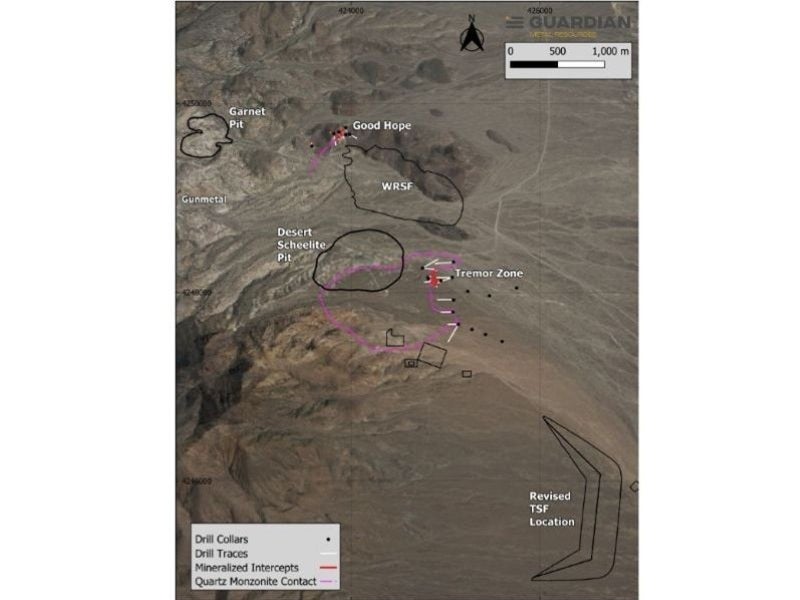
The landholding includes 287 unpatented claims covering the Garnet, Good Hope, Gunmetal and Desert Scheelite sub-projects, as well as four separate Dunham Mill claims.
Geology and mineralisation
Permian to Jurassic sedimentary and volcanic rocks underlie the project area, with local intrusions of Cretaceous granitic stocks, dykes and sills. Tertiary volcanic units are present around the property margins. Mineralisation is primarily hosted in the Triassic Luning Formation, while the older Permian Mina Formation contains marine turbidites, chert and volcanogenic tuffaceous strata.
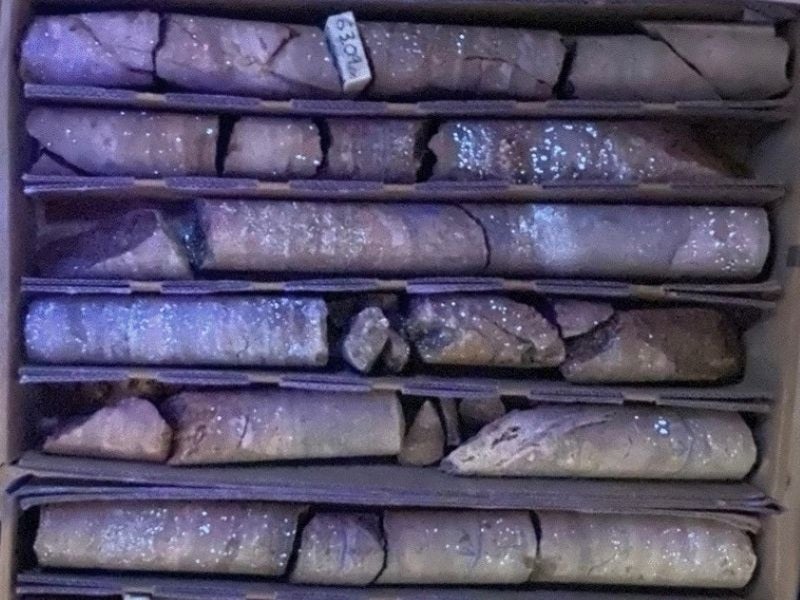
Tungsten mineralisation occurs within garnet-pyroxene skarn created by the interaction of quartz monzonite intrusions with carbonate-bearing rocks in the Triassic Luning Formation. Scheelite is present as disseminated mineralisation and, in some areas, in veins, with varying levels of copper, zinc and silver. Pyrite, chalcopyrite and sphalerite comprise the principal sulphide minerals.
The mineralised areas include Desert Scheelite, Garnet, Good Hope and Gunmetal. Desert Scheelite and Good Hope contain steeply dipping to subvertical mineralised bodies, whereas Garnet and Gunmetal occur in shallow-dipping to subhorizontal stratabound horizons.
Pilot Mountain reserves
The probable mineral reserves at the Pilot Mountain tungsten project are estimated to be 11.82 million tonnes (mt) grading 0.17% tungsten trioxide, 9.28 grams per tonne silver and 0.28% zinc, with contained metals at 20,275t of tungsten trioxide, 3,529koz of silver and 33,396t of zinc, as of June 2026.
Mining methods
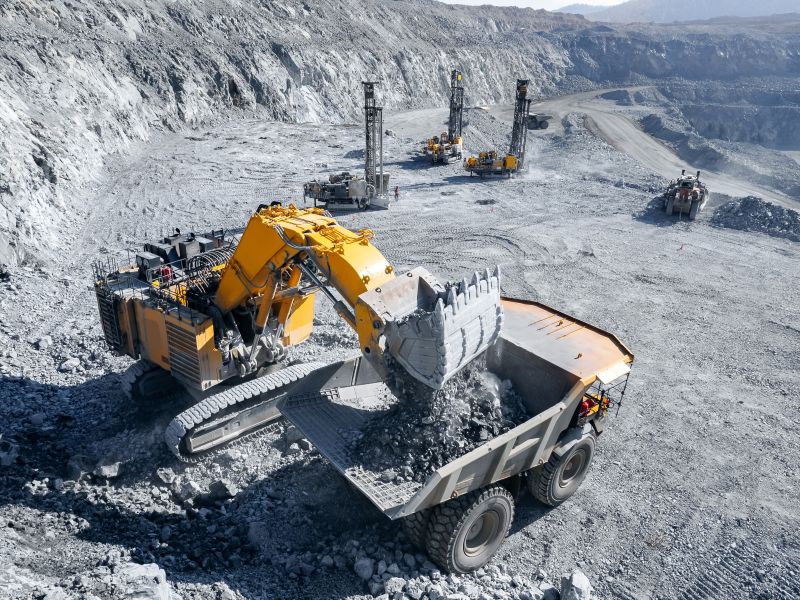
The Pilot Mountain development plan centres on open-pit extraction from the Desert Scheelite and Garnet deposits, reflecting their near-surface setting. The mine schedule assumes the use of contract mining and a LOM strip ratio of 12.6.
Mining at Desert Scheelite will proceed through five stages known as Phase 1a, Phase 1, Phase 2, Phase 3 and Phase 4. The final pit is expected to reach 350m in depth, with a strike length of 990m and a width of 640m.
The Garnet deposit will be mined through two phases, with Phase 1 positioned south of Phase 2. The pits are expected to merge around a shared ridge. The southern pit will reach an ultimate depth of 115m, while the northern section will extend to 110m. Once combined, the pits will measure approximately 380m from north to south, with the larger Phase 1 extending approximately 330m in width.
The planned mining fleet includes CAT 992-type loaders and 91t rigid haul trucks. At peak activity, operations are expected to require four loaders and 16 haul trucks, supported by drilling, blasting, maintenance and ancillary equipment.
Ore processing
The Pilot Mountain processing plant is designed for a nameplate throughput of 4,000t per day, equivalent to 1.46 million tonnes per annum.
Run-of-mine ore will undergo two-stage crushing using a primary jaw crusher and an open-circuit secondary cone crusher before being transferred to a crushed ore stockpile. The comminution circuit will include an open-circuit rod mill followed by a ball mill operating in closed circuit with classification screens. Screen undersize will flow by gravity to sulphide rougher flotation.
Froth flotation will remove sulphide minerals from tungsten-bearing material to create a rougher concentrate. The rougher tailings will then be thickened for tungsten recovery. Sulphide rougher concentrate will pass through three cleaning stages to concentrate silver, zinc and copper into a secondary concentrate. Tailings from the first cleaner will be directed to the tailings thickener, while concentrate from the third cleaner will feed the sulphide concentrate thickener.
Thickened underflow from the sulphide rougher circuit will enter the tungsten circuit to recover scheelite, the primary tungsten mineral. Following reagent addition in two conditioning tanks, the slurry will proceed to rougher flotation. Recovered concentrate will be thickened to 50–60% solids before conditioning with sodium silicate and sodium sulphide to deactivate gangue material. A fatty-acid collector will then be added before the material is upgraded to a saleable grade in a flotation column.
Sulphide and tungsten cleaner concentrates will be thickened and pumped to filter presses for dewatering into filter cake. The filtered material will then be conveyed to storage silos before packaging in bulk storage bags.
Site infrastructure
The project can be reached from US Highway 95 near Mina by a well-maintained 39km gravel road. Internal roads will connect the main access route with the crusher, processing facility, mine pits and tailings storage facility.
Electricity is set to be supplied through an existing 120kV Nevada Energy utility line south of the property boundary. A new 16km, 120kV single-circuit overhead transmission line will connect the site to a new 120kV/13.8kV substation at the processing plant.
Water for processing and other operational uses will be sourced from dedicated wells in Ione Valley, north of the property. The water will be transferred through a proposed 28km pipeline and pumping station system.
The development plan includes a 500-bed off-site construction camp. Contractors and company personnel will travel to and from the site using buses, vans and personal vehicles.
Financing
The PFS was supported by a $6.2m investment under the US Department of War’s Defense Production Act Title III programme, awarded to Guardian Metal’s wholly owned subsidiary, Golden Metal Resources (USA), in July 2025.
Contractors involved
The PFS was prepared with inputs from Samuel Engineering, RESPEC Company and NewFields Mining Design & Technical Services.
