

The Beebyn-W11 project, situated in Western Australia’s (WA) mid-west region, is a direct shipping ore (DSO) operation by Fenix Resources, an iron ore producer based in Australia.
Fenix Resources entered into a binding agreement with the Sinosteel Midwest Corporation (SMC) in October 2023, securing exclusive rights to mine and export up to ten million dry tonnes of high-grade iron ore from the Beebyn-W11 deposit.
Recommended Buyers Guides

A feasibility study completed in July 2024 outlined a life of mine of 6.7 years, with an investment of approximately A$22.9m ($15.1m).
In February 2025, the Department of Energy, Mines, Industry Regulation and Safety approved the project’s mining proposal. A Cultural Heritage Agreement covering the Beebyn-W11 haul road was also finalised with the Wajarri Yamaji Aboriginal Corporation, acting on behalf of the Wajarri Yamaji People.
Earthworks and construction activities commenced in March 2025, followed by mining operations in June. The first shipment of lump iron ore was completed in August 2025.
The project is operating at its proposed annual production rate of 1.5 million tonnes per annum (mtpa).
The current production is projected to increase from 1.5mtpa to 3mtpa in 2027, contingent on securing the necessary mining and environmental permits, which are due to be granted in 2026.
Project location
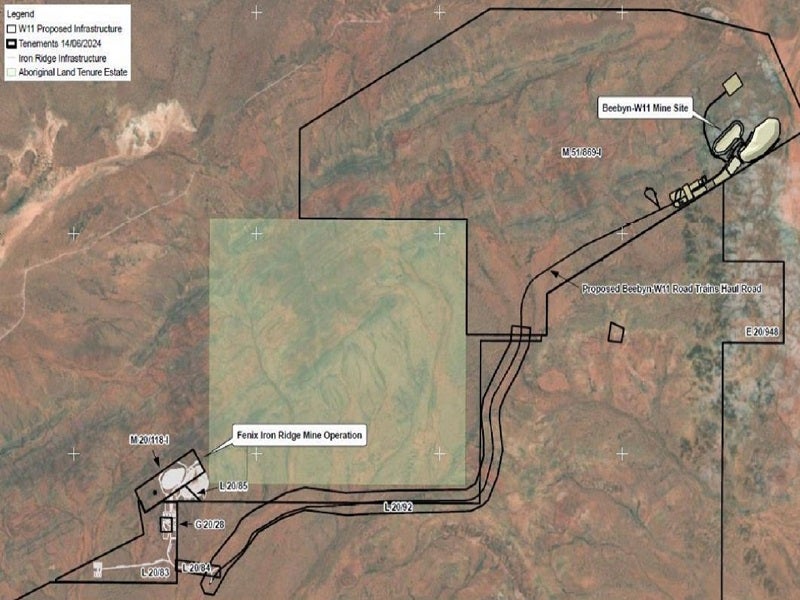
The Beebyn-W11 deposit lies within the Beebyn area (M 51/869-I) in the greater Weld Range.
The site is 508km from Port Geraldton, in WA’s Mid West region, and 20km from Fenix Resources’ existing Iron Ridge operations.
Geology and mineralisation
The Beebyn-W11 deposit is part of the Murchison Domain in the Yilgarn Craton, WA. It comprises a near-surface, steeply dipping Archaean banded iron formation, encircled by mafic igneous rocks within the east-north-east trending Weld Range greenstone belt.
Mineralisation at Beebyn-W11 includes goethite-hematite, massive magnetite, specular hematite, goethite and limonite ore bodies.
Beebyn-W11 reserves
The proven and probable mineral reserves at the Beebyn-W11 project stand at ten million tonnes (mt) with an iron grade of 62.2%, as of June 2025.
The project’s mineral reserve is limited to be in line with the mining agreement with SMC.
Mining method at Beebyn-W11
The Beebyn-W11 Project employs conventional open-pit mining techniques using a standard drill and blast, load and haul cycle. The mining fleet includes a 120t excavator and 90t off-highway trucks, supported by appropriate equipment.
The deposit is being mined in three stages, with an estimated total tonnage of 31.7mt and a strip ratio of 2.2:1. The ultimate pit will measure approximately 875m in length, 275m in width and 125m in depth.
Stage one of mining operations involves the eastern side of the ridge, removing low strip material while maintaining a 45m buffer from heritage areas, excavating from 550–520m reduced level (RL) to yield 1.1mt of ore at a strip ratio of 1.9.
Stage two involves the western end of the ridge, from 550m RL to 520m RL, producing 800,000t of ore with a strip ratio of 2.5.
Following stages one and two, operations will move to the remainder of the pit, from 520m RL to the base at 410m RL. Stage 3 is expected to produce 8.1mt of ore with a strip ratio of 2.2.
Processing
The processing plat features a dry processing facility where water is added to the product for dust suppression, with run of mine (ROM) moisture content remaining below 5%.
The processing plant components feature mobile and modular units, with ROM ore undergoing primary and secondary crushing, followed by sorting in a multi-deck screen to separate lump and fines products.
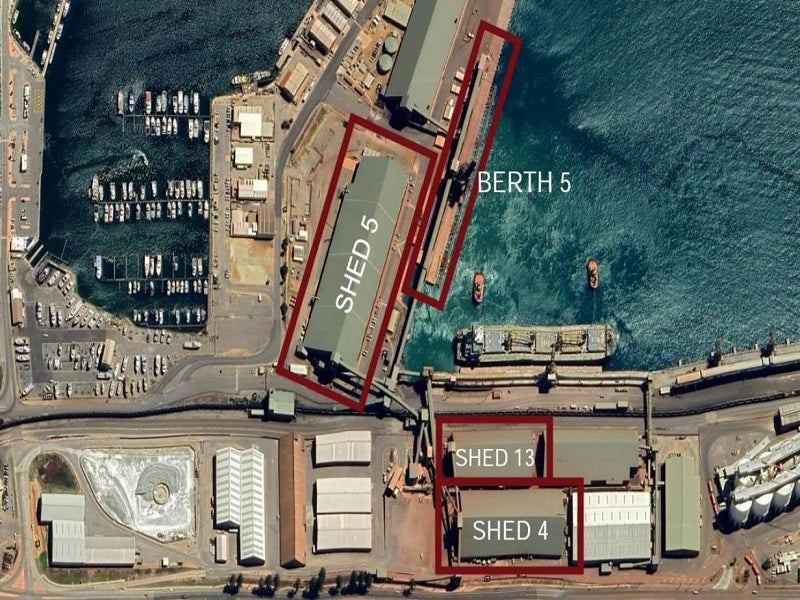
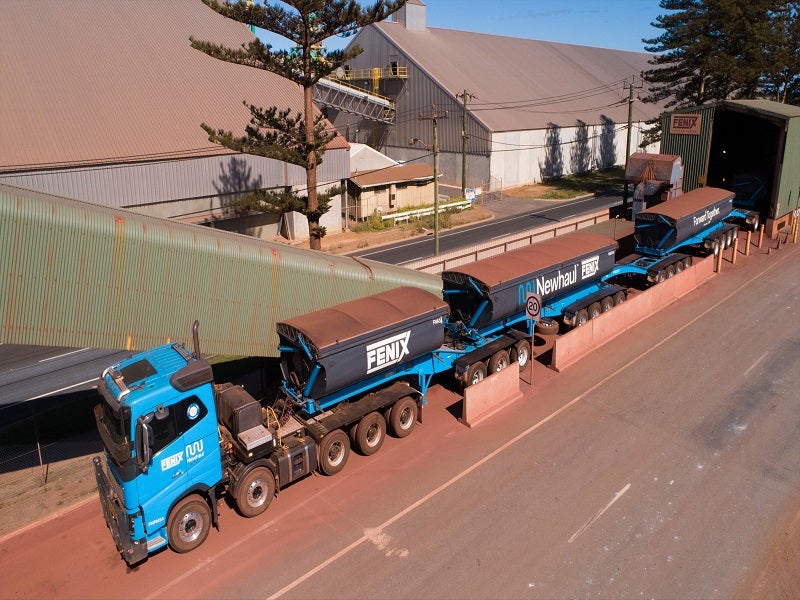
The finished products are transported by road to Geraldton Port and stored in the company’s wholly owned on-wharf storage facility for export.
Site infrastructure
The project uses the Berringarra-Cue Road, Great Northern Highway (National Route 95) and Geraldton Mount Magnet Road (State Route 123) for site access and ore transport to the port of Geraldton.
A sealed 17.6km haul road and mine access road was constructed to connect the Beebyn-W11 mine to the Iron Ridge – Berringarra-Cue Road.
The project included an existing 132-room accommodation facility owned by Fenix Resources at the Iron Ridge camp, 20km from Beebyn-W11. The mine plan involved expanding the facility by 60 rooms to support the project.
Water supply is sourced from pit dewatering and purpose-drilled bores, while on-site power generation is via high-efficiency diesel-powered gensets in an N+1 configuration.
Contractors involved
Oreology, a mine planning and resource consultancy, was responsible for the mineral reserve estimate and mine design and schedules.
Civtec, an engineering consultancy, managed the project’s civil engineering and design.
Ecotec, an environmental consultancy, was engaged for environmental studies and approvals.
Fenix Resources’ wholly owned logistics subsidiaries, Newhaul Road Logistics and Newhaul Port Logistics, are offering road transport and port services for the project.
MACA, a subsidiary of Thiess Group, was awarded the mining contract involving drill and blast, mining, and crushing and screening operations.
