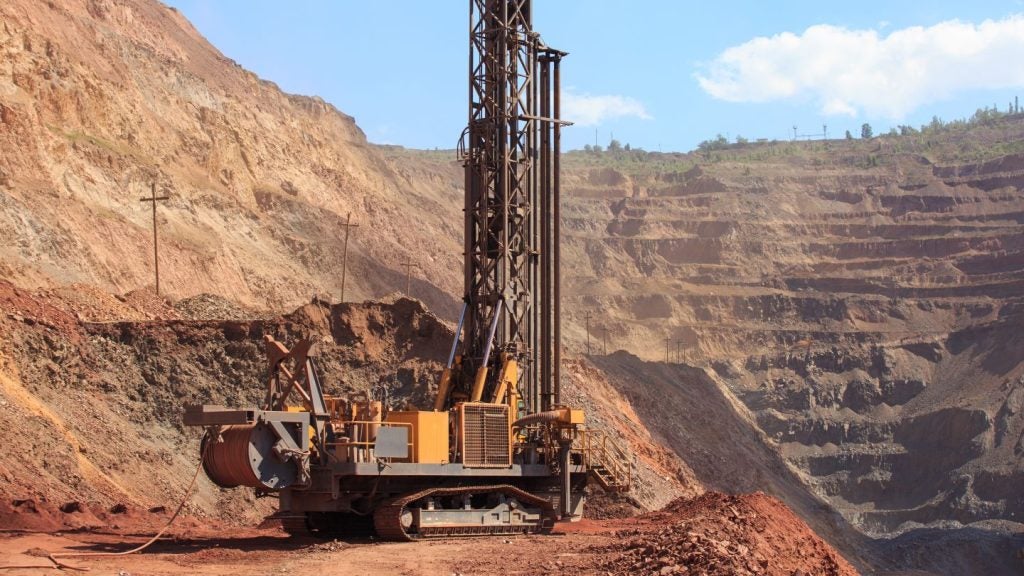
IMC Rare Earths has commenced a deeper drilling programme and expanded field trials at its Itarantim rare earths project in Brazil, as part of ongoing efforts to verify mineralisation depth and investigate potential recovery methods.
The activities form part of preparations for major resource assessment milestones anticipated in 2027.
Drilling is set to start in mid-November across 29 locations on the Block D plateau, which is said to contain significant thickness of weathered rock and soil.
The diamond drilling work will probe below the 30m limit reached by previous mechanical auger drilling, with plans to extend shafts approximately 5 to 10m into bedrock, dependent on actual geological conditions.
Preparation work, including access and drill pad construction, is under way.
Past drilling at the site has shown the presence of rare earth elements at depth, notably with one hole returning 13m at 1,287ppm yttrium (III) oxide from 14m, with mineralisation continuing at the drill’s endpoint.
The drilling campaign is intended to establish the extent, continuity, and grade of these deposits, while also supplying extra material for density assessments.
IMC Rare Earths notes that any positive results could influence future resource evaluations, subject to further analysis.
The Block A in-situ recovery (ISR) field programme, conducted by consultancy WSP, is progressing with installation of 37 groundwater monitoring wells across the project.
Injection testing is targeted to begin in the first quarter of 2027.
The ISR trial, which involves introducing a solution to dissolve rare earths underground for extraction to the surface, will examine the method’s effectiveness and environmental suitability.
IMC Rare Earths CEO and chair Frank Scolaro said: “Our deeper drilling programme marks an important step toward understanding the full scale of the rare earth mineralisation at Itarantim and its potential implications for a future resource estimate.
“At the same time, WSP's leadership of our ISR field programme brings world-class engineering expertise as we evaluate potentially lower-cost recovery methods for strategically important rare earths, including dysprosium, terbium and yttrium.”
IMC Rare Earths reports that earlier laboratory work using acidified magnesium sulphate achieved a 73% extraction rate for rare earth elements, excluding cerium.
Operations on site have expanded, with nine auger teams and more than 100 Brazilian employees engaged.