

Elk Creek is one of the highest-grade primary niobium resources under development in the US. Located in south-east Nebraska, the project is owned and operated by NioCorp Developments (NioCorp).
NioCorp completed the project’s feasibility study in 2017 and a new technical report feasibility study was completed in April 2019.
Recommended White Papers
Recommended Buyers Guides

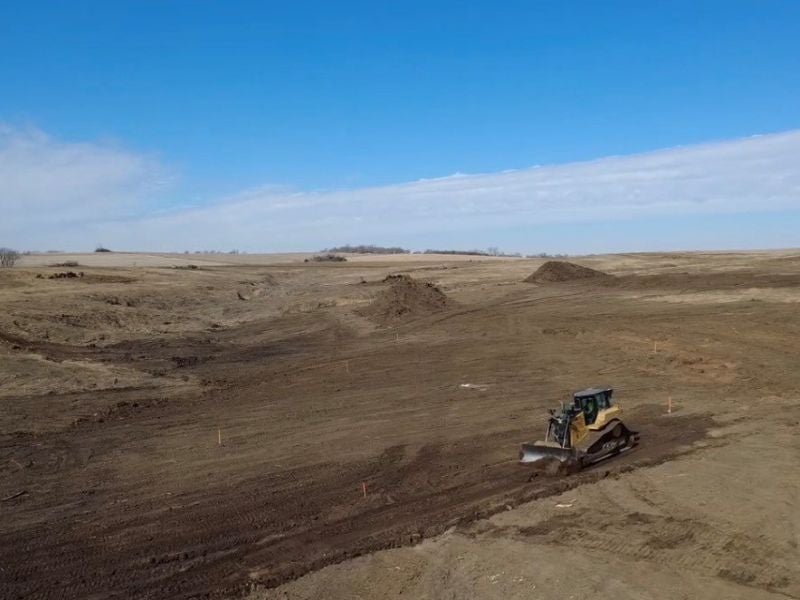
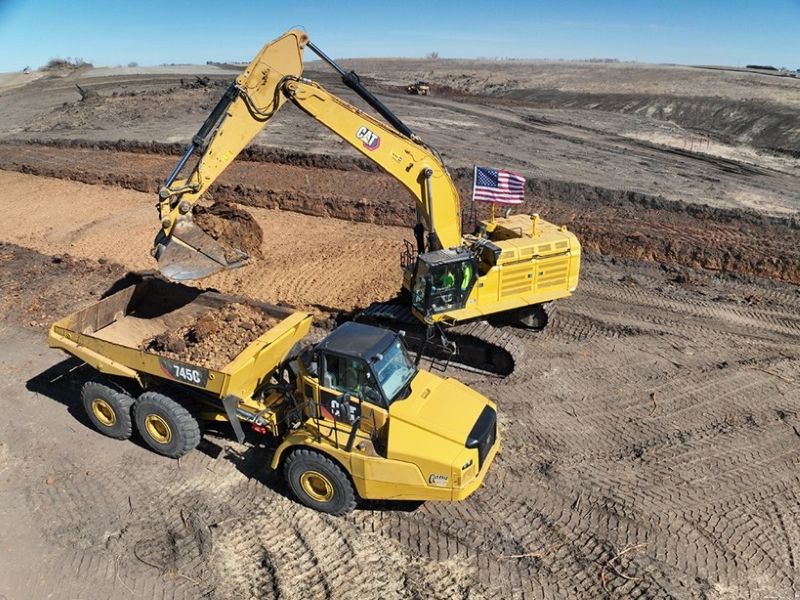
Construction of the main underground access portal commenced in February 2026, with excavation works officially launched the following month in March.
An updated feasibility study for the project was completed in August 2026, highlighting a mining life of 40 years with an initial investment of approximately $1.8bn.
The project will target a steady-state production rate of 3,047 tonnes per day, yielding approximately 8,282 tonnes per annum (tpa) of ferroniobium.
Elk Creek project location
The Elf Creek property is situated in south-eastern Nebraska, US, and falls within the US Geological Survey Tecumseh SE Quadrangle (7.5-minute series) map sheet. The landholding spans Sections 1–6 and 9–11 of Township 3 North, Range 11 East, alongside Sections 19–23 and 25–36 of Township 4 North, Range 11 East.
The site comprises a 287.3-hectare (ha)/709.93-acre freehold parcel owned directly by the company, supplemented by six option-to-purchase agreements that encompass roughly 463.72ha.
Geology and mineralisation
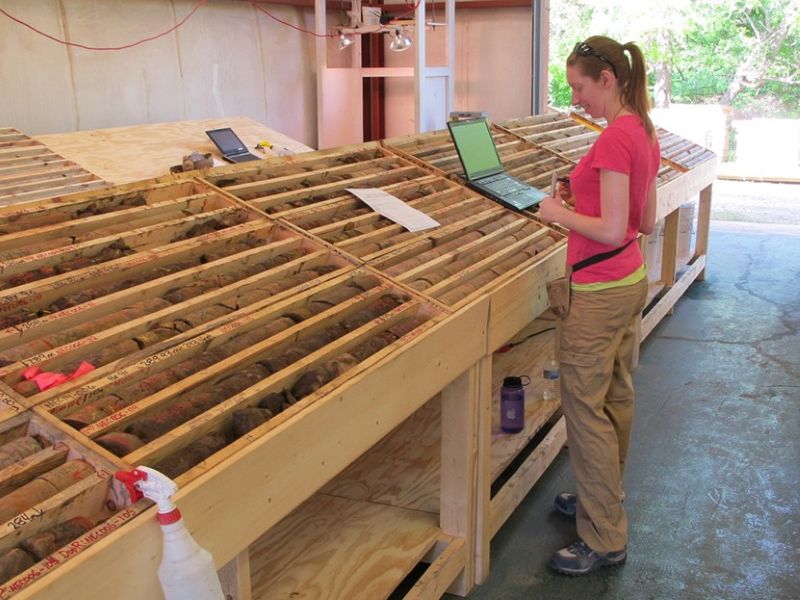
The project features carbonatite intruded by older Precambrian granitic and low-to-medium-grade metamorphic basement rocks, which are overlain by more than 200m (650ft) of Paleozoic marine sedimentary rocks of the Pennsylvanian age.
The carbonatite contains barite, calcite chlorite, dolomite, fluorite, phlogopite, pyrochlore, quartz and serpentine. Niobium, titanium, scandium and rare earth elements (REEs) are primarily hosted in the dolomite-carbonatite and lamprophyre rocks.
Niobium is hosted within pyrochlore, while REE mineralisation is hosted in bästnasite, parisite, synchysite and monazite.
Elk Creek project reserves
The proven and probable (2P) mineral reserves at the Elk Creek project were estimated at 45.9 million tonnes (mt), grading 0.75% niobium pentoxide, 2.6% titanium dioxide, with 69.3ppm scandium and 0.34% total rare earth oxides, as of April 2026.
Mining method
The selected mining method is underground longhole stoping with cemented paste backfill. This method was selected to match the orebody geometry and geotechnical conditions while supporting economic extraction and selective recovery of higher-grade niobium pentoxide mineralisation.
The mine plan comprises three resource blocks that will generally be mined concurrently using a declining-grade strategy. Mining will follow a bottom-up sequence and incorporate primary and secondary stoping, together with partial recovery of sill pillars.
Stope designs are based on widths of 49ft (14.9m), panel lengths of 33–49ft and level spacing of 131ft. The mine plan assumes approximately 6% dilution and 95% ore recovery.
The underground mine will be accessed through a purpose-designed box cut excavation comprising two portals: the Service Portal, also referred to as the North Portal, and the Production Portal, also referred to as the South Portal.
The North Service Ramp will provide the primary access and egress route for personnel and vehicles. The South Production Ramp will be dedicated to production activities and will use a railveyor conveyance system to transport ore and waste continuously from the underground workings to the designated surface dumps. It will also provide an alternate emergency egress route.
The access box cut will remain excavated and will not be backfilled. This will provide permanent, open access to support ongoing operations, maintenance and emergency response.
Ore processing
The Elk Creek processing facility is designed to recover ferroniobium, titanium tetrachloride, scandium oxide, and several individual or mixed rare earth products. It will comprise three main sections, namely mineral processing, hydrometallurgy and pyrometallurgy.
The run-of-mine ore will be stockpiled, crushed, screened and ground to a uniform particle size of less than 1mm and sent to the hydrometallurgical plant.
The ore will first be heated in a rotary calciner to convert carbonates into oxides. Calcium and magnesium will be removed through an ammonium chloride leaching circuit. The remaining material will then undergo hydrochloric acid leaching, which will dissolve iron, REEs and scandium.
A solvent-extraction process will separate the REEs and scandium from the leach solution. These will be further refined into scandium oxide, individual rare earth oxides including neodymium/praseodymium, terbium and dysprosium and mixed rare earth carbonate products.
The solid residue from acid leaching will contain niobium and titanium. It will be dried, treated with sulphuric acid, and water-leached to produce a niobium and titanium-rich solution. After further processing, titanium will be recovered as titanium tetrachloride, while niobium will be converted into niobium oxide and then processed in the pyrometallurgical plant to produce ferroniobium.
The plant will also recover and recycle hydrochloric acid from chloride-bearing process streams. Sulphate effluents will be neutralised with calcium carbonate and quicklime, precipitating base metals and producing treated water.
Infrastructure facilities at Elk Creek
The project site is accessible year-round via interstate and state highways from one of the regional airports.
Water for mining operations will be supplied through deep groundwater pumping wells while potable water will come from the City of Tecumseh via a water supply pipeline.
On-site electricity will be supplied by a third-party microgrid comprising modular natural gas generators with a total capacity of approximately 50MW, supplemented by a 200kW connection to the local grid.
Telecommunications services will be provided by a local supplier and distributed across the site via a network of hardwired and fibre-optic systems.
Financing
In August 2025, NioCorp announced that its subsidiary, Elk Creek Resources, had been awarded up to $10m by the US Department of Defense under Title III of the Defense Production Act.
The funding, subject to milestone achievement, was intended to support the development of a domestic scandium mine-to-manufacturing supply chain through the Elk Creek project.
Offtake agreements
NioCorp signed an offtake agreement with ThyssenKrupp Metallurgical Products in December 2014 for the purchase of 50% of planned ferroniobium production. The contract runs for an initial ten-year term, with an option to extend beyond that period.
In July 2023, Stellantis and NioCorp signed a rare earth offtake term sheet outlining a potential ten-year agreement for specified volumes of neodymium-praseodymium, dysprosium and terbium oxides.
NioCorp entered into a non-binding agreement with Traxys in April 2026, covering the marketing and offtake of the remaining planned critical mineral products from the Elk Creek project. The proposed arrangement would include an additional 25% of planned ferroniobium production on a take-or-pay basis, all planned scandium production, and the remaining products on a best-efforts basis during the first ten years of operations.
In August 2026, NioCorp announced a non-binding memorandum of understanding with Lockheed Martin for the potential purchase of up to 15tpa of scandium oxide or aluminium-scandium alloys over ten years.Top of Form
Contractors involved
NioCorp signed an 11-year contract worth $63m with Rockies Express to build and operate a 27.8-mile (44.73km) pipeline, which will deliver natural gas to the Elk Creek project.
SRK Consulting conducted the full feasibility study, while SGS, Hazen and KPM were contracted to conduct bench and pilot-scale test work.
DuPont Clean Technologies was awarded the contract to conduct engineering and procurement for the project’s sulphuric acid recycling plant.
Veolia Water Technologies was selected to conduct engineering and procurement activities for the project’s water treatment plant.
In February 2023, a contract was executed with Zachry Group to develop a cost for the surface facilities associated with the project, representing the first phase of engineering, procurement, and construction (EPC). NioCorp had previously selected Zachry as its EPC contractor for the project’s surface facilities.
The 2026 updated feasibility study was prepared by Dahrouge Geological Consulting, L3 Process Development, Amplify Mine Planning, Adrian Brown Consultants and BBA Consultants International, formerly Tierra Group International (Tierra Group/BBA), in addition to Olsson, Andrieux & Associates Geomechanics Consulting, Magemi Mining, Dumas Contracting and T Engineering. Tetra Tech, DM Consulting and Metallurgy Concept Solutions also contributed to this feasibility study.
