

The platinum market is forecast to return to a modest surplus in 2026, but the improvement says little about the industry’s ability to produce more metal.
The World Platinum Investment Council (WPIC), an industry body funded by major global platinum producers, expects a 265,000-ounce surplus this year after the market recorded a revised deficit of 1.44 million ounces (Moz) in 2025. Yet global mine supply is forecast to remain broadly flat at 5.55 Moz, with the entire 2% increase in total supply coming from recycling.

Discover B2B Marketing That Performs
Combine business intelligence and editorial excellence to reach engaged professionals across 36 leading media platforms.
The findings come as the WPIC publishes its Platinum Quarterly for the second quarter of 2026, including a full-year market forecast.
Although WPIC focuses on platinum, the metal is mined as part of a wider basket of PGMs including palladium, rhodium, iridium, ruthenium and osmium. Its analysis therefore also highlights the broader supply challenges facing PGM miners.
The surplus is therefore largely a consequence of weaker investment demand rather than a meaningful increase in primary production. WPIC expects total demand to fall 18% in 2026, principally because of lower investment demand, while above-ground stocks are forecast to end the year at just over 3.4 months of global demand.
For miners, the more important question is why primary production has proved so difficult to increase despite three consecutive years of significant deficits.
Edward Sterck, director of research at WPIC, said the principal constraint was geological. South African PGM mines are deep-level underground operations working narrow, tabular reefs that cannot simply be scaled up when prices rise.
“On the primary side, on the mining side, it’s just geology,” he said.
The problem is particularly acute in South Africa’s Bushveld Igneous Complex, a roughly 66,000km² geological formation in the north-eastern part of the country. Its economically important PGM-bearing regions include the Merensky Reef and the Upper Group 2 (UG2) Reef.
The scale of the complex helps explain South Africa’s importance to the global market. The country accounts for about 70% of mined global platinum production and has supplied roughly 71% over the past decade.
Sterck said the Merensky Reef is around 70cm thick, while the UG2 can reach about 1.3m. Although the reefs extend laterally over large distances, their limited vertical thickness makes them difficult to mechanise. Sterck described the resulting mining method as “small scale” and “non-conventional”, with operations still heavily reliant on manual work.
The concentration also extends beyond South Africa. PGM reef mining is concentrated in South Africa and, to a degree, Zimbabwe, while much of Russia’s and Canada’s production is recovered as a by-product of nickel mining. Supply in those countries can therefore also be influenced by the economics of another metals.
There is a further complication: platinum is not mined on its own. PGM deposits also contain metals such as gold, nickel, copper and chrome, while the individual PGMs have very different demand outlooks.
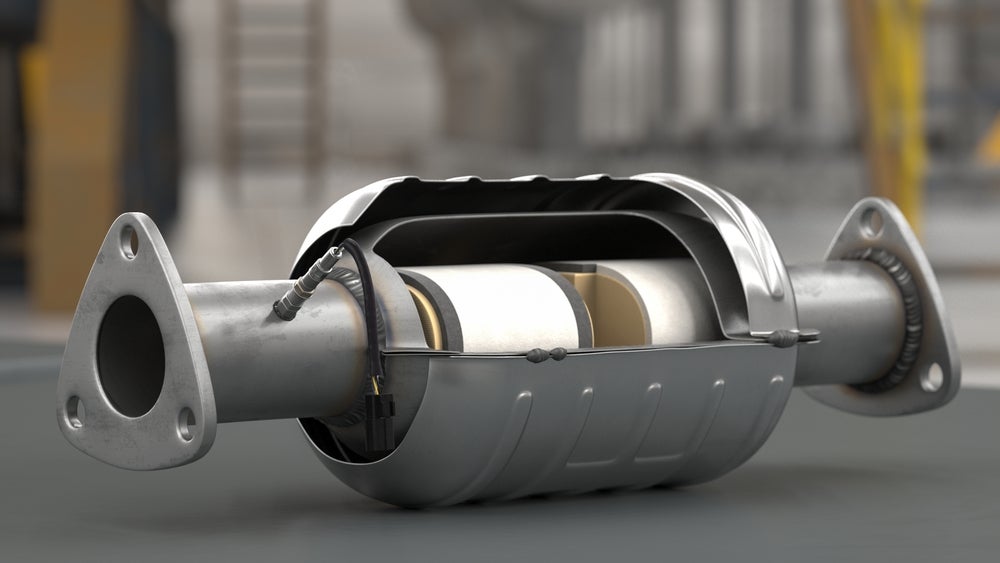
Around 40% of platinum demand is linked to catalytic converters, which sit in vehicle exhaust systems and use PGM catalysts to convert pollutants from internal-combustion engines into less harmful substances. Palladium and rhodium are even more heavily exposed to the automotive market: Sterck said more than 80% of demand for each is linked to catalytic converters.
The transition towards electric drivetrains therefore presents a longer-term challenge for the PGM basket. Platinum has potential new demand from applications including green hydrogen and AI infrastructure, but palladium and rhodium have fewer obvious replacement markets.
That creates a difficult investment picture for miners. A company considering a new project may have confidence in platinum demand a decade from now, but much less certainty over the value of the palladium and rhodium produced alongside it.
“I can be quite confident in the outlook for platinum in 12 years’ time,” Sterck said. “But I’m not so certain about palladium and rhodium.”
The development timelines make that uncertainty more significant. Sterck estimated that a brownfield restart or expansion could take four to five years, while a greenfield project could take around a decade. He said geology and economics, rather than regulation, were the main barriers to developing new mines, with relatively few deposits having the grades required to be economic.
For now, recycling is providing the more immediate supply response. WPIC expects recycled platinum supply to rise 8% in 2026 to 1.80 Moz, compared with virtually no growth in mine supply.
But Sterck cautioned that the increase is partly a temporary response to higher prices. Lower PGM prices between 2022 and 2024 led to catalytic converters being stockpiled because they were uneconomic to recycle. Higher prices have brought some of that material back into the market, but the effect will eventually normalise.
The longer-term constraint is the number of end-of-life vehicles available for recycling. Metallurgical recovery is highly efficient once a catalytic converter reaches a recycler, at around 98–99%, but Sterck said slightly less than half of scrapped vehicles currently have their converters recovered and recycled, a ratio that has remained broadly unchanged for around 30 years.
Meanwhile, new sources of platinum demand are beginning to emerge. WPIC forecasts industrial platinum demand to rise 5% in 2026, with growth in glass and electrical applications linked partly to AI infrastructure, alongside smaller increases in hydrogen demand.
Sterck said a large-scale build-out of AI infrastructure could ultimately become a meaningful source of PGM demand and potentially replace automotive demand for platinum, although he was considerably less confident about the implications for palladium and rhodium.


