
Special Report: Down with Tailings
Mine tailings storage is an ever increasing challenge to the industry. As advances in technology allow lower-grade ores to be exploited, higher volumes of waste require safe storage.

SRSL is a leading UK marine environmental consultancy that provides environmental impact assessment and consultancy services in waste management for deep-sea mining and tailings disposal.

You have successfully submitted your enquiry. Someone from our company will respond ASAP
SRSL is a leading UK marine environmental consultancy that provides environmental impact assessment and consultancy services in waste management for deep-sea mining and tailings disposal. We offer independent advice and deliver high-quality science, underpinned by cutting-edge research.
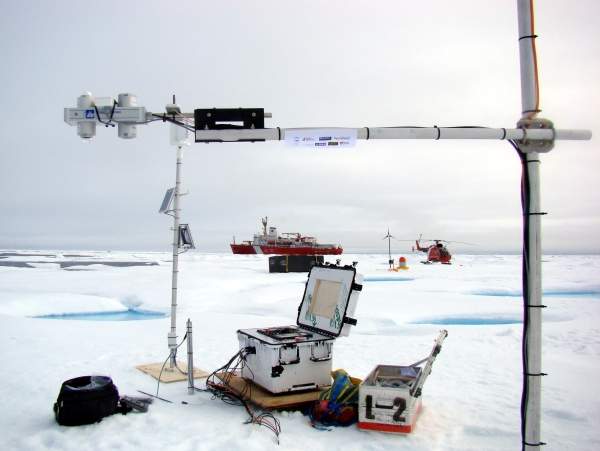
SRSL is a world leader in best-practice and environmental impact assessment of deep-sea mine tailings placement (DSTP), having assessed three DSTP-permitted mines worldwide. We have over a decade of experience working with industry, landowners and regulators internationally, operating from ice camps in the Arctic to the deep-sea in Papua New Guinea.
Our committed staff of marine geologists, physicists, geochemists, analytical chemists, ecologists, biologists, social scientists, hydrographers and modellers all work hand-in-hand towards the delivery of sustainable solutions and the development of new policy.
SRSL is an experienced provider of marine environmental impact assessments for mines using deep-sea mine tailings placement as a waste disposal solution.
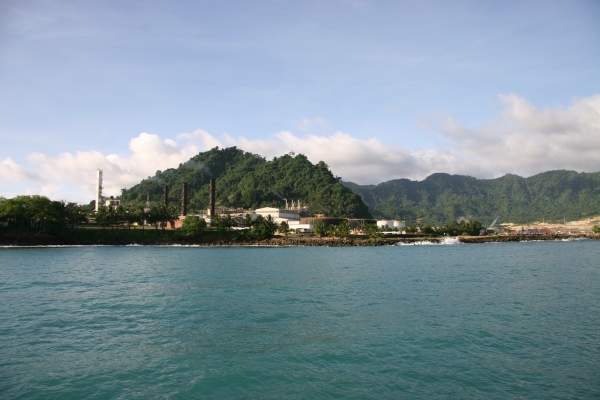
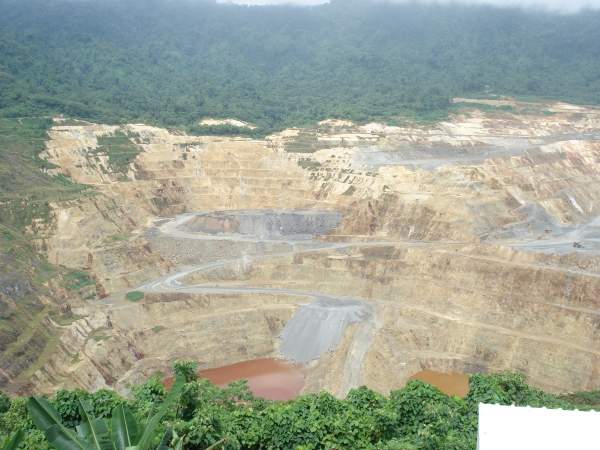
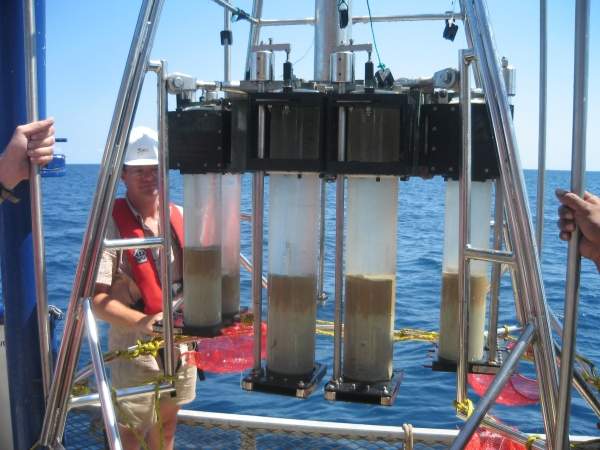
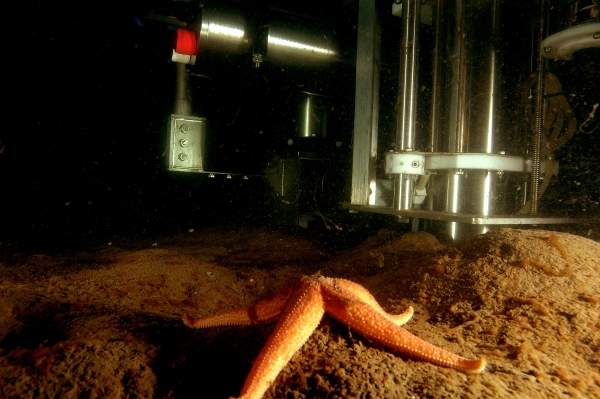
SRSL provides both mine operators and the governmental mining sector with robust environmental baseline surveys, involving characterisation and investigation of offshore sites proposed for tailings disposal. Where DSTP is being considered as a possible waste management option, SRSL advises on site suitability and provides best practice advice, and mitigation solutions where appropriate. At operational mines, our marine scientists employ a suite of environmental surveys to determine the impact of DSTP against existing environmental baseline data, whereas at decommissioned mines we assess both the extent and recovery of impacted sites.
At SRSL we cover the full requirements of environmental impact assessment, from metocean and sedimentary processes to ecological impacts.
SRSL has over ten years of experience in providing marine environmental impact assessments internationally, including assessments of Lihir and Misima mines in Papua New Guinea (2007-2010), and the environmental baseline survey of Basamuk (2008), the site of the now operational Ramu Nickel mine processing plant. SRSL continues to work in the Basamuk area, and was recently commissioned to investigate hydrography along the RAI coast (PNG Mineral Resource Authority, 2011-2012).
SRSL understands that good regulatory guidelines are necessary to sustain a country’s economic performance through mineral production and exports, and to alleviate poverty, increase employment opportunities and mitigate mine-induced environmental impacts.
Far-reaching involvement with mine operators and the governmental mining sector has allowed SRSL to build up an extensive knowledge base. This base is used to advise on guidelines and help develop new policy for DSTP and environmental monitoring, raising the bar for international best practice.
In 2008, SRSL was commissioned by the Papua New Guinea (PNG) government to author general guidelines for the use of DSTP. These guidelines have now been accepted by the Department of Environment and Conservation, as well as the Department of Mineral Policy and Geohazards in PNG. SRSL has since been commissioned to develop specific regulatory guidelines for several individual mines worldwide.
Deep-sea mining is a relatively new mineral retrieval process, and little is known about its potential near and far-field environmental impacts. Baseline surveys and environmental impact assessments for commercial deep-sea mining operations will be more difficult as most sulphide deposits are located at depths of about 1,400m – 3,700m below the ocean’s surface. These depths require the use of specific deep-sea survey techniques and sampling equipment.
SRSL staff are very experienced in conducting deep-sea surveys and operating specialist equipment at these depths. We have a long-standing history of research into the ecology and geology of deep-sea marine environments, ranging from the deep north Atlantic and Arctic to the tropical Pacific oceans. Our in-house deep-sea experts include marine physicists, microbial and molecular biologists, biogeochemists, geologists, ecologists and deep-sea taxonomists.
SRSL offers a range of environmental survey services to meet different site requirements. These include:
Mine tailings storage is an ever increasing challenge to the industry. As advances in technology allow lower-grade ores to be exploited, higher volumes of waste require safe storage.
A new policy for deep-sea mine tailings placement is making waves in the industry.
UK-based marine environmental consultancy SRSL will be presenting at the forthcoming Deep Sea Mining Summit in London on 31 July - 1 August.
UK-based marine environmental consultancy, SRSL, attend the Exponor International Mining Conference in Antofagasta, Chile this week (17-21st June).
Environmental consultancy SAMS Research Services Ltd (SRSL) design and manufacture novel autonomous sea-ice mass balance buoys (SIMBs) for monitoring sea-ice cover in the Arctic/Antarctic.