

Mipac Publishes Technical Paper on Closing the EPCM Knowledge Gap in Mineral Processing Projects
Free download available: a peer-reviewed paper and conference presentation examining why operational experience must be embedded earlier in mining project design, and how to do it.
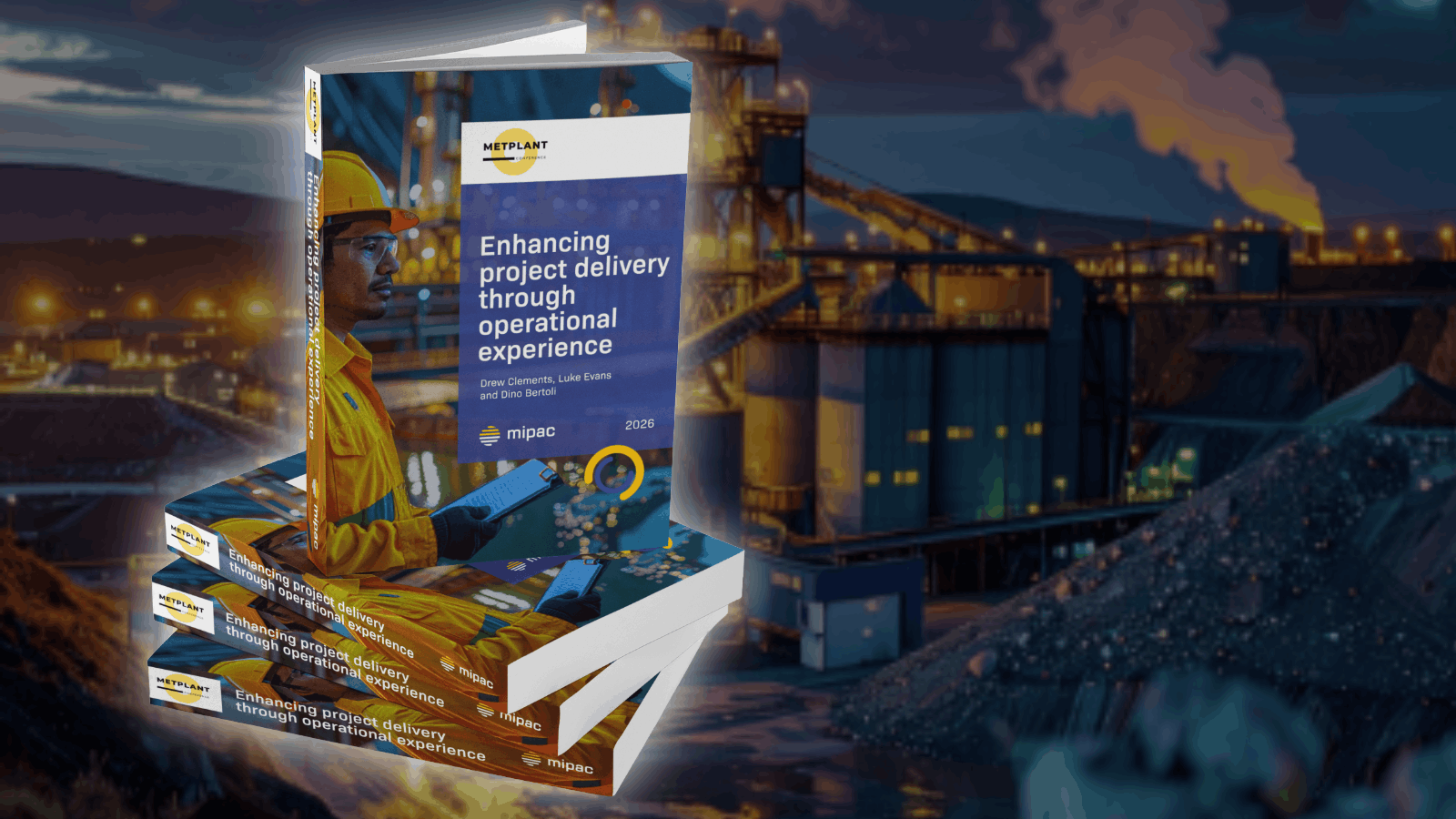
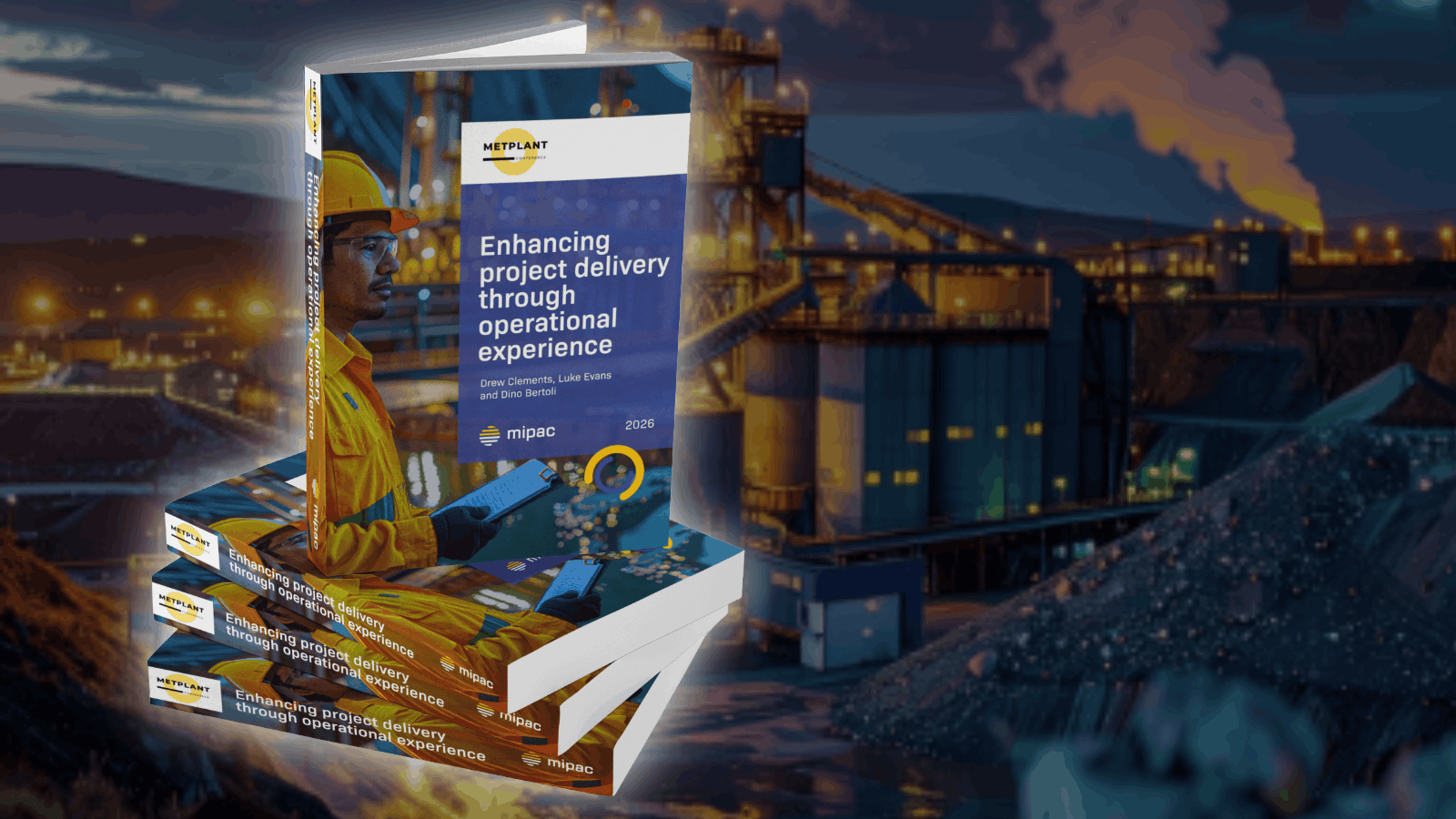
Mipac has released a technical paper and conference presentation addressing one of the most persistent and costly problems in mineral processing project delivery: the structural gap between design, commissioning and operations in the EPCM model. The paper, Enhancing Project Delivery Through Operational Experience, was presented at Metplant 2026 in Adelaide and is now freely available to download at mipac.com.au.
The paper was authored by Drew Clements (Senior Metallurgist and Optimisation Team Lead), Luke Evans (Senior Process Engineer) and Dino Bertoli (previously Senior Process Engineer) – a team spanning metallurgy, process engineering, industrial automation and hands-on plant operations. It draws on direct experience across feasibility, FEED, commissioning and operational phases across multiple commodity groups.
The core argument is straightforward: design influence is strongest and cheapest to act on during pre-feasibility and FEED. Yet operational stakeholders are typically not introduced until the 20%–25% engineering complete stage, by which point the cost of change has risen significantly. The result is a predictable pattern of late-stage discovery: accessibility and maintainability issues, instrumentation placement that conflicts with the control philosophy, metallurgical assumptions that don’t hold up against real ore variability, and commissioning problems that recur across project generations.
The paper is structured around six failure modes in conventional EPCM delivery: the compounding cost of late-stage discovery; the practical design changes that operational experience drives; the limits of bulk composite testwork against real ore variability; how control system design should be led by process understanding rather than technology preference; why lessons from commissioning rarely reach the next project’s design team; and the business case for cross-functional collaboration from feasibility onwards.
“Design deficiencies get repeated and addressed late during commissioning, increasing ramp-up duration and elevating CAPEX risk,” said Clements. “The knowledge to prevent this exists in the people who’ve run these plants. The challenge is building the structures and the culture, to bring it forward into design where it’s actually cheap to act on.”
The paper also addresses the role of digital tools, including Mine Information Modelling, digital twins and AI-powered analytics, in accelerating the feedback loop between operational experience and design practice. The authors argue that the barrier to applying these tools is no longer cost; it is governance and organisational culture.
The full technical paper and conference presentation are available for immediate download at mipac.com.au/whitepapers/operational-experience-project-delivery