


A haul-truck engine can be cheaper to buy and still cost more over its working life. The difference becomes clear once a mine accounts for fuel, planned servicing, major overhauls and the production lost when a truck is unavailable. For fleets operating around the clock, even a small change in engine availability can affect how much material the site moves.
That is why mining companies increasingly assess engines through total cost of ownership (TCO). A useful calculation follows the engine from purchase and commissioning to its final retirement. It combines costs that appear on an invoice with maintenance labour, spare parts, overhaul frequency, consumables and the financial effect of downtime.
These costs are interconnected. An engine that uses less fuel but requires more frequent workshop visits may give back that saving through maintenance and lost production. The buying decision therefore depends on operating hours, load profile, altitude, dust and maintenance practice at the site, as well as the initial price.
Time before overhaul shapes mining engine costs
Time before overhaul (TBO) is one of the most consequential inputs. It is the number of operating hours expected before an engine undergoes a planned major overhaul. Each event brings the direct cost of parts and labour, along with the logistics of removing and transporting the engine. If the truck is unavailable or a standby unit must take its place, the cost extends beyond the workshop.
Across a large fleet, the interval matters because every engine repeats that cycle. A longer interval may mean fewer major interventions during a truck’s planned service life and less pressure on workshop capacity. Operators still need evidence from comparable duty cycles, because maintenance quality and site conditions affect whether an engine reaches its expected interval.
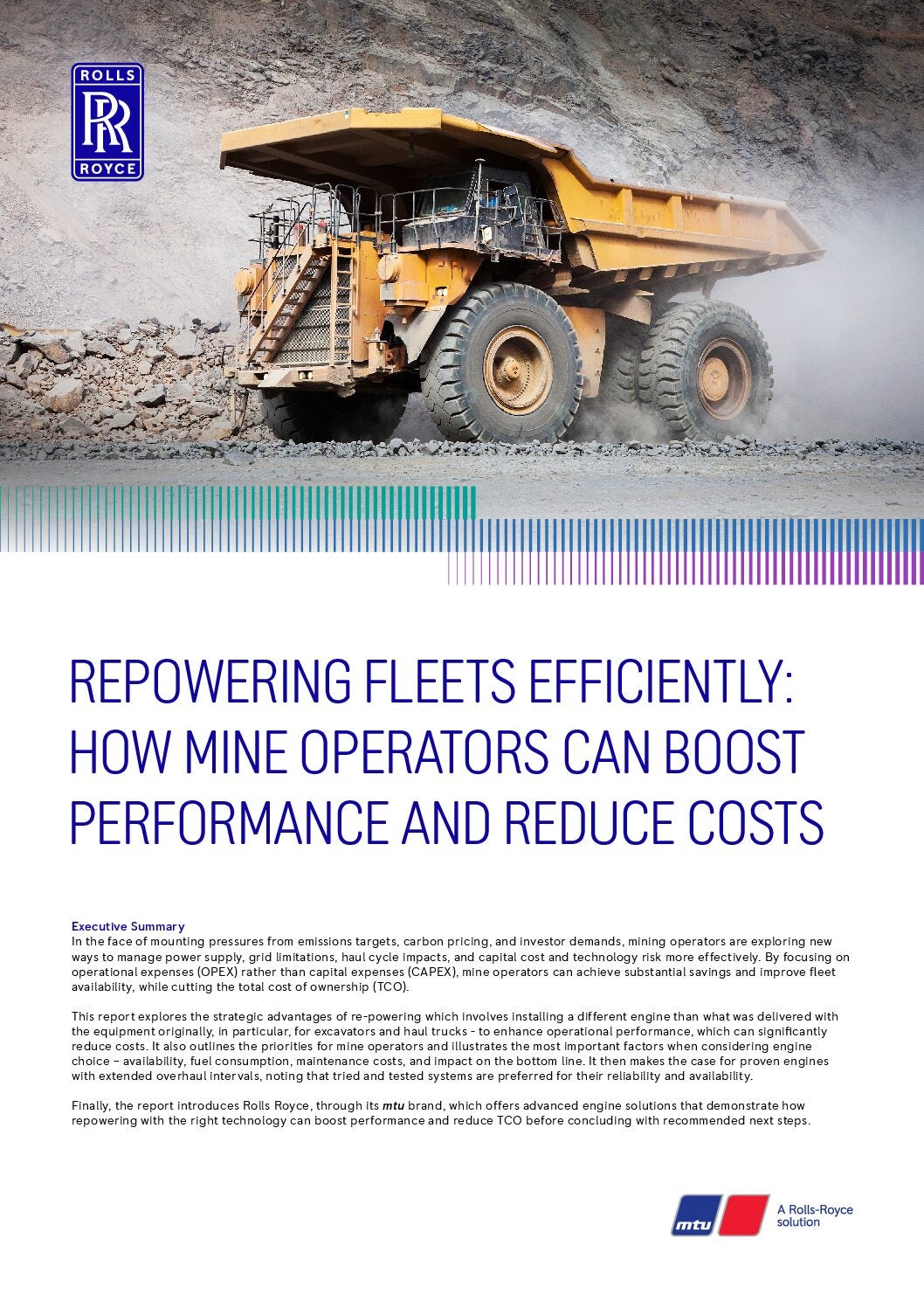
The Los Bronces copper mine in Chile provides a practical example. Since January 2018, Anglo American and its partners have repowered 30 Komatsu 930E haul trucks with mtu Series 16V 4000 C45 engines rated at 2,000 kW. Rolls-Royce reports an operating time of around 24,000 hours for each engine and more than 720,000 accumulated hours across the fleet. The first truck passed 24,000 operating hours in mid-2023 and continued to operate as expected.[1]
Aftertreatment affects haul truck operating costs
Emissions compliance can add another layer of ownership costs. Engines that rely on selective catalytic reduction (SCR) need catalysts, dosing equipment and a separate supply of diesel exhaust fluid (DEF), commonly sold as AdBlue. The mine must store and refill the fluid, maintain the hardware and manage the risk of catalyst contamination. On a large haul truck, the tank and associated equipment also occupy space and add weight.
At Los Bronces, the previous engines would have required an added SCR system to meet Tier 4 emissions limits. The 16V 4000 C45 uses common-rail injection, electronic controls, two-stage turbocharging and exhaust gas recirculation to comply without exhaust gas aftertreatment. This removes DEF refilling and the maintenance demands associated with the SCR components. Rolls-Royce says the arrangement reduces downtime and operating costs while retaining the required 2,000 kW output.[1]
Removing aftertreatment does not make emissions performance less important. Rolls-Royce reports that the repowered fleet avoided approximately 9,960 tonnes of carbon dioxide, 91 tonnes of particulate matter and more than 3,000 tonnes of nitrogen oxides between January 2018 and the publication of its 2023 case study. Those results are specific to Los Bronces and its previous engines. They show why a TCO assessment should examine emissions compliance and operating costs in the same calculation.[1]
How mines should compare engine lifetime costs
A credible TCO comparison needs a common operating horizon and assumptions that reflect the mine. It should include the quoted purchase price, expected fuel consumption, planned maintenance, overhaul costs, consumables and likely downtime. Operators can then test how the result changes with annual operating hours, fuel prices and truck availability instead of relying on one generic figure.
Downtime also deserves its own line in the model instead of being buried in maintenance. The cost of a planned overhaul can be estimated from labour, parts and replacement-engine logistics. An unplanned stoppage can be more disruptive, particularly when it changes dispatch plans or leaves supporting equipment underused. Assigning a site-specific value to an unavailable truck makes that exposure visible.
The Los Bronces case gives the discussion an operational base. Its 24,000-hour milestone, 720,000 accumulated fleet hours and removal of the SCR and DEF system connect the engine choice to work performed at the mine. For the mtu Series 4000, the case for lower lifetime cost rests on longer operation between major interventions, fewer aftertreatment components and reduced fuel use. Mine operators should test each of those benefits against their own duty cycle, fleet data and service plan before procurement.[1][2]
Sources
- Rolls-Royce Power Systems, Cleaner operations without compromising performance, Anglo American uses mtu engines as a more sustainable option for Chilean mining, Los Bronces success story, 2023
- Rolls-Royce Power Systems, Powerful Engines for Mining Trucks, accessed 10 September 2026.
