

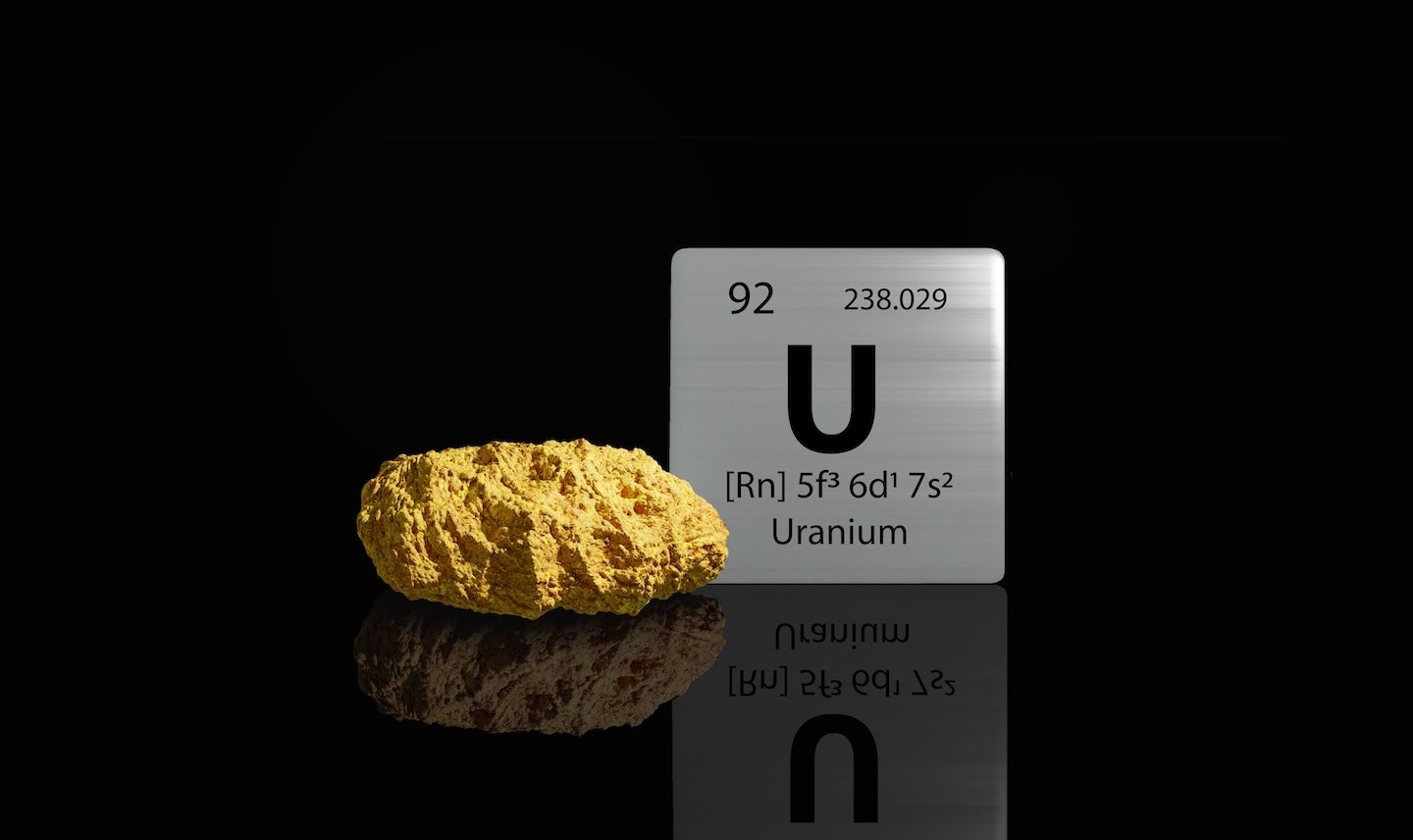
Global uranium production is estimated to have increased by 6.1% in 2025, with growth led primarily by Kazakhstan, followed by the US, Canada, Namibia and Uzbekistan. Rising climate-policy focus and the need for low-carbon power generation continued to support renewed interest in nuclear energy, reinforcing the demand backdrop for primary uranium supply.

Kazakhstan’s 2025 uplift largely reflects higher Kazatomprom production alongside the ramp-up at the JV Budenovskoye. Kazakhstan remained the world’s largest uranium producer in 2025, accounting for 39% of global supply. In the US, uranium production is estimated to have risen from 326.1 tonnes in 2024 to 1,316.4 tonnes in 2025, supported by the Pinyon Plain (Arizona) ramp-up following first production in 2024. Output benefited from higher mined volumes, supported by very high grades, with mill processing beginning in Q4 2025. Production was further supported by accelerated wellfield development and the addition of a second ion exchange at the Alta Mesa mine.

Access deeper industry intelligence

Experience unmatched clarity with a single platform that combines unique data, AI, and human expertise.

Find out more

In November 2025, the US Department of Energy (DOE) added uranium to the Critical Minerals list, re-designating uranium as a critical mineral at a time when the US is importing over 95% of its uranium—much of it from foreign adversaries—while maintaining limited domestic processing capacity. The US has one commercial uranium enrichment facility and one domestic uranium conversion facility, and uranium’s inclusion on the 2025 Critical Minerals list is likely to improve its strategic standing for policy support, similar to copper.

Canada’s uranium output in 2025 is estimated to have increased by 4.8%, reflecting the commencement of the McClean Lake project in June 2025 and continued strong performance at Cigar Lake. The overall uplift was partly moderated by weaker-than-expected contributions from McArthur River and Key Lake, where production was impacted by operational and development constraints, including schedule slippage, slower ground freezing progress, shortages of skilled labour, and delays in commissioning new equipment.

Namibia’s uranium production is estimated to have risen by a significant 9.4% in 2025, driven primarily by the restart of the Langer Heinrich mine. Looking ahead, global uranium production in 2026 is expected to increase by 10.1% over 2025. Growth is expected to be led by Kazakhstan and the US, followed by Canada, Niger, Namibia and Australia, with combined production from these countries forecast to increase by 11.3% in 2026 over 2025. Kazakhstan’s growth is expected to be driven by the continued ramp-up at the JV Budenovskoye mine.

For the US, 2026 output is expected to rise further as ramp-up continues, with Pinyon Plain targeting more than 760 tonnes of uranium (2.0 million lb U₃O₈). Additional support is expected from the commencement of the Burke Hollow, Shirley Basin and Velvet Wood projects, which are expected to add more than 450 tonnes of uranium in 2026. Meanwhile, Canada’s production is forecast to rise further by 4.0%, led by the ramp-up of McClean Lake. Incremental growth is also expected from Cigar Lake, McArthur River and Key Lake, although increases are likely to be more modest, reflecting the gradual pace of operational normalisation.
Namibia’s production is expected to be supported by continued ramp-up at Langer Heinrich alongside stable output from Husab. Australia’s production is expected to be supported by improving operating performance at both Honeymoon and Olympic Dam.

Over the forecast period (2026-2035), global uranium production is expected to grow at an 5.8% compound annual growth rate (CAGR). A broad pipeline of uranium projects is under development or expansion globally, particularly across Canada, Australia, the US, Namibia, Uzbekistan and Niger. Key upcoming projects include Olympic Dam Expansion, Rook I, Inkai 3, Patterson Lake South, Etango Project, Wheeler River, Grants Precision ISR and Midwest.
