
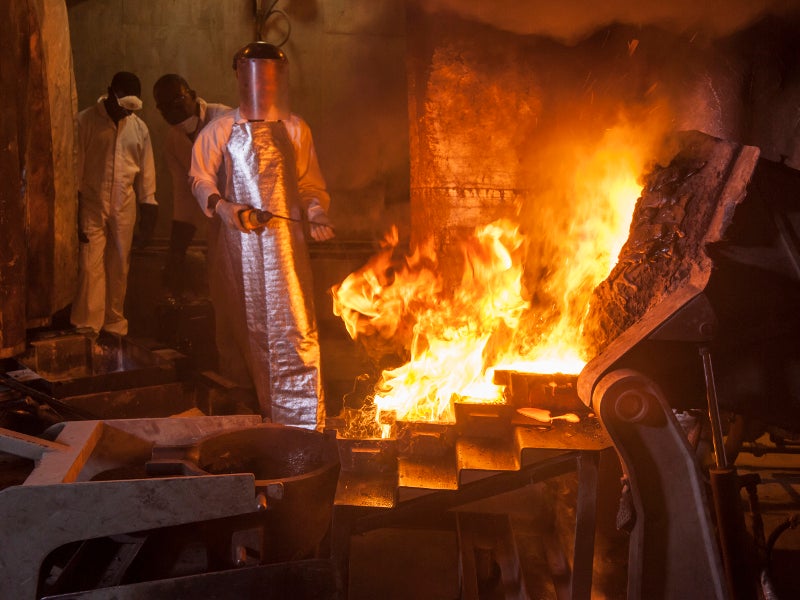
The Kibali gold mine is situated 560km north-east of Kisangani in the Orientale province, Democratic Republic of Congo (DRC). Developed in an area of 1,836km² on the Moto goldfields, the site is one of the largest gold mines in Africa.
The open pit and underground integrated mining at Kibali was commissioned in September 2013 and the mine has a life of 18 years.
Recommended White Papers

Recommended Buyers Guides

The project is owned by Kibali Goldmines, a joint venture (JV) of Barrick Gold Corporation (45%), AngloGold Ashanti (45%) and Société Miniére de Kilo-Moto (SOK IMO) (10%). Project operator Barrick gained ownership of the mine through the acquisition of Randgold Resources in January 2019.
Production at the mine commenced in September 2013 and the mine produced 814,027oz of gold in 2019. The development cost of the mine was approximately $1.7bn.
It is expected to produce 600,000oz of gold per annum for the first 12 years.
Geology and mineralisation of Kibali
The Kibali gold mine is located within the Moto greenstone belt. The belt contains Archean Kibalian volcano-sedimentary rocks and ironstone-chert horizons.
The volcano-sedimentary sequence comprises sedimentary rocks, a variety of pyroclastic rocks, basaltic flow rocks, mafic-intermediate intrusions and intermediate-felsic intrusive rocks.
The goldfields at Kibali are characterised by north-east and north-west trending faults. The gold mineralisation is scattered throughout the region.
It is mainly found in volcaniclastics, coarse volcaniclastics, sedimentary rocks and banded ferruginous cherts.
The mineralisation is believed to have occurred structurally through quartz-carbonate alteration and pyrite.
It is broadly divided into two zones. One part lies in the Kibali-Durba-Karagba, which trends north-east, and the second part lies in the north-west trending Pakaka-Mengu area.
The mine property encompasses ten exploitation permits consisting of several deposits, namely the Karagba-Chauffeur-Durba (KCD), Sessenge, Sessenge SW, Pakaka, Pamao, Gorumbwa, Mengu Hill, Mengu Village, Megi, Marakeke, and Kombokolo.
Kibali gold mine reserves
The Kibali gold mine has proven and probable reserves of approximately 8.3Moz of gold as of December 2018. The combined measured and indicated gold resources have been estimated at 13Moz, along with 4.2Moz of inferred resources.
Mining and infrastructure at Kibali
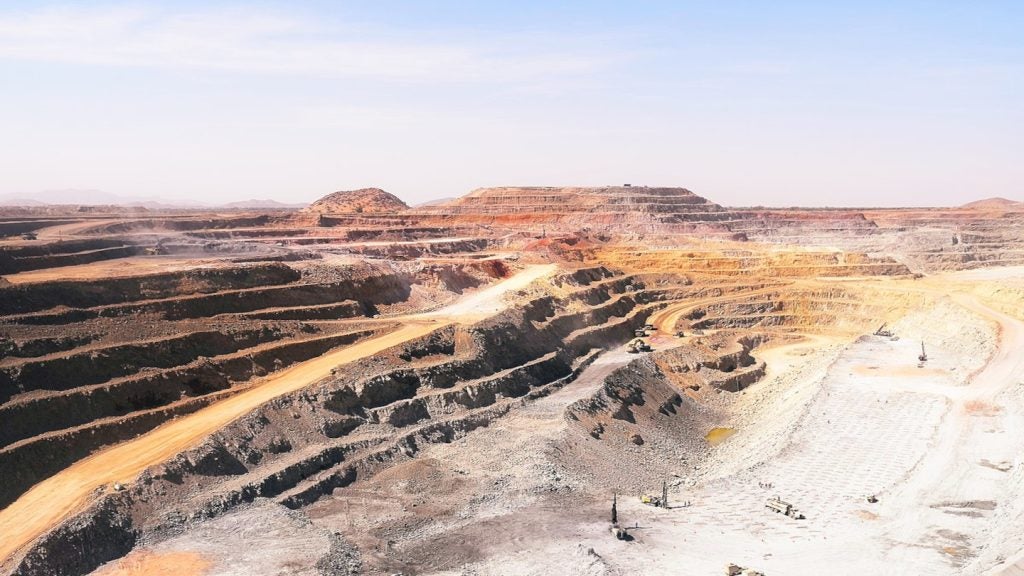
Conventional open-pit mining using the drill-blast-haul method is carried out at the KCD pushback 3, Kombokolo and Sessenge operational pits.
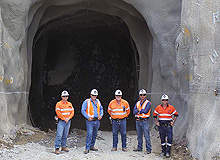
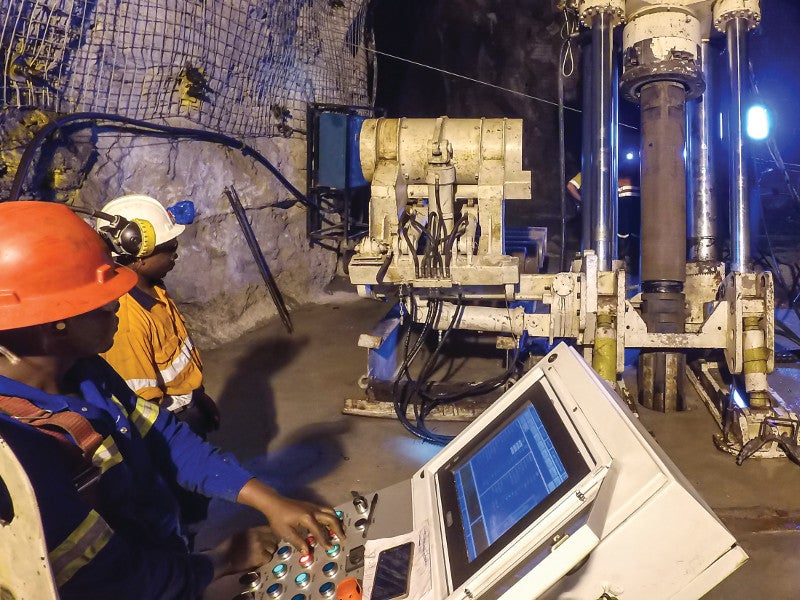
The underground mine development took place by constructing a tunnel using the box cut method while creating a terrace for the processing plant. Long-hole stoping with a cemented paste backfilling method is used to mine the KCD underground.
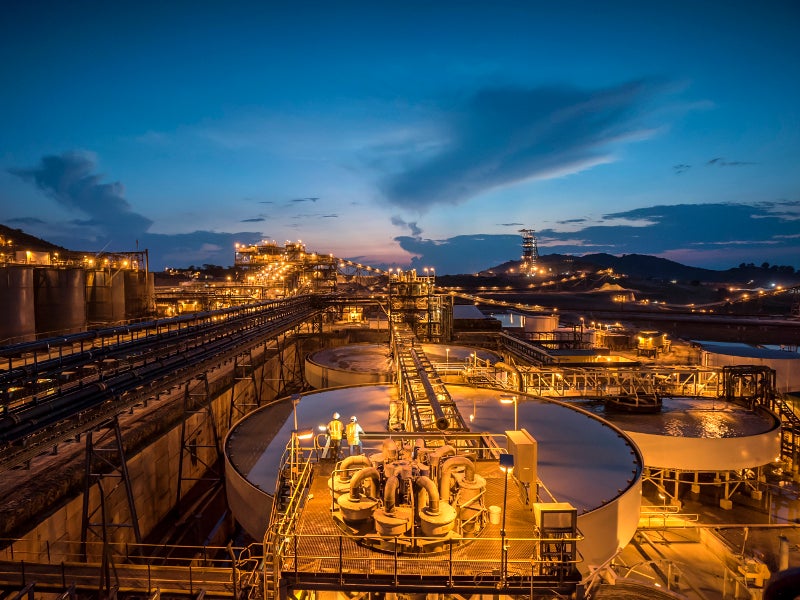
The integrated mine comprises of a twin-circuit sulphide and oxide plant with a combined capacity of 7.2 million tonnes per annum (Mtpa), three 44MW hydropower stations and a 32MW of standby high-speed thermal power generator as a backup to be used during the dry season.
The mine’s average gold recovery rate is 88%. It produced 807,000oz of gold from 32Mt of ore graded at 3.45 grams per tonne (g/t) in 2018.
Development of Kibali gold mine
The Kibali gold project was developed in two overlapping phases.
Phase one of the project was carried out from Q1 2012 to Q4 2013.
It included the construction of open-pit operations, metallurgical plant, separate tailings storage facilities (TSF) for cyanide and flotation tailings, hydropower stations, back-up power plant, and all other associated infrastructure.
Work on the open-pit mine development at Kibali began at the end of the second quarter of 2012. The underground mine was developed as part of the second phase and production commenced in September 2013.
The mine started receiving power from the Azambi hydropower plant in 2018, while the cyanide tailings storage facility was also completed in the same year.
Construction and infrastructure facilities at Kibali mine
Construction works on the Kibali gold project began in April 2012. Approximately 200,000m³ of land was shifted for the foundation of metallurgical plant and 800,000m³ for the bulk earthworks. The underground mine was developed through a twin-decline system.
The manufacturing of the mills and hydro turbines, construction of the ROM pad, a platform for the vertical shaft and the mine assay laboratory works were completed in 2012.
Development of a 751m vertical production shaft for ramping underground mine production was completed in December 2017.
Contractors involved with the Kibali mine
Kibali Mining Services, a local subsidiary of DTP Terrassement, was contracted for the open-pit mining operations.
The underground mine development and construction contract was awarded to Barrick (formerly Randgold). Byrnecut was contracted for the underground development, production, and equipment operations and maintenance until July 2018.
Systech International acted as the advisor on the contractual issues associated with the construction of the mine.