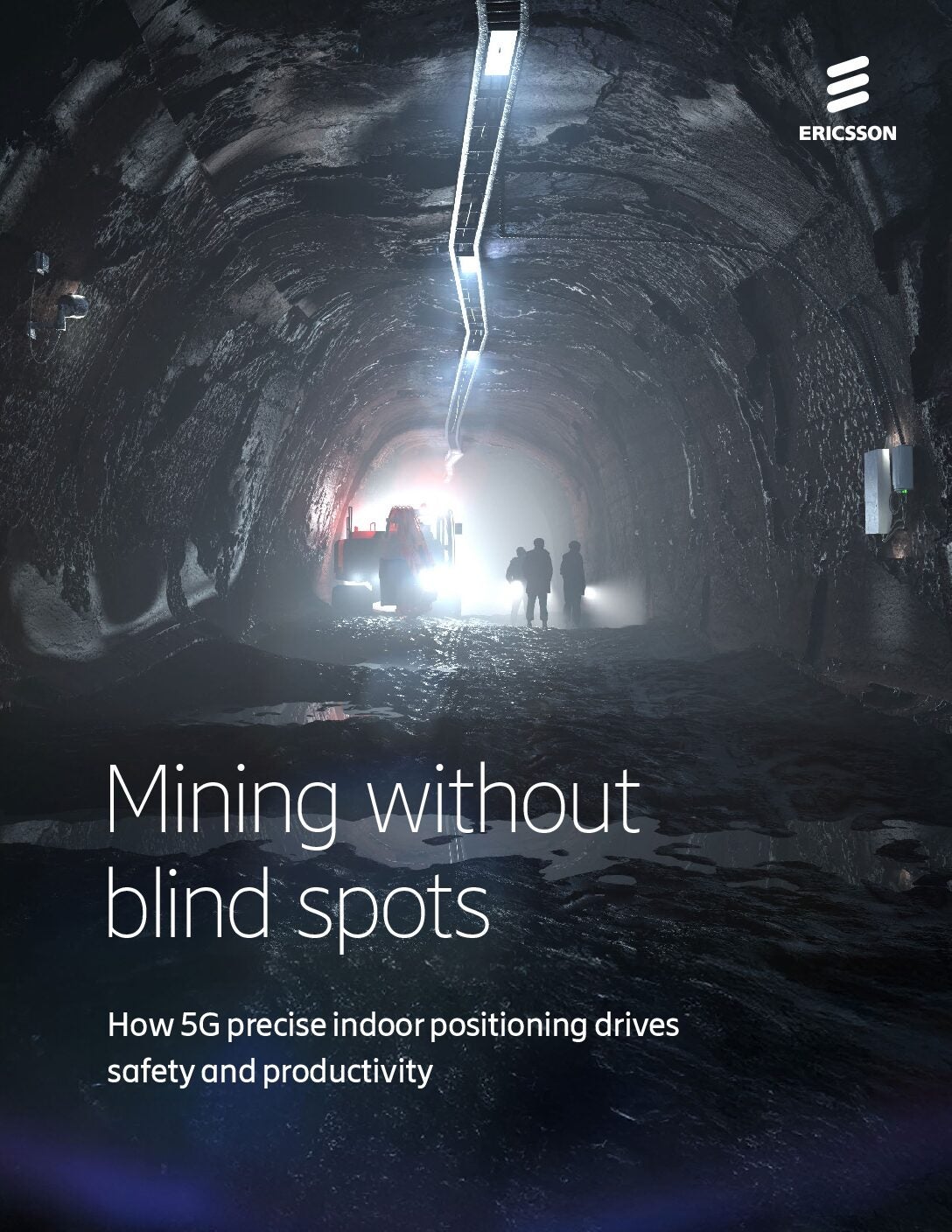


The global mining industry faces mounting pressures: volatile commodity prices, shorter production cycles, stringent safety regulations, and escalating environmental expectations. In response, mining companies are investing heavily in digitalization, including autonomous equipment, Industrial IoT sensors, advanced analytics, and artificial intelligence.
Yet many operations still struggle to unlock the full value from these technologies. Modern mines generate continuous data streams—from air quality and equipment health to ore grade and structural stability—all of which require continuous, highbandwidth, low-latency, and highly reliable connectivity. Traditional mining communications—VHF/UHF radio systems, scattered Wi-Fi hotspots, and isolated monitoring platforms—simply cannot meet these demands.
Without robust connectivity, digitalization efforts deteriorate. Personnel tracking loses visibility in dead zones. Environmental sensors cannot transmit real-time data. Equipment monitoring fails. Production optimization stalls. Safety systems cannot protect all personnel. Autonomous equipment cannot maintain the continuous communication that safe operation require.
Becker-Lasec and Ericsson: a strategic partnership for the digital mine
Together, Ericsson and Becker-Lasec combine industrial-grade 5G connectivity with mining-specific digital tools, giving operators a single, scalable path to safer, smarter, and more productive mines.
With 35+ years of global underground expertise, LASEC, a division of Becker Mining Systems, is solving underground mining connectivity challenges in three-quarters of the world’s major mining countries. Its Smartflow platform delivers a flexible, purpose-built digitalization framework engineered specifically for mining operations.
Ericsson delivers the business-critical network foundation. Ericsson Private 5G is built on 3GPP standards, ensuring reliability, interoperability, and the performance modern mining applications require. The result is a unified, end-to-end solution that eliminates the need to stitch together disparate vendor components independently.
Why legacy systems fall short in smart mining
Many mines today rely on a communication infrastructure layered together over decades: VHF/UHF radio for voice, Wi-Fi added for data, and independent monitoring platforms. These systems were never designed for real-time operations, mobile equipment, or autonomous workflows.
Without complete connectivity, mines operate with partial awareness. Personnel tracking works in some zones but not others. Environmental sensors report data inconsistently. Mandown detection only functions where connectivity exists. And in underground environments stretching 30 to 600 kilometers of tunnels, these limitations grow exponentially.
Industrial Ethernet can’t support mobility, a critical limitation in mines where production zones constantly shift. As conditions change, re-cabling is costly, slow, and often impossible. Wi-Fi also falls short at scale, where metal structures, heavy machinery, and interference degrade performance. Access-point handovers cause momentary drops that stop autonomous systems in their tracks. When remote or autonomous machines lose connectivity, they must reboot, stalling production and cutting into revenue.
LASEC Smartflow: The digital brain of the mine
Connectivity is the foundation—but software turns data into decisions. Smartflow brings all data into a single platform, eliminating data silos and allowing mines to scale digitalization at their own pace. Smartflow provides 3D digital twin visualization where supervisors see equipment moving through tunnels, personnel location and status, environmental conditions, and production activity simultaneously. Simulation capabilities enable testing operational changes before implementation.
Real-time personnel tracking, man-down detection, collision avoidance systems, and intelligent evacuation guidance keep workers safe. During emergencies, the platform identifies personnel in affected areas and guides them through available routes while providing response teams with situational awareness. Applications coordinate material movement throughout the operation, tracking ore from extraction through processing while optimizing routes and ensuring consistent material flows. Equipment dispatch assigns vehicles dynamically based on real-time conditions.
Smartflow monitors air quality, gas concentrations, temperature, humidity, and airflow. Ventilation-on-demand systems adjust airflow based on actual needs, reducing energy consumption while maintaining safe conditions. Equipment telemetry tracks operating hours, consumption, and performance. Predictive analytics identify equipment likely to fail before breakdowns occur, reducing unplanned downtime. Natural language interfaces enable conversational queries. Computer vision digitalizes visual processes like blast-hole counting. Predictive analytics inform decisions
Open pit operations, fully connected
A major gold mining operation in Latin America implemented Private 4G/5G infrastructure across extensive surface operations. The deployment enabled remote drilling teleoperation from climatecontrolled facilities, real-time fleet tracking and dispatch, meteorological monitoring, and water management systems.
The connectivity infrastructure eliminated equipment coordination limitations and enabled data-driven optimization. Drilling operations continued during conditions that previously required shutdowns. The operation is now advancing to autonomous equipment deployment and migrating legacy VHF communications to LTE-based systems.
Connecting the entire mine, surface to underground
A large underground mining complex in Latin America implemented full connectivity throughout tunnel networks using combined Private 4G/5G and leaky feeder systems, achieving complete coverage. The deployment enabled personnel safety systems with real-time location tracking and man-down detection, environmental monitoring throughout the operation and production optimization.
Incident detection moved from manual reporting with delays to automated detection with immediate response. Personnel accountability shifted from periodic check-ins to continuous awareness. Environmental monitoring expanded from spot checks to continuous coverage. The operation is now implementing advanced energy monitoring, expanded automation, and AI-powered analytics.
Before breaking ground
Before deployment, teams assess physical infrastructure, connectivity gaps, workflows, and safety requirements to ensure the design matches operational needs. Smartflow connects to existing enterprise platforms through established interfaces, so operations don’t have to abandon current systems. Training programs and internal champions help ensure implementations align with how teams already work.
Private 5G networks provide security through SIM-based authentication, encryption, and dedicated infrastructure. Smartflow maintains audit trails and access controls for critical infrastructure.
For underground operations beyond approximately 20 kilometers, Private 5G becomes cost-effective compared to traditional alternatives. Benefits extend beyond infrastructure costs: real-time visibility reduces production bottlenecks, predictive maintenance prevents costly downtime, energy optimization reduces operational expenses, and safety improvements affect liability and insurance costs.
Moving forward
Mining operations worldwide are implementing connectivity and digitalization solutions. The connectivity infrastructure deployed today determines what becomes achievable tomorrow. LASEC and Ericsson deliver integrated Private 5G and Smartflow solutions where connectivity and mining-specific digitalization function as unified systems—enabling operations to implement current capabilities while preparing infrastructure for autonomous operations, electromobility, advanced AI applications, digital twin integration, and sustainable operations.