
The International Seabed Authority (ISA) has taken another step forward in drafting new regulations to govern the activities of mining companies in international waters, according to Hannah Lily, a lawyer working with the PEW Charitable Trusts, at the Deep Sea Mining Summit in London today.
PEW lawyers have been working with the ISA on legislation impacting deep sea resource exploitation, in an effort to fill what Lily called a number of “gaps” in existing laws.
Go deeper with GlobalData


Discover B2B Marketing That Performs
Combine business intelligence and editorial excellence to reach engaged professionals across 36 leading media platforms.
Currently, the ISA can only offer recommendations to companies based on the results of environmental impact assessments (EIAs), and these suggestions are organised by the ISA’s Legal and Technical Commission (LTC), a body without executive decision-making powers.
These EIAs are also subject to little ISA oversight, as the authority lacks an inspectorate. Contractors therefore have considerable freedom to conduct assessments as they see fit.
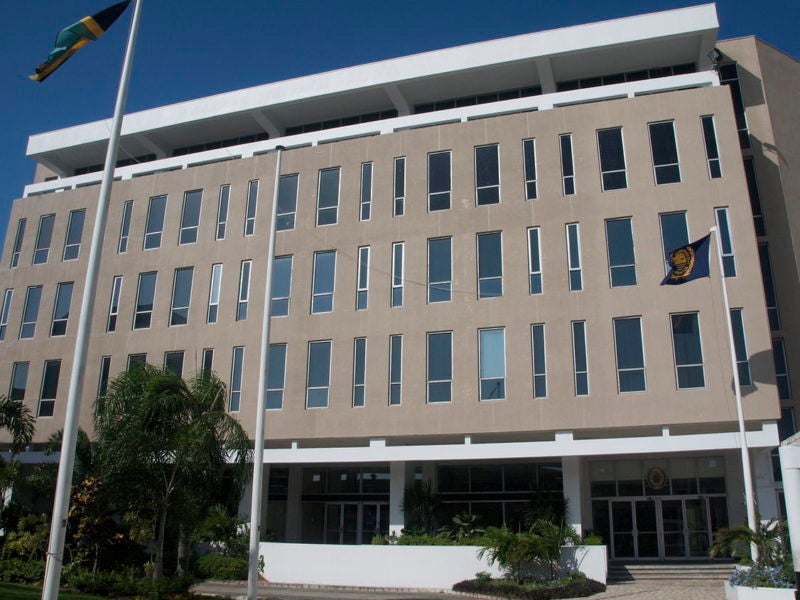
These rules have been perceived as too lax to be effective, and the ISA has been updating its regulations since March 2014. It published a fifth draft of the new legislation following the first half of its 25th session in Kingston, Jamaica last month.
The latest draft will add an additional scoping stage to the environmental assessment process, provide financial incentives for companies, which minimise the environmental impact of their operations and establish a framework for future ISA intervention, by introducing environmental monitoring plans to EIA applications and standardising the format of future EIA reports and statements.
Lily noted that these forward-looking plans contain an element of flexibility that could be beneficial as understanding of both deep sea minerals and complexity of mining processes grow.
“The ISA has said that the regulations will be supported by other instruments, that will be termed either ‘standards’, which will be mandatory, or ‘guidelines’, which will be discretionary,” Lily said.
“I think this is a great idea; you don’t want a very bulky, difficult-to-navigate set of regulations, and once the regulations have been adopted by the ISA council, it’s going to be very hard to change them. It’s a very time-consuming bureaucratic process.”
The rules will also adhere to several concepts set out by the UN Convention on the Law of the Sea, which governs the ISA. These include the “polluter pays” principle and a “precautionary approach” with regards to potential mining projects where the environmental impacts are not fully understood.
The drafting process has involved parties including stakeholders and the ISA council, which has the decision-making powers the LTC lacks, as the ISA strives for a more inclusive and transparent set of regulations.
However, while the new regulations are a step in the right direction, they are not perfect. The rules still do not mandate that scientific advice is considered with regards to EIAs, and much of the new legislation is defined as “guidelines”, which are non-enforceable and part of a wider issue that many of the regulations are vague or unclear.
The ISA will meet next month in Pretoria, South Africa, to discuss the new regulations further, and will hold the second part of its 25th session in July, ahead of a proposed rolling out of the new regulations in 2020.


