

According to GlobalData, the deployment of autonomous haul trucks is accelerating globally. The number of trucks in operation increased by 84% between July 2024 and July 2025, with several operators now managing fleets that run into the hundreds.
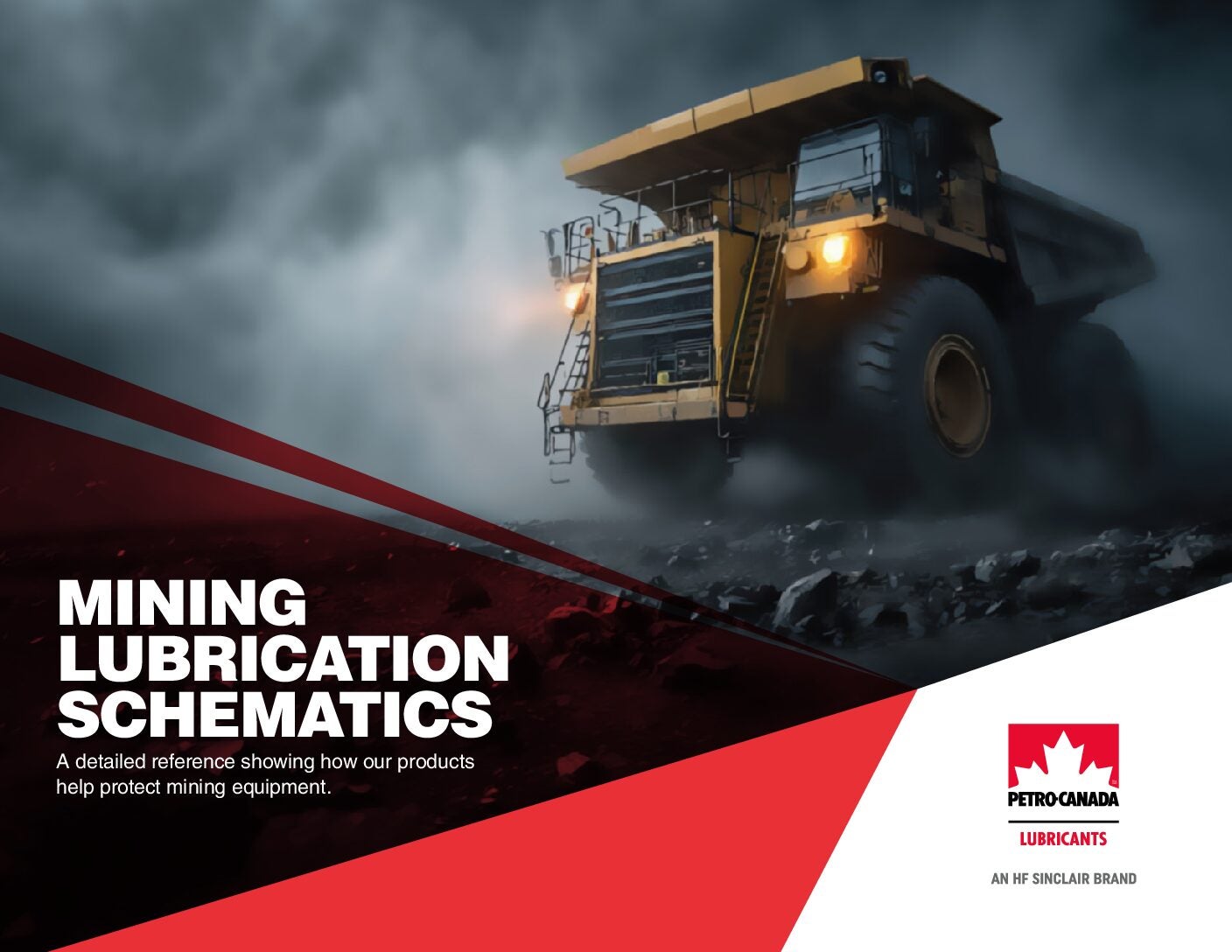
This growth indicates autonomous haulage is now being used in day-to-day operations in many mines, rather than remaining limited to small trials, with the largest fleets reaching several hundred trucks at a single operator and even at a single site.
Reducing risk while improving operational efficiency
Mining operations require careful coordination across large, complex and equipment-intensive sites. Autonomous systems can support this by helping create safer working conditions, improving visibility over equipment movement and enabling more consistent operating practices across the mine site.
“Overall, autonomous mining equipment can lead to substantial improvements in worker safety,” says Andrew Peterson, senior sales manager at Petro-Canada Lubricants. “Safety improves primarily because people are physically removed from danger zones. But there is also the benefit of removing human error from the equation.”
Safety may be the headline, but productivity is driving deployment. Autonomous systems can reduce delays associated with shift changes and breaks, and improve consistency in speed control, routing and payload management. In many operations, that translates into higher utilisation, which is critical in capital-intensive, high-throughput mines.
“Autonomous operations have a significant productivity uptake,” Peterson says. “By reducing some of the delays associated with shift changes, equipment may be able to operate for longer periods, while autonomous systems can also help improve operational efficiency.”
Real-time monitoring needs real-world context
Autonomous fleets generate continuous streams of machine-health and operating data. Compared with traditional spot check inspection models, artificial intelligence (AI)-enabled monitoring can identify subtle patterns and intervene earlier.
But AI is only as effective as its baselines and calibration. If sensors are tuned to idealized assumptions, they can trigger false alarms or miss real issues. Peterson points to an example relevant to lubrication strategy: “Lubricant consolidation can mean a slightly different grade of product is being used other than what is specified by the OEM. It is important that monitoring sensors be set up to accommodate ‘normal’ operations under these different parameters.”
In other words, autonomy doesn’t eliminate the need for engineering judgment. It raises the importance of defining what normal looks like for each site’s duty cycle, climate, haul road condition, payload profile, and lubricant approach.
Keeping autonomous fleets reliable starts with lubrication
Autonomous equipment often runs longer and more consistently than manned fleets. That is a major advantage, but it also changes maintenance economics and reduces safety risks. Higher utilisation compresses service windows and magnifies the consequences of failure, making reliability not only an operational priority but also a safety and continuity requirement.
“Equipment reliability plays a significant role in operational safety,” says Peterson. “The longer the time between service intervals the lower risk of injuries related to maintenance operations.”
This is where lubrication becomes more important in an always-on haulage environment. Lubricants may be a small cost relative to the machines they protect, but in autonomous mining they are a critical enabler of uptime. Durability, oxidation stability, low-temperature pumpability, wear protection and shear stability all influence whether fleets can safely extend service intervals without compromising component life.
Autonomy also changes the duty cycle of equipment. Without operator lunch breaks or shift transitions, there is less natural downtime for cooling and inspection, and machines may run at a more consistent, high-utilisation pace. “When there is no shift change or lunch break downtime the equipment duty cycles for the same operating hours change significantly,” Peterson explains.
Advanced formulations are therefore becoming more important. By maintaining viscosity control, film strength and cleanliness for longer under sustained heat and load, lubricants can help support the reliability standards that autonomous mining depends on.
They also play an important role in predictive maintenance. In autonomous mines, predictive maintenance is only as good as the inputs it is built on. Lubricant performance directly affects those inputs, with degradation products, viscosity change, contamination tolerance and additive depletion all influencing component health signals and failure risk.
“Longer running hours at elevated stress means it’s more challenging for the lubricant to reach the next change out,” Peterson says. The response is “advanced lubricants with modified formulations to elongate capabilities”, enabled by higher-performance base oils and additive systems.
This creates an economic balancing act for mine operators. Premium lubricants may cost more upfront, but they can support “drain extensions and reliability monitoring” to keep operating costs competitive, Peterson notes, especially when the alternative is unplanned downtime or major component repair.
Mines also need lubricant versatility across weather extremes. In many regions, autonomous fleets operate through large seasonal swings. Peterson highlights the importance of “all season” products and being “very deliberate in prioritising the characteristics we need during development”, so lubrication does not become the limiting factor between preventive maintenance events.
Supplier support: Enabling consistency and longer intervals
As mining operations automate, lubricant suppliers are increasingly expected to provide more than a product. They must help deliver a reliability framework suited to high utilization, long service intervals and remote operating constraints.
In practice, that means pairing advanced lubrication solutions with the operational support needed to keep highly automated fleets running consistently. Petro-Canada Lubricants is supporting operators with advanced lubrication solutions designed to help deliver that consistency in always-on, highly automated mining environments.
Looking ahead, continuous autonomous operations will rely more on in-line oil sensing. “Development of in-line full analysis and rugged oil sensor capabilities… will make the operations truly continuous,” Peterson says, especially when paired with more stable next-generation fluids that reduce the risk of unexpected degradation between sampling events.
