

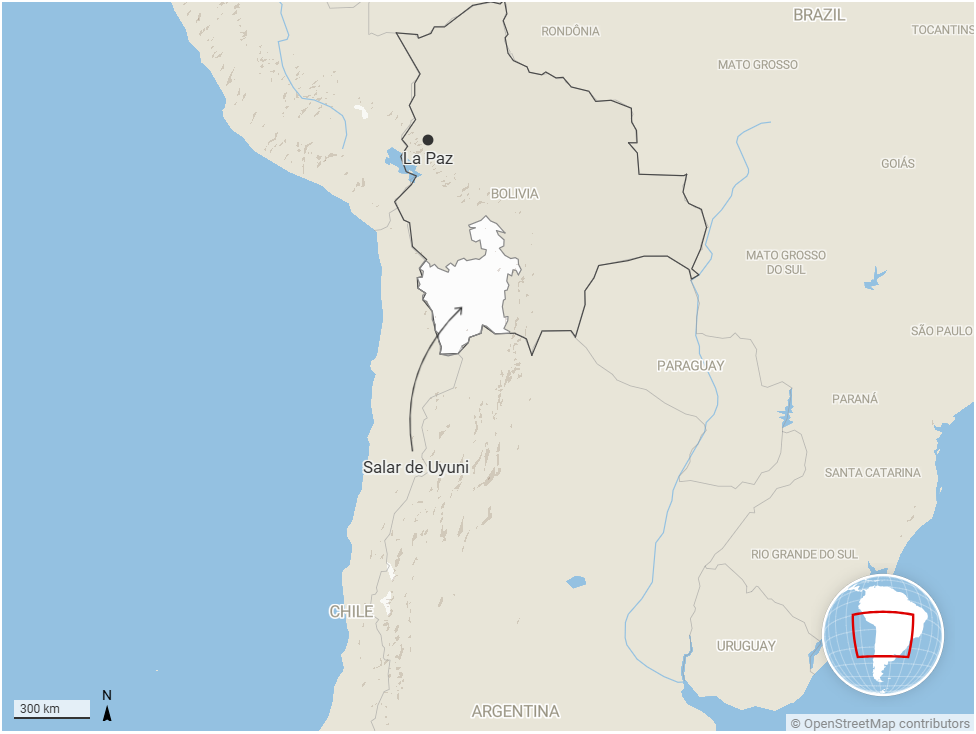
The blindingly white salt flats of the Salar de Uyuni stretch across thousands of square kilometres in south-western Bolivia. On any given day, the Salar teems with hundreds of tourist excursion jeeps, harvester machines and specialist pumps for deep extraction of the vast lithium reserves hidden beneath the 8m-thick crust of the world’s largest salt flats.


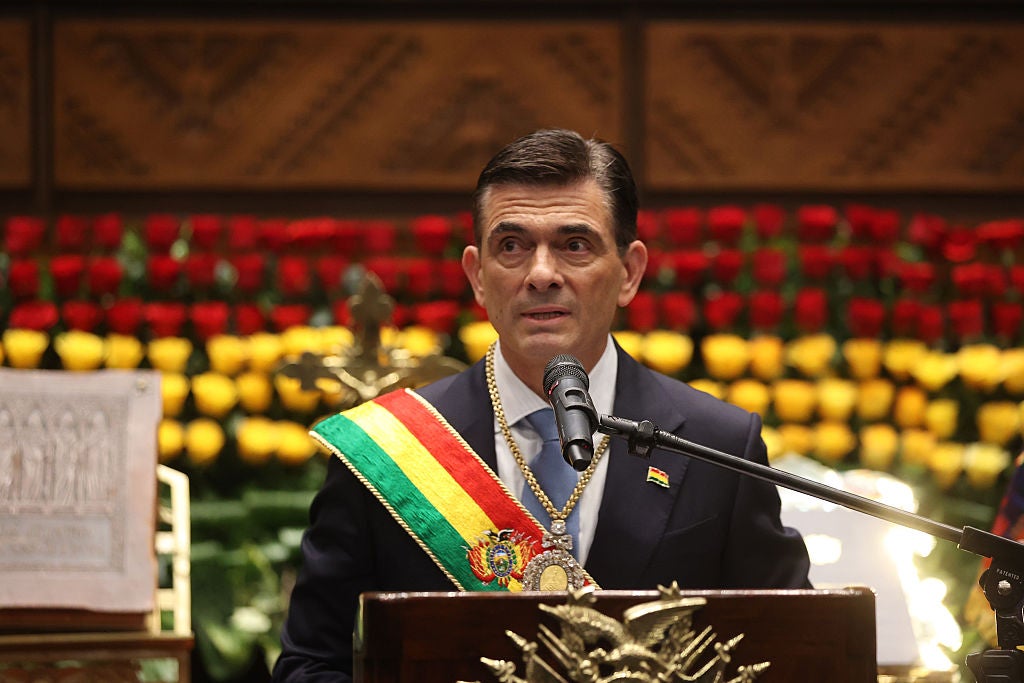
In the Salar, Bolivia holds the keys to vast reserves of lithium – a critical mineral in seemingly limitless demand by the international community for electric vehicles, batteries, phones and more. The salt flats may be the solution to maximising investor interest in the Bolivian economy both domestically and overseas, according to Bolivia’s new president, Rodrigo Paz.
Paz took office last November off the back of a campaign promising private sector-led growth, a decentralised government and foreign direct investment (FDI). For Bolivians and the international lithium mining industry alike, there is cautious optimism that this is not just another false start after 20 years of tail-spinning economics under successive governments from the Movimiento al Socialismo (MAS) party.
Bolivian citizens have borne the brunt, with inflation climbing above 20% in 2025, its highest level in nearly 40 years, with widespread food and fuel shortages exacerbated by political power plays and protest blockades.
Naturally, tapping into Bolivian lithium to alleviate the economy is divisive, with concerns over corruption, cultural appropriation and profits never reaching local hands. In part to avoid alienating supporters of the MAS party and its founder, Evo Morales, Paz has vowed not to “sell out” the Salar de Uyuni, a nationally cherished symbol of Bolivia’s sovereignty and indigenous traditions.
Resource nationalism and protectionist attitudes in Bolivia extend far beyond the economic value of its lithium deposits.
Protection of the Salar is enshrined in the Bolivian constitution, which includes a law dictating that only the state can extract lithium. Changing this would require a referendum or constitutional reform, which Paz is yet to address.
Such reform is “on the cards but will take time”, according to Federico Gaston Gay, principal lithium analyst at Benchmark Mineral Intelligence.
“I truly doubt he [President Paz] will have the political power to do it in a short period of time,” Gay tells Mining Technology. “I think rather than changing the law, there might be a short-term programme with some exceptions that would allow them to bypass this, at least for some time. It might happen later this year.”
The state of play
Legal complications are not the only roadblock preventing the emergence of a fully fledged Bolivian lithium industry. Infrastructure remains largely undeveloped, despite the South American nation holding 23 million tonnes of the lightweight metal – double the resources of neighbouring Chile.
Argentina and Chile make up the other two-thirds of the so-called ‘Lithium Triangle’, but Bolivia is the only nation still not deemed commercially viable by the US Geological Survey.
Neither geography nor geology are on Bolivia’s side. The nearest port to the landlocked Salar is more than 400km away in Chile, while high levels of magnesium in its lithium deposits result in increased production costs.
Previous MAS administrations repeatedly attempted to extract lithium at scale through Corporación Minera de Bolivia, a state mining company, and Yacimientos de Litios Bolivianos (YLB), a state lithium company.
So far, Paz’s government has “categorically denied that it intends to privatise YLB”, according to Luis Losada, head of Latin America at Aperio Intelligence.
“This is despite recognising that they are experiencing financial difficulties over mounting debts, while indicating that it would favour private-public partnerships for the development of energy and mining projects,” Losada tells Mining Technology.
Under former President Luis Arce, the government bet on new direct-extraction techniques to avoid purity issues and shorten production cycles.
In 2024, YLB signed up a unit of China’s battery manufacturing giant Contemporary Amperex Technology, and Russia’s state-owned mining company Uranium One to develop projects using this method. Neither project is close to commercial production and both face congressional scrutiny, however, as Paz’s administration is reportedly reviewing Bolivia’s array of opaque lithium contracts with Chinese and Russian companies.
The new Bolivian Government seems to be looking to balance these deals with financing from US operators. Bolivian Foreign Minister Fernando Aramayo said as much during a trip to Washington last month, where he also discussed the possibility of a currency swap not dissimilar to the one the US extended to Argentina, the Wall Street Journal reported.
“There is appetite for investing in Bolivia”, according to Gay, “but companies might need some assurances, maybe something along the lines of Argentina’s Regime d’Incentivo a las Grandes Inversiones (RIGI) [investment scheme] that would take away some of the risk uncertainty.”
Implemented in 2024, Argentina’s RIGI offers a range of incentives and legal protections for companies to encourage major investments.
“It is still early, but I know there are some direct lithium extraction companies interested in testing Uyuni’s and the other Salars’ bribes,” Gay adds. “I have not really heard of any company with cash flow tapping into Bolivia’s projects yet, but I think after the latest recovery in prices things might change. “
Paz has taken a key legal step to act on his pro-FDI rhetoric: approving Supreme Decree N.º 5503. This decree eliminates subsidies on petrol and diesel, seeking to attract foreign investments with a 15-year fiscal stability period and reduce taxes for large projects in “strategic” sectors including mining.
However, the decree has been met with nationwide strikes led by trade unions and mining cooperatives, which dominate Bolivia’s artisanal mining sector, Losada says.
“[The strikes are] against the new decree and particularly the elimination of the [abovementioned] subsidies, which will push petrol prices up by approximately 80% and diesel up by approximately 160%,” says Losada.
“The same complex political dynamics have also resulted in Paz and the main association of mining cooperatives, La Federación Nacional de Cooperativas Mineras de Bolivia, reaching a deal [in December 2025] to amend current legislation (Article 151 de la Ley N.º 535) to allow joint ventures between mining cooperatives and private companies, and to continue working towards a new mining law.”
Such a turbulent political landscape remains debilitating for Bolivians and a deterrent for investors. Unless Paz shifts the narrative, overseas companies may continue to view Bolivia’s lithium industry as characterised by state-controlled protectionism.
There are also safer options in Argentina, which has a fully liberalised lithium sector, and Chile, which operates a half-protectionist, half-investment-friendly policy.
After Australia, Chile is the world’s second-largest lithium producer, but the Andean nation has yet to proportionately capitalise on its vast untapped reserves. Santiago remains an alluring prospect for investors weighing up Argentinian, Bolivian or Chilean white gold.
“Bolivia’s resources are plentiful and potentially competitive, but I want to highlight that it will be tough to compete with Argentina and Chile,” says Gay. “The latter will likely try to tap into the international markets again after the presidential elections.”
Far-right candidate José Antonio Kast won the Chilean elections last month on a ticket promising economic growth and liberalisation. Like Paz, he faces obstacles in amplifying his country’s lithium sector, but Kast inherits a more established operation better known to foreign investors.
Attention remains focused on Paz’s imminent decisions. How will he fulfil his promise to steer Bolivia away from “economic and geopolitical isolationism”?
More specifically, will his government renege on Bolivia’s dubious lithium contracts with Russian and Chinese companies? Does Paz possess the political bravery to propose constitutional changes to allow foreign extraction of lithium from the Salar de Uyuni? To what extent can lithium become the catalyst to improve living standards for Bolivians across the country, who have been forced to contend with supply shortages and economic turmoil for decades?


