

High Impact Breaking Solutions for Modern Mining Operations
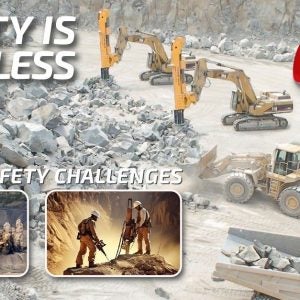
In mining, oversized boulders continue to be one of the most persistent causes of production delays. Whether they appear in the blast pile, at the loading face, or during haulage, large rocks disrupt fleet efficiency and force operations to pause while crews work to reduce them. High-energy impact breakers have emerged as a practical answer to this challenge, offering mines a safer, controlled, and consistently productive alternative to secondary blasting.
Engineered for oversize breaking
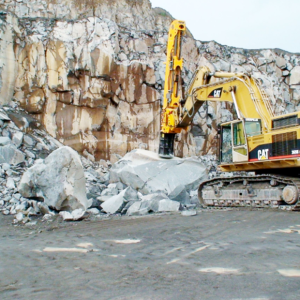
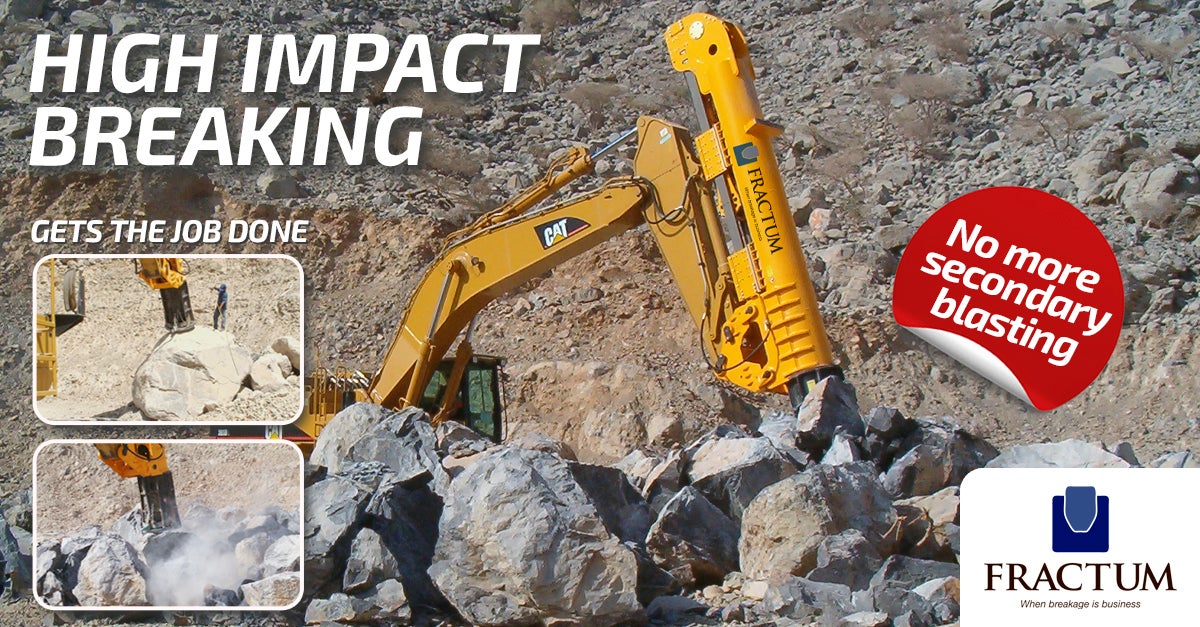
FRACTUM’s high-impact breaking-systems deliver energy levels powerful enough to fracture some of the hardest geological formations encountered in open-pit and quarry environments. Materials such as granite, basalt, iron ore, and bauxite, which traditionally required drilling and blasting to reduce, can now be broken in only a few strikes. Even boulders weighing well over 100 tonnes can be broken rapidly, restoring access for loading equipment and maintaining steady ore flow to the crusher.
These breakers are designed to operate directly on the blast pile or anywhere oversized material accumulates. By eliminating the need to move boulders to a separate breaking zone, mines can prevent unnecessary rehandling and reduce delays in the production cycle.
Lower stress on equipment, higher efficiency in the field
Unlike hydraulic hammers, which rely on repetitive chiselling and transfer high vibration loads to personal and excavators, high-impact breakers apply energy vertically and momentarily, reducing mechanical stress on the carrier machine. This translates to lower maintenance costs, longer equipment lifespans, and reduced operator fatigue.
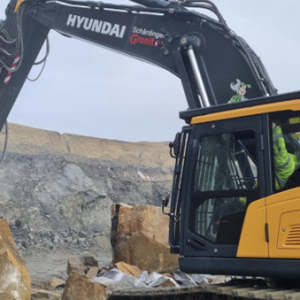
Because the system can be connected to standard excavators, it integrates seamlessly into existing fleet operations. A single operator can mobilise quickly to any location on site, addressing oversize exactly where it occurs without waiting for specialized crews or additional equipment.
Improving safety and reducing downtime
One of the major operational advantages is the significant reduction in safety risk. FRACTUM’s high-impact braking system create minimal fly-rock compared to drop balling or explosives and allow mining crews to continue working nearby with fewer interruptions. This controlled breaking method also reduces the need for production-stopping blast permits or evacuation procedures, which can extend downtime by hours.
By offering an on-demand fragmentation tool, mines stay productive during shifts were unexpected, oversized boulders would otherwise halt operations. Load-and-haul teams can maintain continuous cycles and improve overall equipment utilisation and driving higher daily output.
Built for the demands of today’s mining landscape
As mines continue pushing toward higher efficiency and safer operations, high-energy impact breaking has become an essential part of the modern production toolkit. Its ability to rapidly reduce oversized rock, eliminate secondary blasting, and keep haul cycles moving makes it one of the most valuable productivity enhancers available to surface mining operations.
Key advantages:
- Unmatched Efficiency: Our free-fall technology reduces the need for secondary blasting, streamlining operations and reducing costs.
- Exceptional Safety: Minimal vibration and noise levels create a safer working environment. Our breakers drastically reduce fly rock, minimising the risk of injury to personnel and equipment.
- Superior Durability: Engineered for minimal wear and tear, Fractum breakers extend excavator lifespan and minimise maintenance needs.
- Precise Flexibility: A single operator can easily switch between breaking and grappling functions, enhancing efficiency and reducing labour costs.
How it works:
- Powerful Impact: Fractum breakers utilise gravity for maximum impact, efficiently breaking rock with minimal effort.
- Controlled Breaking: Operators can precisely control the breaking process, minimise fragmented fly rock and maximise safety.
- Eliminating Blasting: Our high-capacity breakers (100,000 J to 250,000 J) break even the hardest rock in a few strokes, reducing the need for dangerous and time-consuming secondary blasting.