
The 2026 US-Israel war with Iran is transmitting risk into global mining and metals markets primarily through energy costs, with chokepoints and logistics acting as amplifiers, and increasingly through disruption to processing infrastructure.


A two-week ceasefire brokered by Pakistan, which took effect on 8 April following 40 days of conflict, has reduced immediate escalation risks but has not restored normal functioning across energy and shipping systems.
While the conflict, which began on 28 February, is centred on Iran, Israel and several Gulf countries, its effects are being felt globally via higher energy prices, shipping disruption, rising insurance costs and increased uncertainty across commodity supply chains. For the mining industry, the primary risk is not widespread production loss but rising costs and growing disruption across processing infrastructure, particularly in aluminium smelting.
A key transmission channel is the Strait of Hormuz, one of the world’s most strategically important maritime chokepoints. The strait handled an average of 20 million barrels per day of crude oil and petroleum products in 2025, accounting for roughly 25% of global seaborne oil trade.
Although the ceasefire promises to improve tanker movements, flows remain uneven, with vessel backlogs, elevated insurance premiums and continued security coordination limiting a full return to normal operations.
Higher fuel costs, longer transit times and tighter freight availability are feeding directly into mining operations and downstream processing margins.
The conflict is also reinforcing an existing structural weakness: mining supply chains remain highly exposed to concentrated trade routes and energy markets. The more significant medium-term effect is likely to be increased investment in more resilient processing and logistics systems.
Mining, processing and refining
Iran’s mining and metals sector is facing growing pressure from infrastructure disruption, power constraints and export bottlenecks. Even where mine assets remain operational, interruptions to electricity supply and industrial support systems will impact energy-intensive activities such as copper smelting, steel-making and aluminium production.
The impact is more pronounced in refining and processing than in mine production. Smelters and refineries are highly sensitive to energy availability, feedstock imports and interrupted logistics. Recent attacks on Gulf smelting infrastructure reinforce this dynamic, demonstrating that processing assets – not mines – are emerging as the most immediate point of failure in the current conflict.
Unlike mining, which continues to operate in most regions, disruption to smelting infrastructure quickly translates into reduced refined output.
Iron ore and aluminium
The effect of the war on iron ore markets is likely to be driven more by cost inflation than by direct supply loss. Iran produced 61 million tonnes (mt) of iron ore in 2025, representing around 3.8% of global output, according to the US Geological Survey (USGS); however, it is the only meaningful iron ore producer in the Gulf region. Elsewhere, Gulf economies are structurally import-dependent, relying on seaborne iron ore and pellet feed to supply direct reduced iron and steel plants.
This makes the region primarily exposed through logistics and energy costs rather than mining disruption.
Iron ore mining is highly diesel-intensive across extraction, hauling and transport. Sustained increases in oil prices therefore translate directly into higher operating costs. In parallel, shipping delays and rising insurance costs linked to disruption in the Strait of Hormuz are increasing the cost of moving bulk commodities. For large-scale open-pit producers, this places pressure on margins and reinforces the longer-term shift toward electrification, renewable integration and reduced diesel dependence.
Copper provides a useful contrast. The Middle East is not a major centre of copper mining or smelting, and supply has so far remained largely unaffected. Instead, exposure is indirect, transmitted through higher energy costs and tighter sulphur availability, a key input in refining. Elevated inventories and continued refined production growth, particularly in China, are helping to absorb supply pressure. This reinforces the broader pattern: while aluminium is experiencing processing disruption and iron ore is exposed through logistics, copper markets are, for now, absorbing the conflict primarily through cost pressure rather than supply loss.
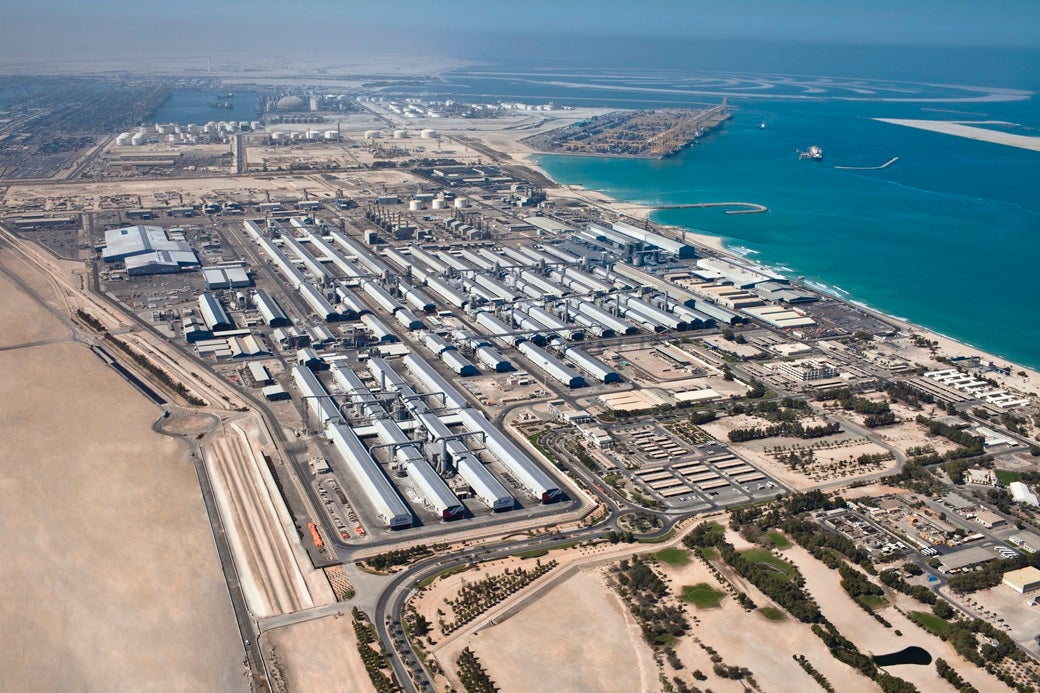
Aluminium is one of the metals most exposed to the combined effects of energy disruption and logistics constraints. The Middle East accounts for around 9% of global aluminium production, with major producers in Bahrain, Egypt, Iran, Oman, Qatar, Saudi Arabia and the United Arab Emirates (UAE). According to the USGS, the UAE and Bahrain produced approximately 2.7mt and 1.6mt of primary aluminium, respectively, in 2025.
In Iran, aluminium production is already constrained by electricity shortages, gas supply limitations and financial pressures. Output reached 552,200t during the first 11 months of the 2025 financial year, down 5.2% from 582,200t in the same period of fiscal year 2024, against installed capacity of around 650,000t per year. Further disruption to power supply, imported inputs or industrial continuity would increase the risk of deeper curtailments.
The conflict has now moved beyond structural exposure into active supply disruption. Iranian strikes have damaged major Gulf smelting operations including Emirates Global Aluminium (EGA) and Aluminium Bahrain (Alba), forcing output reductions and temporary shutdowns. Combined affected capacity is estimated at roughly 3mt per year, representing a meaningful share of global supply.
Gulf producers including Alba and Qatalum have declared force majeure or initiated controlled shutdowns, with restarts expected to take six to 12 months. The temporary ceasefire does little to alter this outlook, as restart timelines and infrastructure damage extend well beyond the duration of the truce.
The aluminium market entered the conflict in a structurally tight position, with inventories already near historic lows, amplifying the impact of production outages and logistics disruption.
The Gulf’s role as a major export hub amplifies these effects, with disruptions feeding directly into supply shortages in key import markets such as Europe and the US. Given the region’s outsized role in export markets, even partial disruption is rapidly translating into global supply tightness.
Market signals reflected this shift, with aluminium prices rising sharply following the attacks.
Nickel, lead, zinc and fertiliser
The conflict also affects nickel, lead and zinc through the sulphur market, creating a secondary transmission channel linked to energy disruption. Sulphur, a byproduct of oil and gas refining, is a critical input for sulphuric acid production, which is essential for processing several base metals.
This includes zinc and lead, for which sulphuric acid is a key processing reagent; input supply pressures risk raising refining costs and constraining output at smelters reliant on imports.
For nickel, the implications are particularly significant in high-pressure acid leach operations, which require large volumes of sulphur to produce mixed hydroxide precipitate for battery supply chains. Indonesia, the world’s largest nickel producer, imports around 75% of its sulphur requirements from the Middle East. This creates a direct transmission channel from regional conflict to global battery metal supply. Any sustained tightening in sulphur availability would increase processing costs, weaken project economics and potentially slow the pace of supply growth.
Synthetic fertilisers dominate global supply and price formation, with nitrogen products such as ammonia and urea – derived from oil and gas – accounting for roughly 60% of use, while mined nutrients such as potash and phosphate make up the remaining 40%, according to the UN.
The conflict is transmitting most directly through energy and shipping, amplifying cost pressures across nitrogen and feeding through into the wider fertiliser market.
Potash remains structurally resilient at the mine level but is exposed in transit. Approximately 70–80% of global supply is extracted from deep underground deposits in Canada, Russia and Belarus, typically in a near-ready form that requires limited processing. Its role as a core agricultural nutrient underpins stable demand, but seaborne trade is vulnerable to higher freight costs, insurance premiums and rerouting linked to disruption around the Strait of Hormuz and the Red Sea, raising delivered prices.
Phosphate introduces a more direct vulnerability at the processing stage. While phosphate rock is mined at scale (predominantly by China, Morocco and the US), it must be converted into fertilisers using ammonia and sulphur, linking supply to gas markets and refining byproducts already under pressure. Combined with heavy reliance on global shipping, this creates dual exposure to both input costs and logistics disruption.
Energy shock and electrification
The conflict is contributing to commodity price volatility, but the impact varies by exposure to energy prices, refining inputs and trade routes. Aluminium, copper and nickel are more vulnerable to sustained cost pressure and supply disruption at the processing stage, while bulk commodities such as iron ore are more exposed to margin compression driven by rising input costs.
Aluminium is now exhibiting the clearest signs of a physical supply shock, with production outages, contract disruptions and low inventories reinforcing upward price pressure.
More broadly, the conflict is highlighting the structural vulnerability of globally interconnected mineral supply chains. Metals depend heavily on seaborne trade, port access and specialised processing infrastructure, making them particularly sensitive to geopolitical chokepoints. The ceasefire provides only temporary relief, with pricing and procurement decisions continuing to reflect the risk of renewed disruption.
Broader disruption to oil and gas markets is reshaping industrial responses, particularly in Asia, where fuel constraints are prompting shifts in energy use and, in some cases, increased reliance on coal and nuclear power.
For mining, this reinforces a central paradox: short-term disruption is increasing dependence on conventional fuels while strengthening the longer-term case for electrification, renewable integration and energy security.