

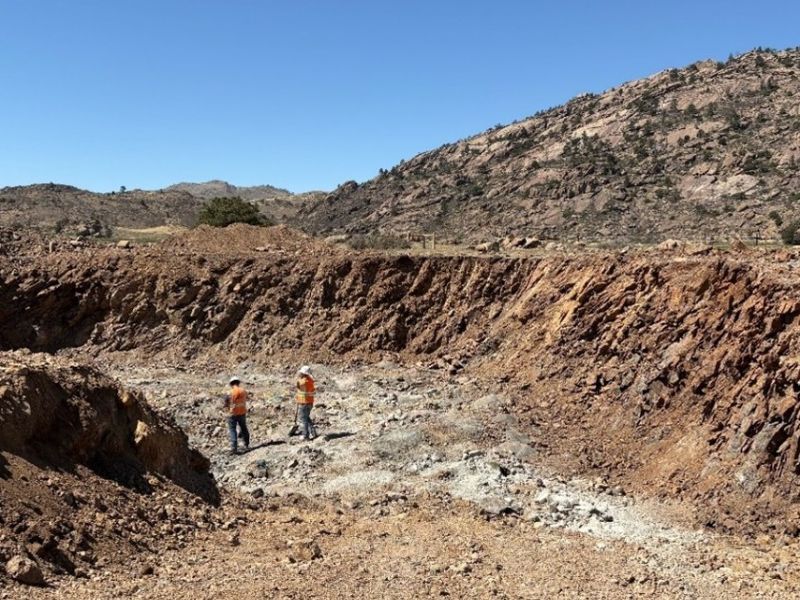
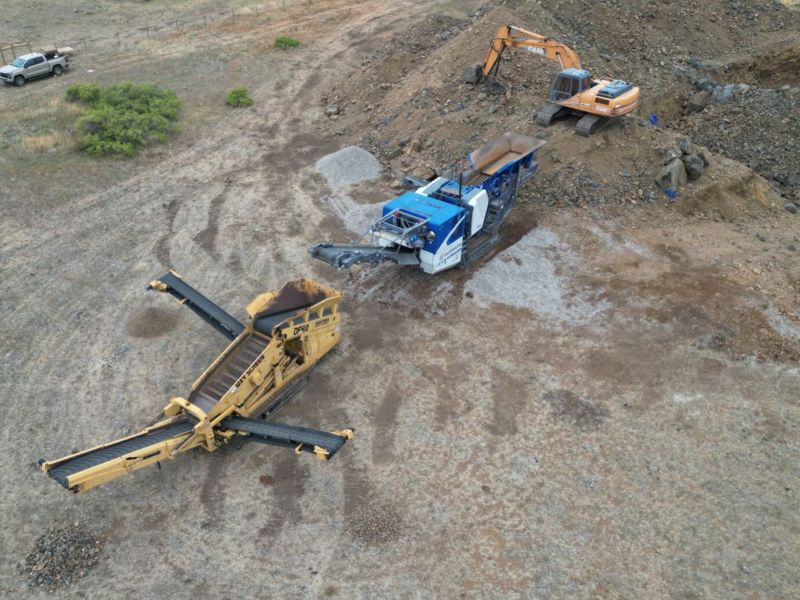
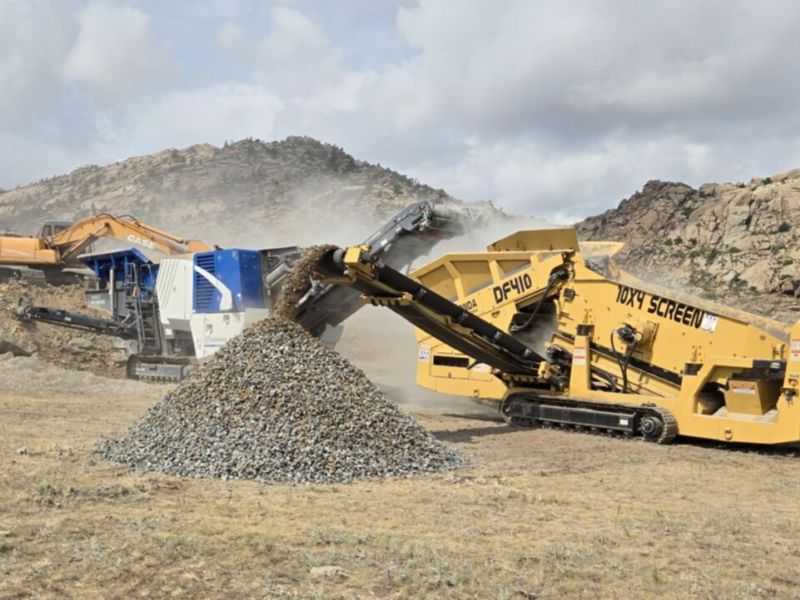
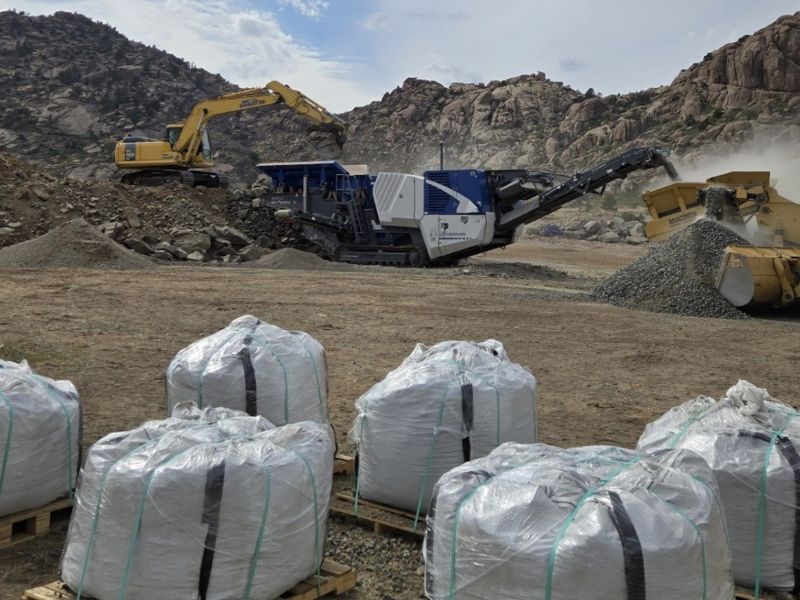
The Cowboy State Mine is an open-pit rare earths mine being developed in Wyoming, US.
Owned by American Rare Earths, the project represents the first phase of the Halleck Creek Project and focuses on the Cowboy State Mine deposit.
Recommended Buyers Guides

A pre-feasibility study (PFS), completed in November 2026, outlined a 26-year mine life requiring an investment of approximately $840m.
The project is also advancing a feasibility study, with the 2026 feasibility drilling campaign completed in November.
Construction for the project’s first phase is scheduled for 2028-2030, with commissioning expected in 2031.
Cowboy State Mine project location
The Cowboy State Mine, part of the Halleck Creek project, is located in the Central Laramie Mountains, roughly 70km north-east of Laramie, across the Albany and Platte counties in south-eastern Wyoming.
The project includes Wyoming State mineral leases and unpatented federal lode mining claims held by WRI. Its mineral rights comprise four Wyoming State Mineral Leases and 365 unpatented federal lode claims, covering approximately 3,304 hectares (8,165 acres).
Geology and mineralisation of the Halleck Creek Project
The Halleck Creek Project is a magmatic rare earth element deposit hosted in allanite and associated with the Red Mountain Pluton (RMP). The RMP is a residual granitic intrusion considered a late-stage differentiate of the ca. 1.4 giga-annum (Ga) Laramie Anorthosite Complex (LAC).
Rare earth mineralisation is principally hosted in allanite, with zircon acting as a secondary host mineral. Mineralisation is concentrated mainly within three of the four intrusive units, including fayalite monzonite, clinopyroxene quartz monzonite, biotite-hornblende quartz syenite, and Red Mountain granite.
Cowboy State Mine reserves
The proven mineral reserves at the Cowboy State Mine were estimated to be 116.4 million tonnes (mt) grading 1,257 parts per million (ppm) payable rare earth oxide (PREO), 958ppm neodymium-praseodymium (NdPr) oxide, 230ppm SEG oxide, 12ppm terbium oxide (Tb₄O₇) and dysprosium oxide (Dy₂O₃), with a total contained PREO of 146,300t as of November 2026.
Mining methods
The Cowboy State Mine deposit is planned as an open-pit operation using conventional truck-and-shovel mining methods.
The proposed mine plan involves total material movement of 135mt, comprising 116.4mt of ore and 18.7mt of waste rock. This equates to an operational strip ratio of 0.16 to 1 and is designed to support a processing throughput rate of 4.5 million tonnes per annum (mtpa).
The mine design includes minimum mining widths of 32.5m on benches and 28m across the pit floor. These dimensions reflect operational requirements, including shovel swing radius, haul truck turning circles, and safety berms.
Overall slope angles range from 54° at a 300m slope height to 45° at 700m. The pit optimisation incorporates a 50° inter-ramp angle.
A CAT 6015 configured as a backhoe has been selected as the primary loading unit, operating with a fleet of 76.9-tonne Komatsu HD605 haul trucks.
A CAT 844 front-end loader is included as a secondary loading unit to support site operations, although it is not required to achieve production targets.
Ore processing
Run-of-mine (ROM) ore will be reduced in size through an on-site circuit comprising a jaw crusher, cone crusher, and vertical roller mill. The circuit is intended to produce material with 100% passing 300µ.
The milled material will then undergo approximately ten-fold concentration through reflux classifier gravity separation, dry induced-roll magnetic separation, and wet high-intensity magnetic separation for the fine fraction. The resulting mineral concentrate will be transported by road to a dedicated hydrometallurgical refinery at Wheatland, Wyoming.
Processing at the refinery will involve dilute sulphuric acid tank leaching and a two-stage purification circuit to remove deleterious elements (uranium and thorium). Downstream processing will include uranium ion exchange, bulk solvent extraction, and separation into refined individual oxide products.
The PFS also considered a multi-stage neutralisation and filtration process to remove iron, thorium, and aluminium, followed by a further uranium ion-exchange stage.
Cowboy State Mine site infrastructure
The Cowboy State Mine project is accessible from Wheatland by travelling southwest on Wyoming State Highway 34 for approximately 18 miles (29km). This is followed by a further six miles west along County-maintained gravel road number 720, also known as Halleck Canyon Road.
A 46kV electrical substation is situated on Wyoming State Highway 34, approximately 2.3 miles from the western boundary of the Cowboy State Mine state mineral leases. Future electricity supply for mining and processing is expected to come from the Wheatland Rural Electric Association.
Wyoming Rare (WRI), American Rare Earths’ wholly owned subsidiary, has an agreement with a local water supplier to provide water to the mine site for an initial period of ten years. The agreement provides for the supply of up to 1,620 acre-feet of water per year.
Contractors involved
The PFS was prepared with inputs from Odessa Resources, Arkenstone Exploration, Stantec Consulting Services, Tetra Tech and Dahrouge Geological Consulting.
