
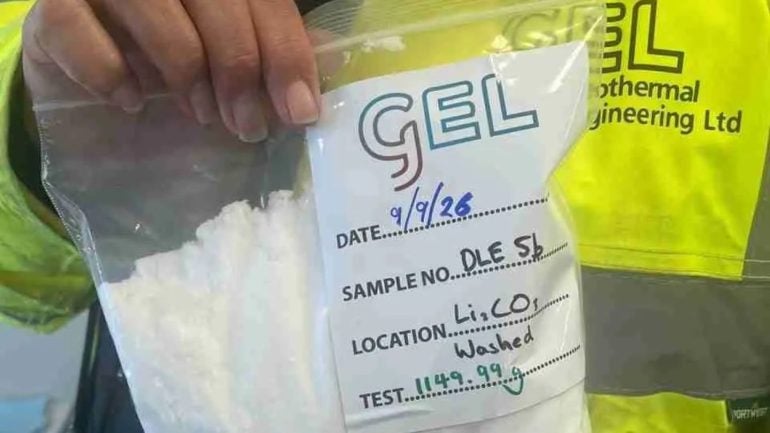
Geothermal Engineering (GEL) has announced plans to invest approximately $57m (£43m) in a new lithium extraction facility at its United Downs site in Cornwall, UK.
The project has received an offer in principle worth nearly £10m from the UK Government’s DRIVE35 Automotive Transformation Fund and will focus on extracting lithium carbonate from geothermal brine drawn from existing wells.
Go deeper with GlobalData


Discover B2B Marketing That Performs
Combine business intelligence and editorial excellence to reach engaged professionals across 36 leading media platforms.
It is expected to generate nearly 50 direct jobs at the site while supporting approximately 80 further positions across the wider supply chain.
GEL aims to begin commercial operations in 2029, targeting output of around 1,500 tonnes per annum (tpa) of technical-grade lithium carbonate. This volume is expected to be sufficient for the production of batteries for more than 180,000 electric vehicles each year.
The company has indicated that the facility could eventually scale to produce tens of thousands of tonnes annually.
GEL CEO Ryan Law said: “Lithium is fundamental to the technologies underpinning the automotive sector’s transition to zero-emission vehicles.
“At GEL, we are proud to be at the forefront of establishing a new UK lithium industry, demonstrating how Cornwall’s geothermal brine can provide a reliable and sustainable source of this critical mineral.”
The investment comes as global lithium demand is projected to grow by 1,100% by 2035.
Authorities say the new facility will support the automotive, clean energy and advanced manufacturing sectors by strengthening the UK’s supply of critical minerals and reducing reliance on imports.
Cornwall holds substantial underground geothermal brine resources containing the critical mineral.
The government has pointed out nearly £230m of combined private investment flowing into two UK lithium ventures.
Tees Valley Lithium’s planned refinery in Teesside, which is backed by a separate offer in principle of £18.3m, involves an investment of £185m.
Officials state that these projects, supported through the DRIVE35 scheme and the Modern Industrial Strategy, are intended to reinforce the UK’s battery supply chain.
Other recent investments in the sector include more than £1bn from automotive companies such as Bentley, McLaren and Nissan.


