

Despite being an industry that does not yet exist at commercial scale, the deep-sea mining of polymetallic nodules from the ocean floor is central to long-term conversations around metal and mineral supply security.
Industry voices have identified exploration and recovery regulations as the defining factor for the future of the nascent industry, and the Trump administration is moving to streamline permitting frameworks accordingly. However, the scale, persistence and reversibility of environmental impacts remain unresolved.
Go deeper with GlobalData


Discover B2B Marketing That Performs
Combine business intelligence and editorial excellence to reach engaged professionals across 36 leading media platforms.
Speaking at the Offshore Technology Conference 2026 (OTC 2026), Principal Deputy Assistant Secretary for Oceans and Atmosphere at the National Oceanic and Atmospheric Administration (NOAA), Erik Noble told Offshore Technology: “We don’t know everything, but we are not going to wait to try and figure everything out.
“The rush to permitting isn’t because we just want to get it done and not think about the environment”, he continued. “This industry doesn’t exist yet, so we are in the mode of asking.”
However, the industry is expected to exist within a year. The Metals Company USA received approval from the NOAA for its consolidated deep-sea mining application last week, making it the first operator to reach this stage. It now expects to receive a permit to operate before the end of the first quarter of 2027.
The application was made under the NOAA’s updated regulatory framework which, as of January 2026, expedites permitting by allowing applicants with exploration-phase data to submit a consolidated application for both an exploration licence and a commercial recovery permit. The regulatory shift is part of the Trump administration’s commitment to making deep-sea mining operational as quickly as possible, recognising that it has long been a stumbling block.
Megan Carr, Associate Director of the Strategic Resources Programme at the Bureau of Ocean Energy Management said: “This isn’t about scientific uncertainty. We understand the science. We understand the technology; it is being developed. This is operational uncertainty, and that is where regulations come in.”
“We are trying to get in alignment to help with this industry”, echoed Noble.
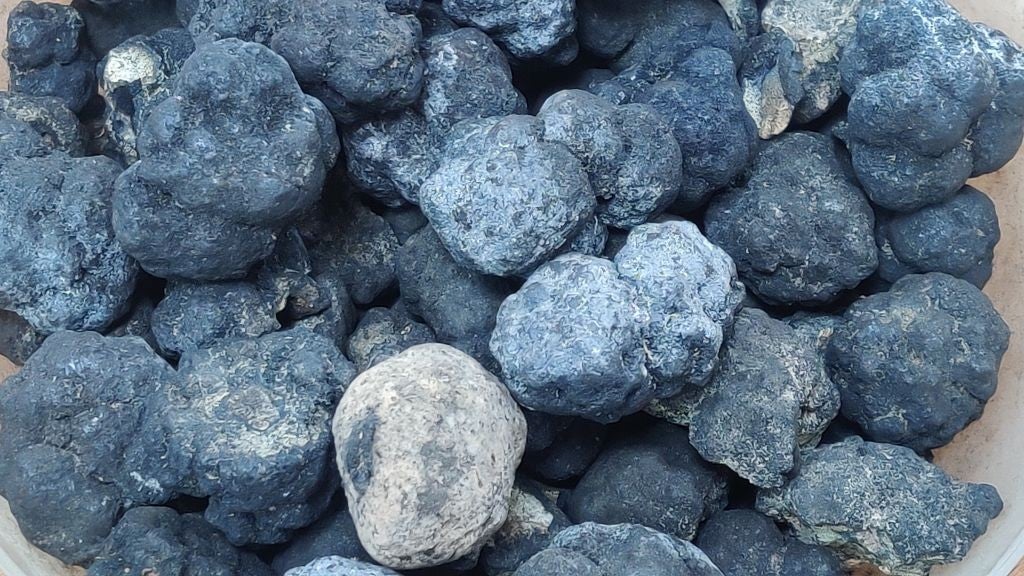
It is good news for deep-sea mining players looking to move from exploration to commercial recovery. However, the social licence to operate remains unresolved, as the administration opts for a responsive, rather than a precautional, approach to anticipated environmental problems.
Last year, the NOAA reported that “Biological/ecological impacts [of deep-sea mining] may include smothering, bioaccumulation of toxic metals, food supply changes and marine life damage. Connections among seafloor, midwater and surface ecosystem functions (including for commercially important fisheries) need to be better understood before the significance of these impacts on marine ecosystems can be assessed.”
The lack of data on environmental impact was noted several times at OTC 2026, particularly by Noble, but both industry and regulatory voices pointed to an adaptive management approach, in which operators proceed alongside ongoing monitoring and mitigation measures.
“[We can] pause, reassess, pivot,” said Carr. “We are not going to know [the environmental impact] until we do the activity, but we can make sure that we are fully aware of what those potential things could be, so that we are able to train appropriately and have our eyes wide open in the process.”


