
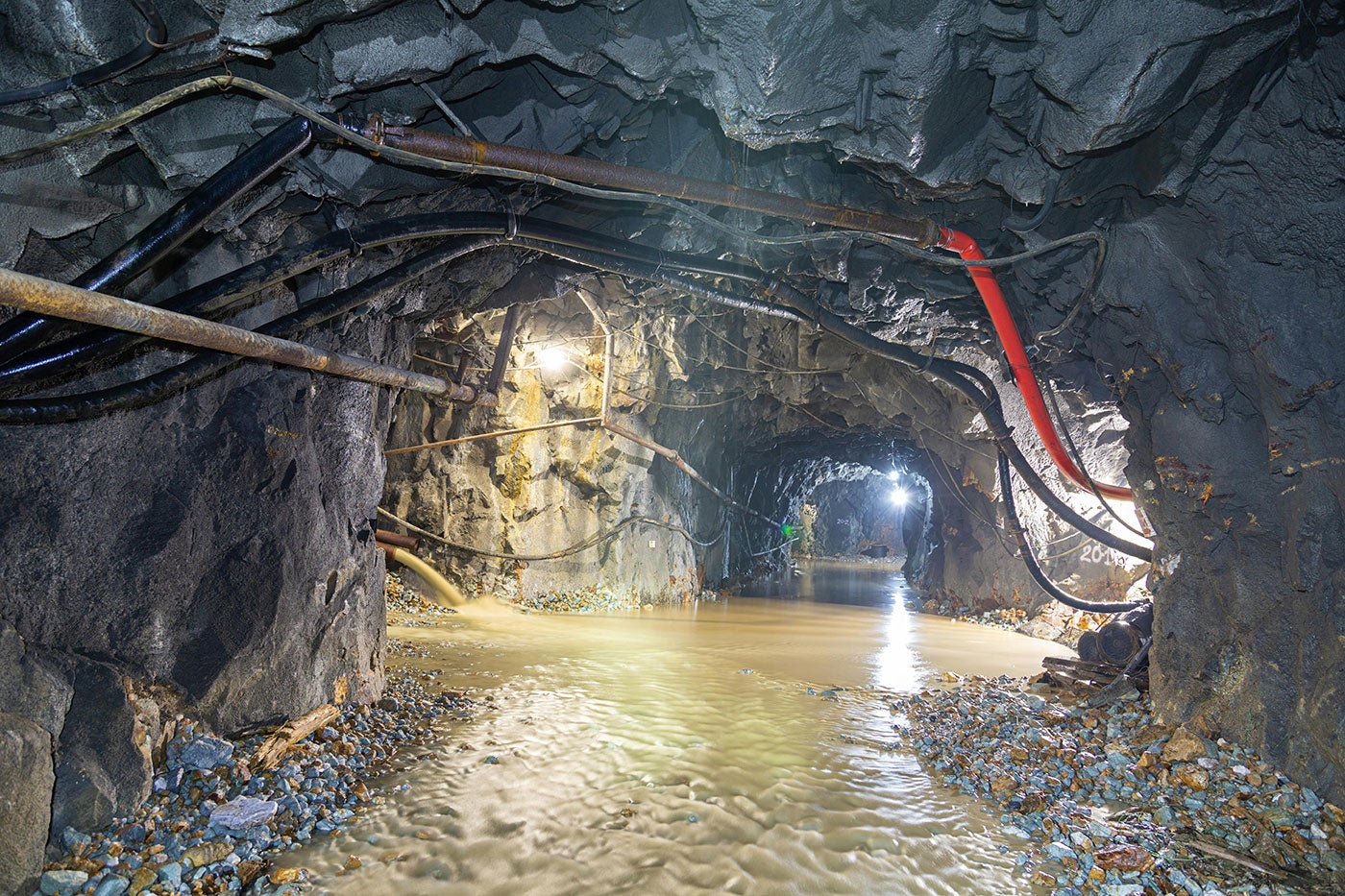
Underground mining routinely exposes workers to confined spaces such as shafts, ore passes, pump stations and narrow tunnels. These environments restrict movement, can limit oxygen levels and may allow toxic gases to accumulate. In an emergency, those same constraints complicate evacuation and rescue, making preparedness a core safety requirement rather than a secondary control.
Across major mining jurisdictions, regulators define confined spaces and prescribe how they must be managed. In the United States, the Mine Safety and Health Administration sets out requirements covering rescue team capability, training frequency and equipment standards. Parallel frameworks exist under Australian state legislation, Canadian provincial regimes and South African mining law. While the detail varies, the underlying principle is consistent: operators must be able to demonstrate that any worker entering a confined space can be rescued in a timely and controlled manner.
What qualifies as a confined space
A confined space is typically defined by three characteristics: it is not designed for continuous occupancy, has limited or restricted entry and exit, and presents a risk to health or safety. In mining, this includes vertical shafts, sumps, tanks and sections of development headings where ventilation is constrained. Many of these spaces require a permit before entry, confirming that atmospheric conditions have been tested, hazards identified and controls put in place.
Permits are not administrative formalities. They formalise accountability by assigning roles such as entrant, attendant and supervisor, and specify conditions under which work must stop. Failure to follow permit procedures is a recurrent factor in confined space incidents across industries.
Training and competency requirements
Confined space rescue training focuses on practical response capability. Programmes typically cover atmospheric monitoring, hazard recognition, communication in low-signal environments and the use of breathing apparatus. Workers are trained to interpret gas readings, manage ventilation constraints and recognise when conditions are deteriorating.
Rescue teams require additional competencies. These include casualty handling in restricted environments, rope and retrieval systems, and coordinated entry procedures where multiple responders may be required. Training is generally scenario-based, using site-specific layouts to reflect the physical constraints of the operation.
Regulatory frameworks often specify minimum training frequencies and competency refresh cycles. In the US, standards enforced by Occupational Safety and Health Administration on permit-required confined spaces also influence contractor practices within mining sites, particularly where multiple employers operate simultaneously.
Rescue methods and equipment
Two broad rescue approaches are recognised: non-entry and entry rescue. Non-entry methods, such as tripod and winch systems attached to a full-body harness, allow a casualty to be extracted without exposing additional personnel to the hazard. Regulations typically require that these systems are in place wherever feasible.
Entry rescue is more complex and higher risk. It involves trained personnel entering the confined space with appropriate protective equipment, often including supplied-air respirators or self-contained breathing apparatus. This requires strict role definition, continuous atmospheric monitoring and a clear command structure.
Standard equipment for confined space rescue in mining includes multi-gas detectors, retrieval systems, intrinsically safe communication devices and medical response kits. Equipment integrity is critical; inspection and maintenance records are routinely scrutinised during audits and post-incident investigations.
Compliance and operational integration
Effective confined space management depends on integrating training into day-to-day operations rather than treating it as a periodic compliance exercise. This includes aligning training scenarios with actual site hazards, accounting for shift patterns and contractor turnover, and ensuring documentation is accessible and current.
Auditable records typically include training attendance, competency assessments, equipment inspections and permit logs. These records serve both as proof of compliance and as a diagnostic tool to identify gaps in preparedness.
Where gaps tend to emerge
Despite clear regulatory frameworks, failures persist. Common issues include inconsistent permit application across contractors, inadequate refresher training, and over-reliance on entry rescue where non-entry methods could be used. In some cases, rescue plans exist on paper but are not tested under realistic conditions, leading to delays or confusion during incidents.
Operational pressures can also undermine compliance. Production targets, workforce turnover and the logistical challenges of remote sites all affect how consistently procedures are applied.
Implications for operators
For mining companies, confined space rescue capability has direct implications for risk exposure, regulatory compliance and operational continuity. Inadequate preparation can lead to enforcement action, project delays and reputational damage, in addition to worker harm.
Conversely, programmes that are aligned with site-specific risks and supported by regular drills tend to improve response times and reduce incident severity. The challenge is maintaining that capability as operations expand, workforce composition changes and mines move into deeper or more complex environments.
