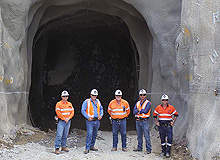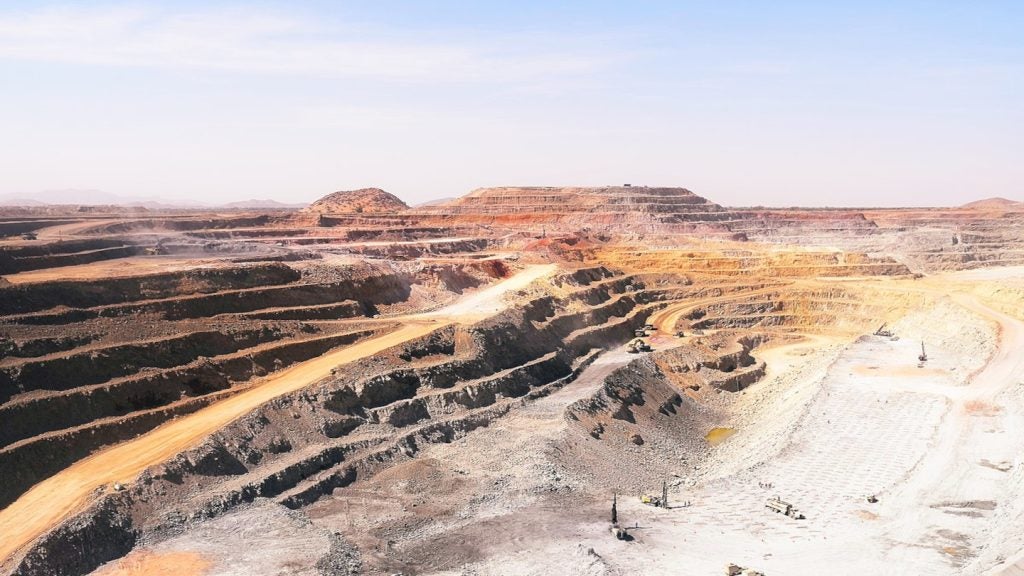

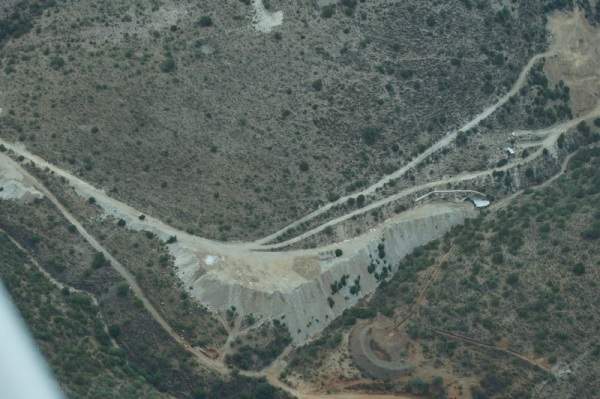
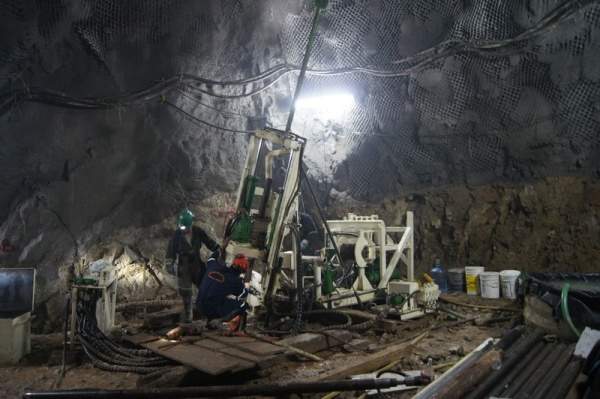
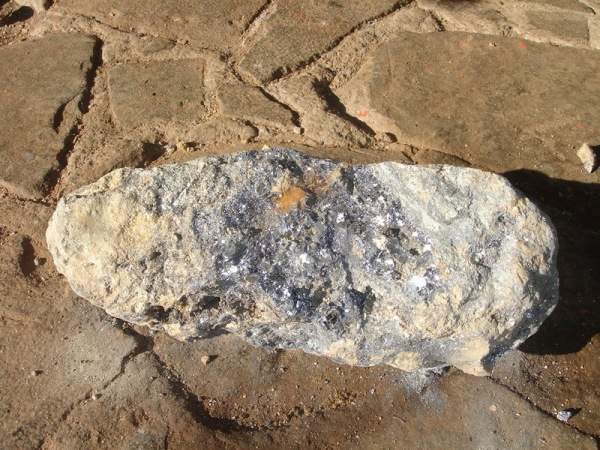
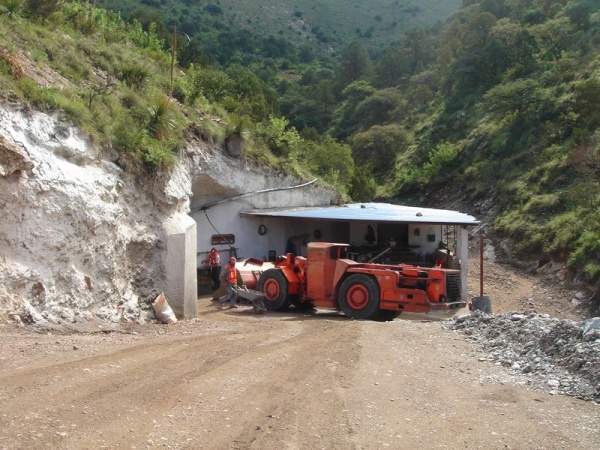
Del Toro silver mine is located in the state of Zacatecas, Mexico. The underground mine is 100% owned by Canadian mining company First Majestic Silver Corporation (FMS) and covers an area of 393ha (943 acres).
It was earlier known as the Chalchihuites Group of Properties and comprises polymetallic deposits.
Recommended White Papers

Recommended Buyers Guides

Drilling at Del Toro was launched in 2005. The development of the mine involves seven structures, namely San Juan, Perseverancia, Las Cotorras, San Nicolas, El Consuelo, El Carmen and El Zinc.
FMS carried out investigations on the San Juan and Perseverancia structures with the help of consulting firm Pincock, Allen & Holt. A prefeasibility study (PFS) of the mine was completed in August 2012.
Reserves at the Mexican silver mine
Measured and indicated resources of the Del Toro mine as of December 2014 were 2.9 million tonnes (Mt) graded at 226g/t of Ag. The inferred resources were estimated at 5.6Mt, graded at 178g/t Ag.
Geology of the deposit’s surrounding area
The Del Toro Silver mine lies between the Sierra Madre Occidental and Mesa Central volcanic terrains situated near the north-west border of Mexico.
The terrains are characterised by tertiary Cretaceous rocks, which comprise sedimentary calcareous and granodiorite intrusive sequences.
The San Juan is conceived to be the oldest structure in the Chalchihuites mining district. It spans a strike length ranging from 100m to 300m, and a depth of 200m. It is enclosed by igneous rocks of limestone, quartz and monzonite.
The La Perseverancia structure comprises two chimney-type ore bodies. The chimneys are between 15m to 30m-long, and 6m to 10m-wide. Mineralisation occurs in breccia with break-ups of igneous rock and skarn.
Mineralisation at the Del Toro silver mine
Mineralisation at Del Toro occurs in veins, breccia pipes and mantos. Minerals hosted in the San Juan structure are hosted in the Indidura formation. The minerals occur in vein type ore bodies in the form of skarn and quartz-monzonite compositions.
The mineralisation includes silver, lead and zinc concentrates in the upper parts of the veins and chimney type ore bodies.
Ore extracted from the San Juan hosts oxidised mineralisation with cerussite, limonite, galena, sphalerite, argentite and a gangue of quartz and calcite.
The perseverancia structure contains oxides and carbonates, including cerussite, cerargyrite, smithsonite and haematite. Sulphide ore is found at the deepest level of the structure along with galena, sphalerite, argentite and a gangue of quartz and calcite.
Production at First Majestic Silver Corporation’s mine
The first phase of production at the Del Toro mine started in April 2013. The mine produced 2.7 million ounces (Moz) of silver equivalent in 2014.
Mining methods used at Del Toro
Underground techniques are being used to extract the metals from Del Toro. Drilling and blasting are being carried out by using drills, aluminium nitrate and fuel oil (ANFO) explosives, respectively.
Trackless diesel-powered mining equipment, including load haul front-end loaders, dump trucks and electro-hydraulic drill jumbos, will be used to perform the mining operations.
Mine development, exploration and production are being contracted to mining firms. MECOMIN is the prime contractor involved in the development of the mine. Underground haulage work is being carried out by Armando Alvarado.
Ore processing techniques
The ore extracted from San Juan is transferred to the La Parrilla processing plant by means of dump trucks for further processing.
Related project
El Castillo Gold Project, Durango, Mexico
The El Castillo gold project is located in the State of Durango, one of the largest gold-producing regions in Mexico.
The La Perseverancia ore is conveyed either to the La Parrilla processing plant or the smelter in Torreon.
Recovered ore contains oxides, sulphides and lesser quantities of lead, zinc, gold and copper. The oxide ore is processed by using a cyanide leaching circuit which produces silver doré.
The floatation circuit yields silver-rich lead and zinc concentrates from the sulphide ore.
First Majestic received permission from the Mexican authorities in January 2010 to build a 1,000 tonnes a day (tpd) floatation circuit at the Del Toro mine site.
Phase I of construction of the new 4,000tpd dual-circuit processing mill began in April 2011 and foundations were laid in September 2011. Construction of phase II was concluded in the third quarter of 2013, while phase III construction will be completed by 2018. The throughput of the current 2,000tpd floatation circuit is planned to be increased to 4,000tpd in 2018.
A new 1,000tpd cyanidation circuit installed at the mine began first production of silver doré bars in November 2013. The capacity of the circuit was increased to 2,000tpd in early 2014.