

Curragh is an open-pit coal mine located 14km north-west of the town of Blackwater in the bowel basin of Central Queensland, Australia. The mine is operated by Wesfarmers Curragh, which bought the property from Stanwell in June 2000.
The mine covers an area of 12,600ha and has an annual production capacity of 7Mt. In November 2009, Wesfarmers Curragh announced expansion of the mine to increase capacity to 8.5Mt. As part of the expansion, Wesfarmers signed a new agreement in 2009 to access an additional 46Mt of reserves held by Stanwell.
Recommended White Papers
Recommended Buyers Guides

The expansion is scheduled to be completed in the first quarter of 2012.
The estimated cost of the project is $286m. It will extend the mine life to 2025.
Expansion
The expansion involves installation of a new 1,200tph of coal handling and preparation plant (CPP). It is being constructed adjacent to the existing CPP which has been in operation for over 25 years. On completion of the new one, the existing CPP will be decommissioned.
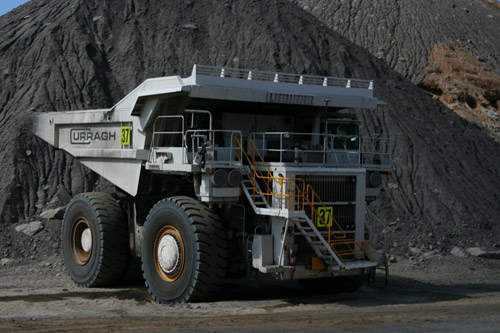
The additional overburden is being removed and transported by Bucyrus 495HR electric shovel and 360t capacity Liebherr 282C ultra-class trucks equipped with CYBERMINE4 simulators for safe mining.
The project includes increase in export rail and port capacities as well upgrade in automation and control facilities. Wesfarmers has secured 1.5Mt additional export capacity at the Stage One of the Wiggins Island Coal Terminal in September 2011. It has also signed a contract with QR Network for below-track rail capacity.
Geology
The deposit lies on the Aries, Castor, Pollux and Pisces seams found within the Rangal Coal measures of Central Queensland’s bowen basin. The geology is relatively complex across the deposit and is characterised by major faulting and differences in seam thickness. The aggregate thickness for the Aries seam is 2.5m, 1.8m for the Castor and Pisces seams and 2.8m for the Pollux seam.
The deposit is hosted over a strike length of nearly 27km. The topography, sloping eastwards, limits the strip ratio.
Reserves
As of June 2009, there were 223Mt of proved and probable reserves. The agreement with Stanwell for additional 46Mt has increased the reserves to 269Mt.
Mining
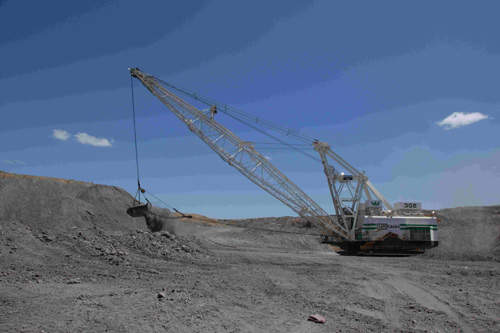
Mining at Curragh, beginning at the line of oxidation, has gradually progressed parallel to the dip towards the east. In the first step, vegetation and the accumulated topsoil are removed for restoring previously mined areas. The overburden laying over the coal seam is drilled and blasted with explosives. To remove the overburden and expose the Aries seam, four Marion electric dragline excavation systems, including the Marion 8750 Super Dragline, are used.
Pre-strip operations are employed in areas where the dragline dig-depth capacity falls short of the depth of the Aries seam. It is also used in zones where the existence of loose alluvium prevents drilling and blasting.
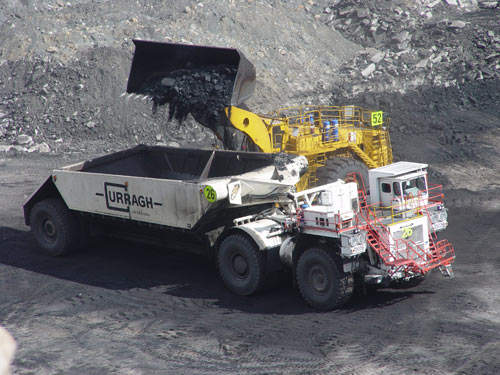
Once the seams are exposed, it is accessed by operating low wall ramps with coal excavated via hydraulic excavator or front-end loaders. The coal is loaded into bottom dump coal haulers and capacity rear dumps. It is then delivered to the coal handling and preparation plant where it is crushed and processed.
Processing
All sections of the plant are capable of producing two product streams simultaneously and blend feed and product coals effectively. There are two main areas in the raw handling system; the Curragh Run of Mine (ROM) system and the Curragh north ROM system.
The Curragh ROM system has a dual line design. Each line can crush up to 1,200t/h. The dual-line design also enables the system to direct coal via one line to preparation plant feed stockpiles and run the bypass steam through the second line.
The Curragh ROM coal is loaded into 500t capacity hoppers via 240t haul trucks. Apron feeds of different speeds discharge coal into the hammer mills where lumps of coal are ground to less than 400mm. After reducing the coal to 63mm in rotary breakers, it is delivered as bypass coal to either a secondary product coal line or is further crushed to 32mm and piled as preparation plant feed.
In contrast, the Curragh North ROM system has a single line that can crush up to 2,500t/h. The ROM is dumped in a 600t hopper via 190t rear dump trucks and front-end loaders. To reduce the lump size to 32mm, coal is transferred from the primary crusher to the secondary crusher. It is then delivered via a 20km-long single flight conventional conveyor to a 500t bin installed at the preparation plant feed stockpile area.
Two bridge reclaimers reclaim the feed from the stockpiles area. A consistent feed rate is ensured by achieving surge capacity through two 250t surge bins. The surge bins are equipped with electro-magnetic vibratory feeders that provide the exact feed rate
Through two modules, the plant handles up to 1,750t of coal per hour. Raw coal is filtered into two size fractions as it enters the plant. Coarse coal measuring more than 0.5mm is treated in a dual-stage dense medium cyclone circuit. The finer coal, less than 0.5mm, is processed in a single stage froth flotation circuit.
The coal processing infrastructure at the handling and preparation plant includes two horizontal belt filters, jameson flotation cells, dense medium cyclones with 1,000mm diameter, VM1500 coarse coal centrifuges, banana screens and dry distributors. Two product stockpiles, each with 150,000t capacity are used to stack the coal.
All trains are loaded with same-quality coal through a bucketwheel reclaimer that loads at 3,600t/h. Prior to being loaded into the 7,000t train that dispatches for the Port of Gladstone, coal is loaded into separate laid out bins for steam or coking coal, depending upon the type of product.
Contracts
A long-term contract to remove and transport the extra overburden was awarded to Theiss in February 2010.
The CYBERMINE4 simulators have been provided by ThoroughTec while automation and control upgraded is done by HWT Paklog.
Schneider Electric is the new communications network supplier.
