

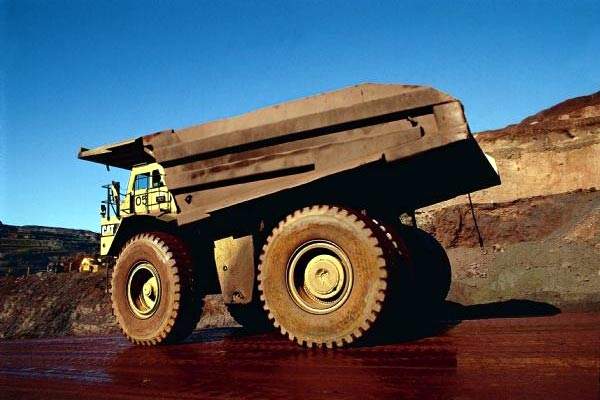
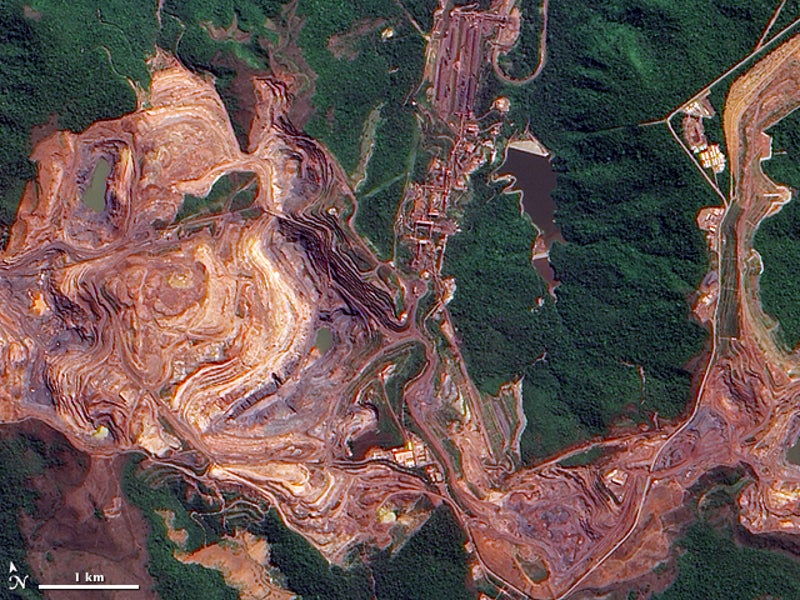
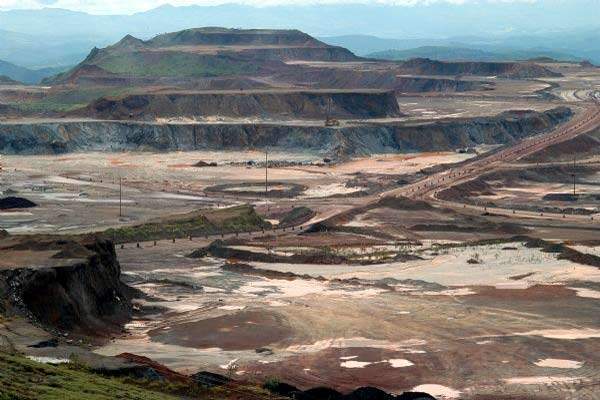
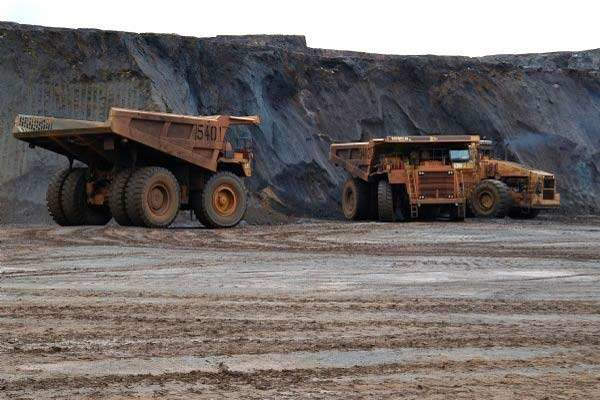
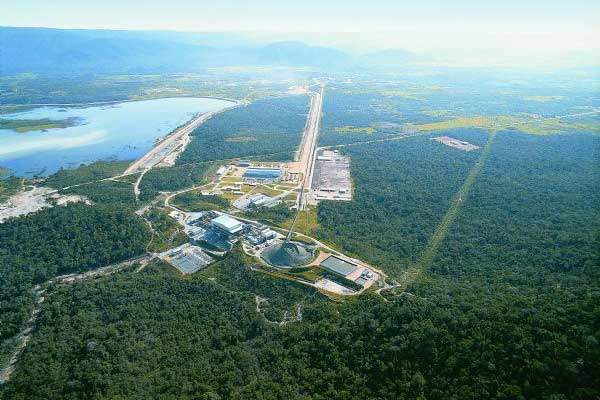
Carajás Mine, the world’s largest iron ore mine, is located in the state of Para in northern Brazil. Fully owned by Brazilian miner Vale (CVRD), it holds 7.2 billion metric tonnes of iron ore in proven and probable reserves.
The Carajas region boasts the richest reserves and concentrations of iron ore anywhere in the world and was discovered entirely by accident in the late-1960s when a US Steel Helicopter was forced to land on a hill in the area to refuel. Surveyors on board noted the baron state of the hill and subsequently discovered that the iron content was as high as 66%.
Recommended White Papers

Recommended Buyers Guides

Other mineral deposits were discovered later. Carajás is rich not only in iron ore but also ores for manganese, copper, tin, aluminium and even gold.
The mine implements a complete truckless transport operation and other automation systems in order to reduce emissions and fuel costs. ABB was awarded a $103m contract in September 2014 to install electrical and automation systems to help move rock and ore around the mine site more efficiently and safely using the truckless system.
Carajás iron deposit and mine development
US Steel initially wanted to develop the Carajás iron deposit alone, but the Brazilian Government was unwilling to hand control over to a foreign company.
In 1970, the Brazilian Government opted instead to create a joint venture company, Amazonias Mineração (AMZA), which 51% was owned by Vale and US Steel had 49%.
US Steel subsequently withdrew from the joint venture in 1977 by selling its share to Companhia Vale do Rio Doce (CVRD) for $55m. Vale produced 237.9Mt of iron ore at the Carajas Mine for 2009, against 301.7Mt in 2008.
Brazil is currently the world’s largest exporter of iron ore with an annual production of more than 510Mt.
Carajas iron ore mine expansion
In 2007, Vale approved an expansion project of the Carajas mine. The $2.48bn project, Carajas 130, would add 30Mtpa to the current capacity of 100Mtpa. In 2009, $798m was diverted towards the project. The project was to include the construction of a new plant, including primary crushing, processing and classification units.
Significant investments in logistics were also made. Originally scheduled for completion in the second half of 2009, the project was postponed.
To compensate for the delay in the completion of Carajas 130 project, another 10Mtpa brownfield project was constructed in the northern range of Carajas. The project was completed in the first half of 2010 and increased the capacity of the iron ore beneficiation plant by 10Mtpa.
The company obtained the operating licence for the expansion of its N4WS mine pit at Cajaras in November 2014. The licence supported the production plan for 2015 and 2016 at the mining complex.
Carajás geology and iron ore reserves
The Carajás ores are found within Archaean iron formations. The volcanic sequence has been weathered to a depth of between 100m and 150m while oxidation is observed to a depth of up to 500m in the BIFs of the ore zone.
The upper 80% of the reserve comprises a soft, friable enriched limonite near surface passing down into hematite to a vertical depth of around 300m. Hematite rich, but harder and more siliceous pods occur within the soft hematite, but also as a transition to the unenriched BIF at depth.
The Carajás District contains known reserves of the order of 18 billion tonnes with an average grade of 65.4% Fe.
The reserves are distributed in a number of deposit groups, with the largest being the North Range with 6,200Mt @ 65.8% Fe, 0.038% P, 1.0% SiO2, 1.05% Al2O3, 0.45% Mn, 0.01% S, 0.02% KO, 0.03% Na2O and 1.88% LOI. The other reserves include South Range, 35km to the south – 10,400Mt @ 66.3% Fe. East Ridge has 400Mt @ 65.9% Fe, while the South Felix Ridge has 600Mt @ 62.8% Fe. The current production contains < 1% Al2O3, < 1% SiO2, < 0.03% P2O5 and < 0.3Mn, with 10% lump and 90% fines.
The Carajás District contains 7.2 billion metric tonnes of proven and probable reserves as of 2009 estimates.
Open-pit mining at Carajas
The operation uses an open-pit mining complex with an initial capacity of 35Mtpa, which is soon to be extended. It also uses a deepwater port near the city of Sao Luis, in the north-east state of Maranhao, with a handling capacity of vessels of up to 280,000dwt, and a single-track 1.6m gauge railway line of approximately 890km interconnecting the mine and port.
Iron ore production at Carajas
Vale’s iron ore production for 2013 at Carajas was 104.88 million metric tonnes, a decline of 1.8% from 2012.
In January 2012, Vale also obtained the operation licence for the N5 Sul pit, which allows accessing the new ore body in the N5 mine of Carajas. The new ore body is believed to have the highest ferrous content within Vale’s portfolio.
The Additional 40 Project became operational in the second half of 2013 and reached full capacity in the first half of 2014, expanding iron ore production at the mining complex by 40 million metric tonnes per annum. Vale produced 129.6 million metric tonnes of ore from Carajas in 2015. Approximately 148.1 million metric tonnes of ore were produced from the mine in 2016.
Carajas iron mine expansion details and contractors involved
A major project called Carajás Serra Sul S11D Iron project for expansion of mining and processing at the Carajás Mining Complex was completed in 2016. It involved a total investment of $19.67bn, including $8.08bn for installing the new mine and processing plant, and $11.59bn for logistics infrastructure. The project received environmental approvals in July 2013. The S11D mine was inaugurated in December 2016.
The S11D project is the largest Greenfield project in the iron ore industry. A consortium of SNC Miner Consult and WorleyParsons Edmonton provided detailed engineering services for the project.
In a positive development for the S11D Iron project, Vale received the installation licence for the expansion of Carajás railroad (EFC) that links the company’s mining operations in the state of Pará with Ponta da Madeira maritime terminal in the state of Maranhão, Brazil. It includes 504km of rail works and the doubling of 226km of railway. The project featured innovative solutions including truckless system and dry processing.
Delivery of initial components for the project began in March 2014 and construction completed in 2016. The Carajás S11D Iron project produces and supplies more than 90 million metric tonnes of iron ore per year with 66.7% iron content. It helps further consolidate the position of Vale in the global iron ore market.
ABB was awarded a $140m contract to supply and install automation and electrical equipment at the new S11D processing plant. ABB was also contracted in September 2012 to install and commission the primary transmission substation for the S11D project.
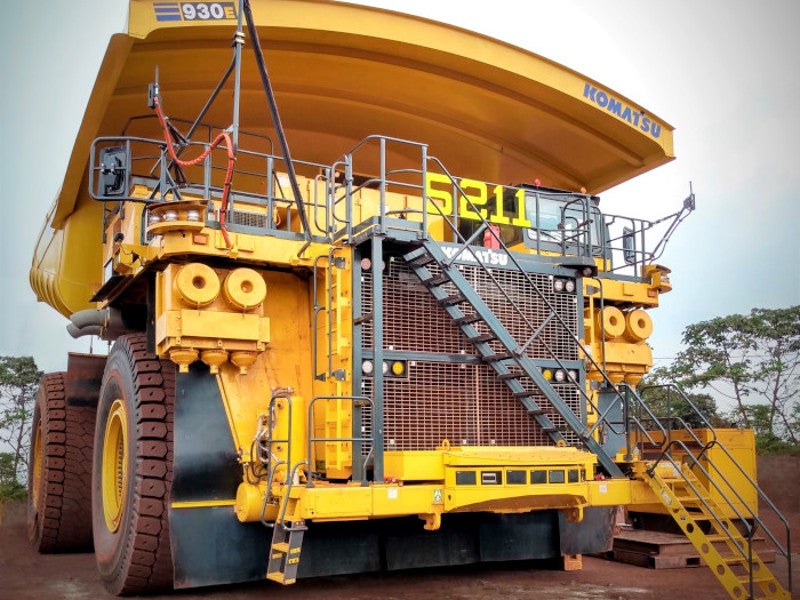
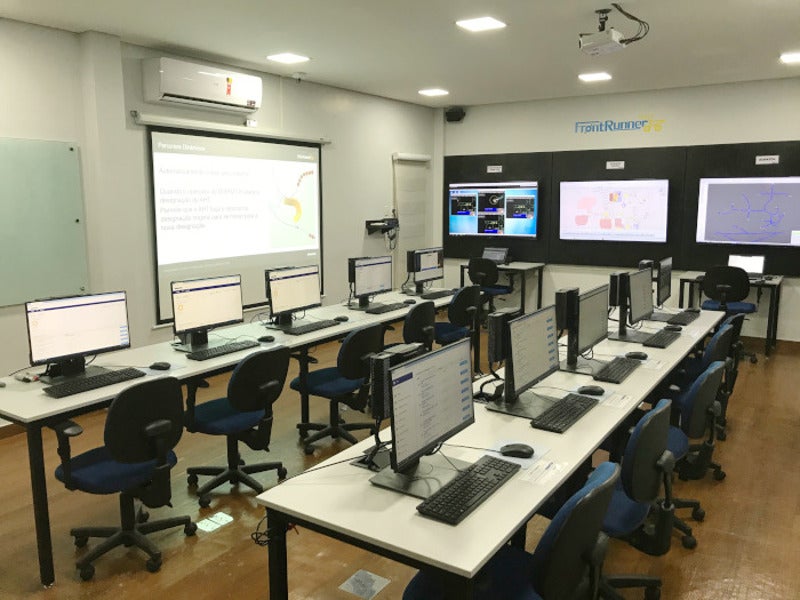
Komatsu will deploy 37 930E ultra-class electrical dump trucks with Autonomous Haulage System (AHS) FrontRunner technology at the mine by 2024.
Vale partnered with Vivo to operate a private 4G/LTE network at its Brazilian operations, in November 2019. It will be available at the Carajas mine to optimise the usage of autonomous equipment.
