

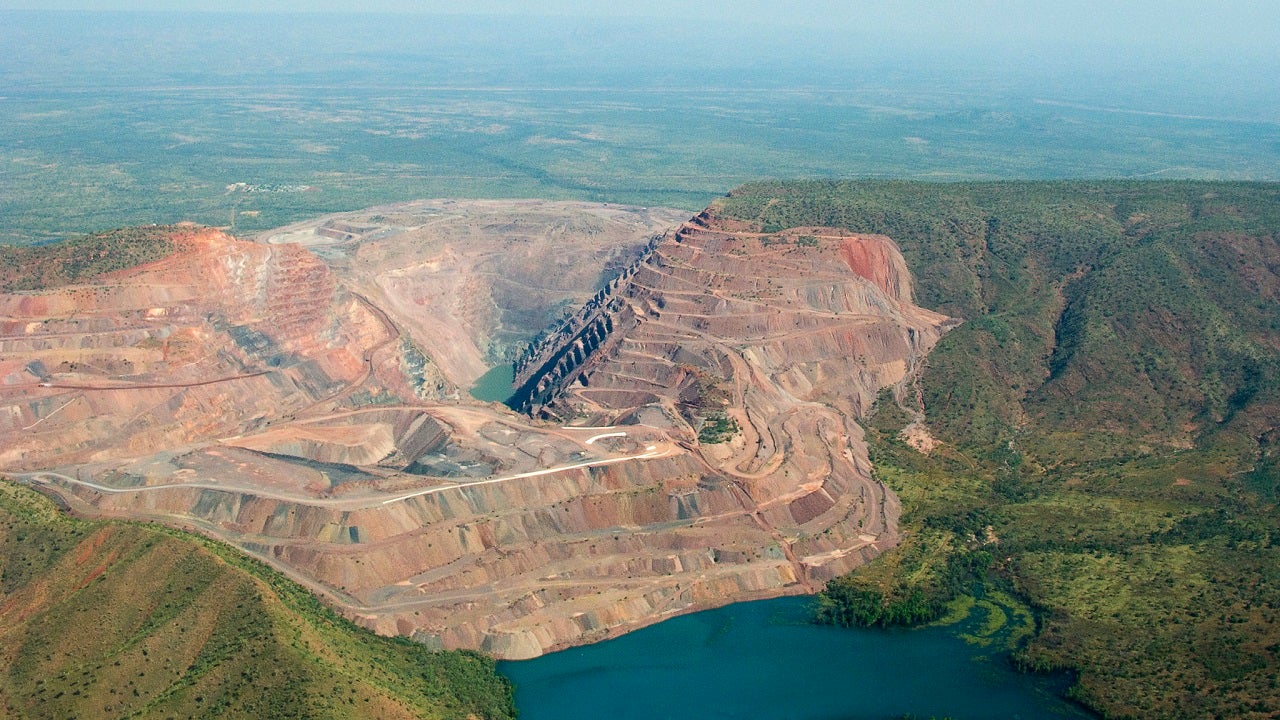
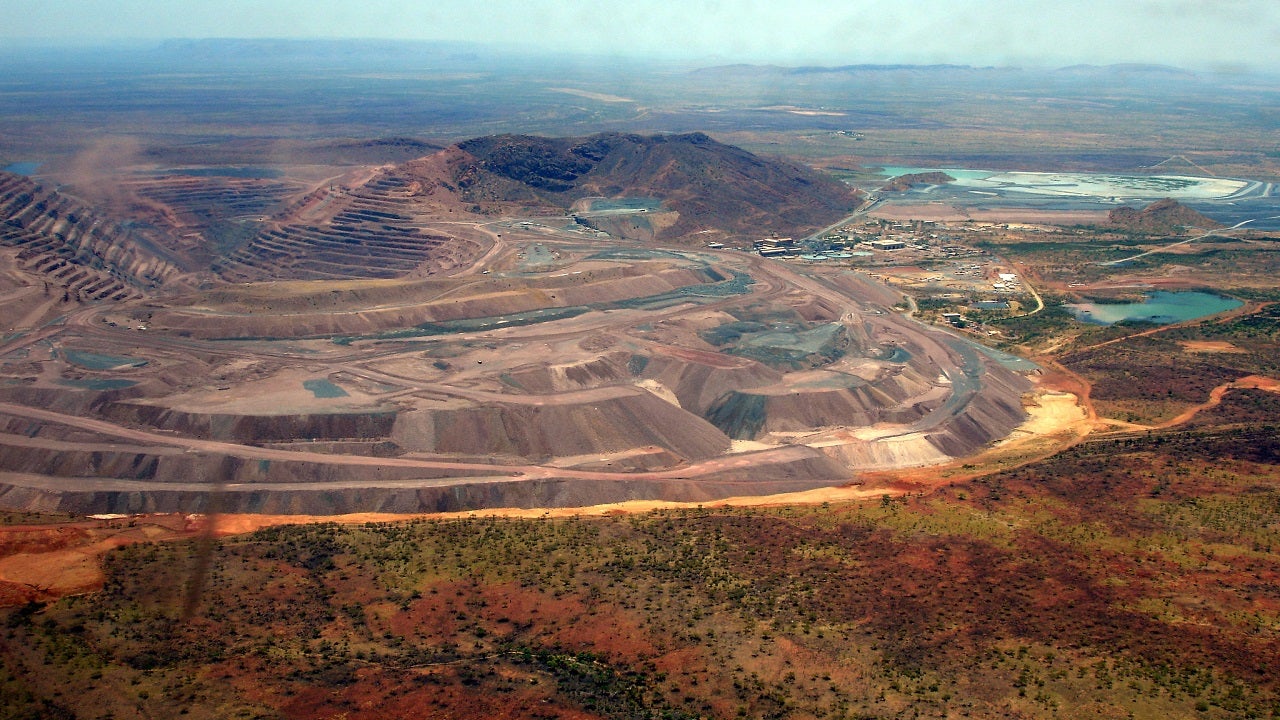
The Argyle mine, located in the Kimberley region in the far north-eastern area of Western Australia, was the world’s largest single producer of diamonds. The mine lies some 550km south-west of Darwin by air. The region is remote, rugged and hot, with temperatures of more than 40°C during the wet season from October to March.
Recommended White Papers

Recommended Buyers Guides

When production began in 1985, most of the workforce was Perth-based and operating on a two-week ‘fly-in, fly-out’ basis, requiring the construction of a complete camp infrastructure to support the operation.
In recent years, however, a programme of localisation has been underway to base workers in East Kimberley. Now about 70% of the workforce deployed at the mine is local.
Argyle is operated by the Argyle Diamond Mines joint venture, wholly owned by Rio Tinto since 2002. The initial mining lease expired in 2004 and has been renewed.
In September 2010, Rio Tinto announced an investment of $803m to complete the project. The money was used to ramp-up the underground block cave in order to extend the mine’s life to 2020.
The Argyle mine was converted from open cut to underground operations in 2013 and the underground mine became operational by 2013.
Since it started production in 1983, Argyle produced more than 865 metric carats (Mct) of rough diamonds and had ample reserves to mine commercially until its closure.
Mining at the Argyle diamond mine ceased in November 2020. The decommissioning and demolition will take three to five years. the land will be returned to Traditional Owners as the custodians of Country.
Geology and reserves at the Argyle diamond mine
The discovery of the Argyle ore body marked the first time that a commercial diamond occurrence had been identified that is not hosted in kimberlite. The AK1 pipe at Argyle instead consists of olivine lamproite, from which diamonds had been eroded to form placer (alluvial) deposits nearby.
The deposit was discovered in 1979 by the Ashton joint venture, following some 12 years of exploration by various companies in the area. The discovery of alluvial diamonds led directly to their source, the AK1 pipe.
At the end of 2016, the total measured, indicated and inferred resources in the AK1 pipe were 15Mt at a grade of 3.2ct/t. The resources were decreased to 0Mt during 2017.
At the end of 2019, the probable ore reserves were 5.1Mt at a grade of 1.9ct/t as compared to 11Mt at a grade of 2.2ct/t in 2018.
Mine development processes
Development of Argyle was a two-stage process. Alluvial diamond mining took place between 1983 and 1985, when the AK1 pipe came into production. Since then, this has been the principal source of ore, supported by lesser amounts of alluvial material.
Argyle operated as a conventional open-pit mine, with both lamproite and waste rock being drilled and blasted before being loaded out in a shovel-and-truck operation. The mine operated Bucyrus, P&H and Tamrock Driltech rotary drill rigs, O&K RH 200 hydraulic excavators, and a fleet of Caterpillar 789B and Unit Rig MT4400 haul trucks, supported by Caterpillar wheel loaders, bulldozers and other ancillary equipment.
The mine operation was monitored and vehicle movements were controlled using the modular mining systems’ dispatch system, which used a global positioning system (GPS) for accurate location of drills and other plant. Contract mining is used for the alluvial ores.
Much of the waste rock was highly abrasive quartzite, and Argyle was a long-term user of the Skega dump body system in its haul truck fleet. This used a suspended, reinforced rubber liner in place of conventional steel plating in the hauler body.
Ore processing
Argyle’s processing plant used a crushing, screening, heavy-medium separation (HMS) and X-ray sorter diamond recovery flowsheet. 3mm ore forms the feed for the heavy-medium separation circuit while -1mm material is rejected to the plant tailings.
Two-stage heavy medium cyclones with a specific gravity of 3.0 form the heart of the separation process, with material denser than the cut point forming the diamond-bearing concentrate.
X-ray sorting separated the diamonds from residual waste in the HMS concentrate, the recovered stones being acid washed before sorting for shipment.
Diamond production at Kimberley’s Argyle mine
Since coming into operation, Argyle produced more than 865 metric carats (Mct) of diamonds, with an average stripping ratio in the open pit of approximately 7t of waste being moved for each ton of ore mined. Peak production was in 1994, at 42.8Mct.
The pit was so deep that the lack of manoeuvrability in the bottom had come to hinder mining operations.
Argyle diamond mine produced 12.9Mct in 2019, as compared to 14Mct in 2018.
Underground mining
The company reached to a point where the lamproite ‘pipe’ narrows and continued at greater depth, making continued access to the ore by open methods uneconomical.
Back in 2001, the company began looking at the option of developing an underground mine – launching a pre-feasibility study to investigate all of the possible alternatives and transition strategies.
The results of this led, in early 2003, to the approval of funding for a full feasibility study for a block cave underground mine and the construction of an exploratory decline.
Both were completed during 2005 and in December of that year the decision was made to go ahead with the underground mine.
Work on the A$1.6bn development began on schedule, but was slowed down in January 2009 due to the global economic downturn. Macmahon Holding was the primary mining contractor at Argyle Diamond mining site.
Work resumed in September 2009. Underground mining involved development of 30km of block cave mining, excavation of two underground crusher chambers, vertical development and initial cave draw protection.
As of June 2012, the roadway and underground workshop construction was complete, and the underground crushers and dewatering pumps were installed. The underground mine started its first production in April 2013.
