


Mining is one of the most demanding working environments, with equipment constantly exposed to dust, moisture, abrasive particles, chemical contaminants, and extreme mechanical stress. Components such as hydraulic cylinders, rods and seals operate under high pressure and precise tolerances, meaning even minor contamination can lead to degradation, leaks, or complete system failure in machinery such as excavators, loaders, haul trucks, and drilling rigs.
“Without protection, rods corrode, and companies end up having to re-chrome the rods every few years, an expense that can cost between a few hundred dollars to thousands, plus the cost of downtime for disassembly,” says Leigh Carlson, CEO, Fluid Control Services (FCS), adding, “worst case, cylinders may have to be replaced completely.”
Furthermore, the costs of the cylinders are considerable. Carlson explains the numbers: “Without adequate protection, mining companies must frequently repair or replace hydraulic cylinders. A used and resealed cylinder for a mid-sized excavator can cost anywhere between $5,000 and $15,000.”
Effective hydraulic protection safeguards equipment performance and maintains uptime, reduces maintenance costs, and extends the working life of critical assets.
A combination of preventative strategies is used to achieve this, including advanced coatings and filtration systems, as well as proactive maintenance and operator training. More recently, new technologies, such as Seal Saver’s hydraulics protection solution produced by FCS, have emerged that offer additional protection directly at the point of exposure.
Reducing hydraulic damage
As mine operators know, there are several factors that can impact on the performance of hydraulic systems – from the design and components through to contamination of fluids and direct exposure to mining’s harsh environments.
As Carlson points out: “hydraulics are under constant attack – this accelerates the wear and tear on cylinders, particularly the rods and seals, allowing contaminants to penetrate through the damaged seals and mix with the hydraulic fluid. Ultimately, this causes rod scoring and seal degradation, which will eventually lead to system failure.”
Protection of hydraulics systems in the field is managed using several methods. Primarily, operator training is essential to understand how to use equipment within its intended limits, reducing unnecessary strain on hydraulic components, which can accelerate wear and increase the risk of damage.
Applying specialised protective coatings to exposed components is another strategy for protecting hydraulic systems, and advanced coatings can significantly improve resistance to these threats. However, contamination of lubricants is a leading cause of hydraulic system failure in mining equipment. Even microscopic particles can damage internal components, affecting system efficiency and reliability, so high-quality filtration systems are crucial for keeping hydraulic fluid clean. Combined with these measures, regular preventative maintenance is key to maintaining hydraulic system performance to ensure that equipment continues to operate safely and efficiently.
While these traditional protection strategies will remain critical, they often focus on managing contamination after exposure or strengthening components against damage. Preventing contaminants from reaching hydraulic components in the first place provides the foremost line of defence.
Direct protection for hydraulics
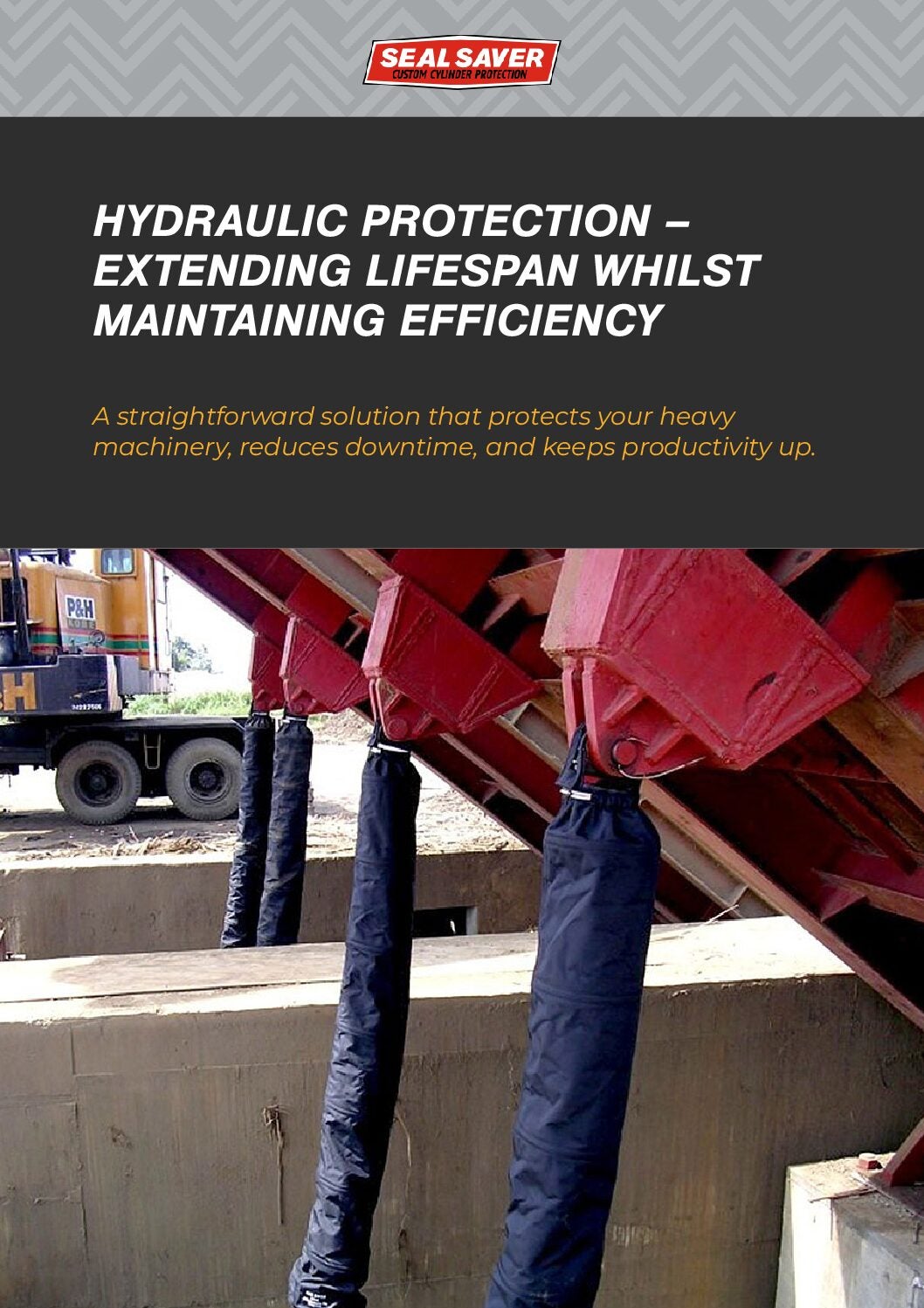
FCS addresses this with a custom-fitted protective boot that is specifically designed to safeguard hydraulic cylinders from environmental damage. Its Seal Saver boots can extend the life of hydraulic cylinders by up to three times, reducing repair or replacement costs, as well as downtime and productivity losses – and provides a simple, cost-effective solution.
The protective sleeve fits over the rod and cylinder assembly, forming a barrier that prevents dust, mud, and debris from contacting the rod surface. As the rod moves during operation, the sleeve shields it from abrasive particles and environmental contaminants, reducing the likelihood of debris entering the hydraulic oil lubrication system through damaged seals or scratched rods.
One of the key advantages of this approach is its simplicity. Seal Saver sleeves are designed as an out-of-the-box solution, which can be installed quickly without complex modifications to existing equipment, making them suitable for both new machinery and retrofitting on existing mining assets.
By combining robust system design, protective coatings, effective filtration, and preventive maintenance with practical shielding solutions such as Seal Saver sleeves, operators can significantly reduce contamination risks and mechanical wear. This layered approach helps safeguard hydraulic components, extend equipment lifespan, and minimise costly downtime, ensuring machinery continues to perform efficiently even in the most demanding mining conditions.
To find out more about how Seal Saver hydraulic cylinder boots protect seals and cylinder rods, download the white paper below.
