

How to Reduce Winter Conveyor Failures: Five High-Risk Areas
At mining operations across Canada and the northern United States, sustained sub-zero temperatures tend to reveal weak points in conveyor systems. Ice forming on rollers, frozen material inside chutes, or grease thickening inside cold bearings can quickly escalate into belt slippage, misalignment or a no-start scenario following a shutdown. These issues are common, repeatable winter failure modes that can be managed with the right focus.
This article outlines five conveyor areas that consistently demand extra attention in freezing conditions. For each, we look at why problems occur, the warning signs to watch for, and practical steps that can help keep conveyors running through winter.
- Rollers and idlers: small ice build-up, big tracking impacts
Ice accumulation on rollers is often the earliest winter issue crews encounter.
Even a few millimetres of frozen build-up can distort a roller enough to push the belt off-centre. According to Travis Moore, VP North America at PROK, “I’ve seen rollers with six inches of ice on them. If you’re not checking often enough, it builds up fast.”
Once ice forms on a roller, several symptoms may appear, including belt drift, contact with stringers or structural steel, belt edge damage and spillage at loading or discharge points. Travis explains why even modest ice build-up can have a major effect: “The ice creates a reverse hourglass shape that’s thicker in the middle, and thinner on the ends. That small bulge is enough to pull the belt off-line.”
How to manage roller ice build-up
More frequent inspections are the most effective preventative measure. When temperatures remain below freezing, exposed conveyors should be walked every shift. In particularly cold conditions, Travis notes that “twice a day is not unusual,” especially for return idlers where moisture accumulation is common.
If ice is detected, it should be removed immediately. This typically requires stopping the conveyor and breaking the ice away using heat or a rubber mallet. “If you leave it for another shift, that’s when things get expensive,” says Travis. Even a few additional hours of operation can turn minor ice build-up into a serious tracking problem.
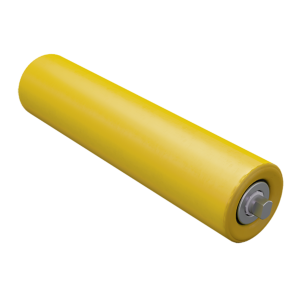
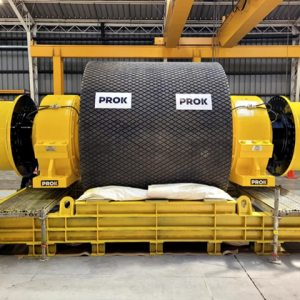
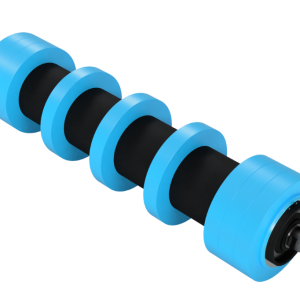
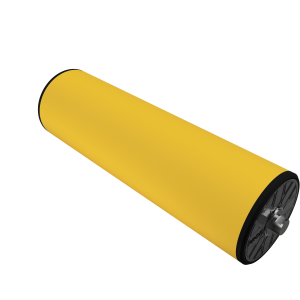
Where the same sections freeze repeatedly each winter, permanent equipment upgrades may be justified. HDPE rollers shed condensation more easily, PU disc return idlers release build-up between discs, and lagged return rollers can break ice as they rotate. These are not seasonal changes, but for conveyors that freeze every winter, they can significantly reduce downtime.
- Pulley icing, belt slippage and no-start events
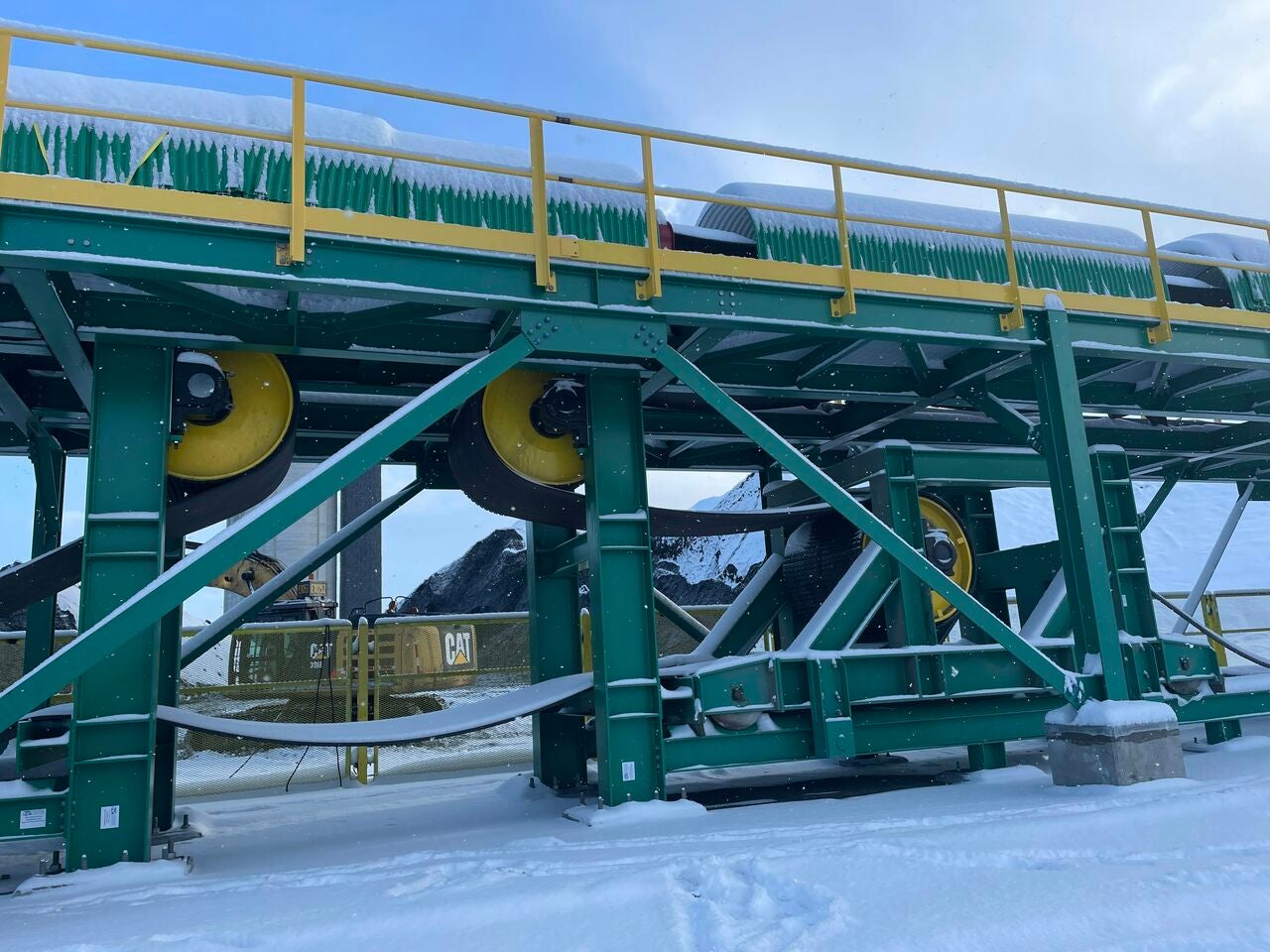
Ice forming on the drive pulley or belt surface can result in severe slippage or a conveyor that will not start at all. The pulley rotates, but the belt remains stationary. As Travis explains, “If there’s ice between the belt and the pulley, you basically lose all traction. The belt just won’t move.”
Uneven ice build-up introduces additional risk. If one side of the pulley accumulates more ice than the other, the effective pulley diameter changes across its width. This creates uneven belt tension, increasing the likelihood of tracking problems, accelerated wear and edge damage.
These issues commonly develop after shutdowns. While a conveyor is operating, friction and movement generate enough warmth to prevent ice from forming. Once stopped in sub-zero conditions, surfaces cool rapidly and moisture freezes in place.
How to prevent and recover from pulley slippage
Belt de-icers are often the simplest preventative option. Biodegradable liquid heat or ice-melt products can be applied to pulleys and belts prior to startup, particularly before planned maintenance or any shutdown expected to last several hours.
If ice has already formed and the belt will not move, traction aids such as sand or floor-dry compounds can help restore movement by increasing grip, similar to grit under a vehicle tyre.
The most effective approach is planning ahead. If specific pulleys or outdoor conveyor sections have caused slippage in previous winters, treating belts before the first cold snap or ahead of shutdowns can prevent problems from developing in the first place.
- Chutes and skirt areas: frozen material and blockages
Frozen material accumulating in chutes and skirt zones is another frequent winter challenge. Material that freezes in stockpiles overnight can stick to chute walls once temperatures remain below zero. Travis describes the process clearly: “Rock freezes solid in the stockpiles. Then the crushers warm it up just enough to melt the surface, and when it refreezes, it sticks together even more.”
This build-up can choke chutes, cause spillage at transfer points, or force shutdowns so blockages can be cleared. Even partial restrictions can disrupt loading patterns and contribute to downstream tracking issues.
How to keep material flowing in cold conditions
Air cannons and air lances are among the most effective preventative tools, dislodging material before it freezes into a solid mass. Air cannons are particularly valuable because they operate automatically. As Travis notes, “Once the material freezes to the chute wall, it’s tough to get it off without heat. Air cannons help you stay ahead of it.”
If material has already frozen hard, some operations use controlled heating methods such as propane torches. This approach is typically slow and labour-intensive, making it a last resort rather than a preferred solution.
Winter chute management usually requires increased inspection frequency and additional manpower. Frozen material can return quickly in sustained cold conditions. “It’s one of those winter jobs where you just need more people available,” Travis says.
Where the same chute freezes every year, it may indicate a design issue that becomes more obvious in winter, such as liner selection, heating coverage or flow geometry.
- Bearings and lubrication: thickened grease and stalled components
Cold temperatures affect pulley and roller bearings differently. Pulley bearings can be re-greased, but rollers are sealed for life, which limits winter lubrication options. As temperatures drop, standard grease thickens, increasing resistance and sometimes preventing bearings from turning freely.
This is most noticeable on conveyors that stop and start throughout the day. According to Travis, “If a conveyor sits for eight hours in the cold, that grease can stiffen right up. Once it’s running, it stays warm enough. It’s the startup that hurts them.”
Pulley bearing issues are usually detected quickly due to noise. Roller bearing failures are more subtle. A frozen roller can remain locked long enough to develop flat spots on the shell, and multiple seized rollers can lead to belt wear or tracking issues before the underlying cause is identified.
How to reduce cold-weather bearing failures
For pulleys, switching to a cold-weather grease before winter and maintaining normal re-greasing intervals is typically sufficient.
Rollers require a longer-term solution. Because grease cannot be changed once installed, sites that experience recurring winter roller failures may need to consider cold-weather-rated roller designs. Travis advises taking a permanent approach: “You’re not going to swap rollers just for winter, so it’s something you’d want to get right for the long-term.”
Operational changes can also help. Some sites keep certain conveyors turning slowly or avoid extended idle periods during extreme cold. Preventing a full cool-down helps maintain grease mobility and reduces startup strain. Frequent inspections remain critical for catching problems early and identifying patterns that repeat each winter.
- Ice on walkways and restricted access to components
Snow and ice accumulation on conveyor walkways creates an immediate safety risk. As Travis points out, “It only takes one icy step for someone to go down. And most conveyors have walkways all the way along them.”
Snow can also bury lubrication points, inspection covers and ventilation openings on motors or gearboxes. When these areas freeze over, routine maintenance becomes more difficult, and blocked vents can lead to overheating once equipment restarts.
Even enclosed conveyors usually include exposed sections such as transfer points, outdoor drives or return runs where weather exposure is unavoidable.
How to maintain safe access during winter
Regular clearing of walkways is essential. Many operations apply ice-melt compounds around high-traffic access points to reduce refreezing after clearing. Some sites prioritise critical access routes and restrict entry to areas that become too hazardous during severe weather. “Sometimes it’s safer to restrict access than try to keep every walkway clear,” Travis says.
On the equipment side, vents, fans and lubrication points must remain accessible. Snow build-up around drives and gearboxes can block airflow or trap heat, particularly if equipment has been idling before restarting under load. A simple visual check during winter inspection rounds can help prevent unexpected shutdowns.
How to plan for winter conveyor reliability
Winter conditions place additional strain on conveyor systems, but the associated failure modes tend to follow consistent patterns year after year. That predictability allows maintenance teams to plan ahead.
Earlier and more frequent inspections, rapid response capability and careful planning around shutdowns that leave equipment idle in freezing temperatures all play a role. Paying close attention to these five areas can reduce unplanned stoppages, improve safety and make winter conveyor maintenance far more predictable.