
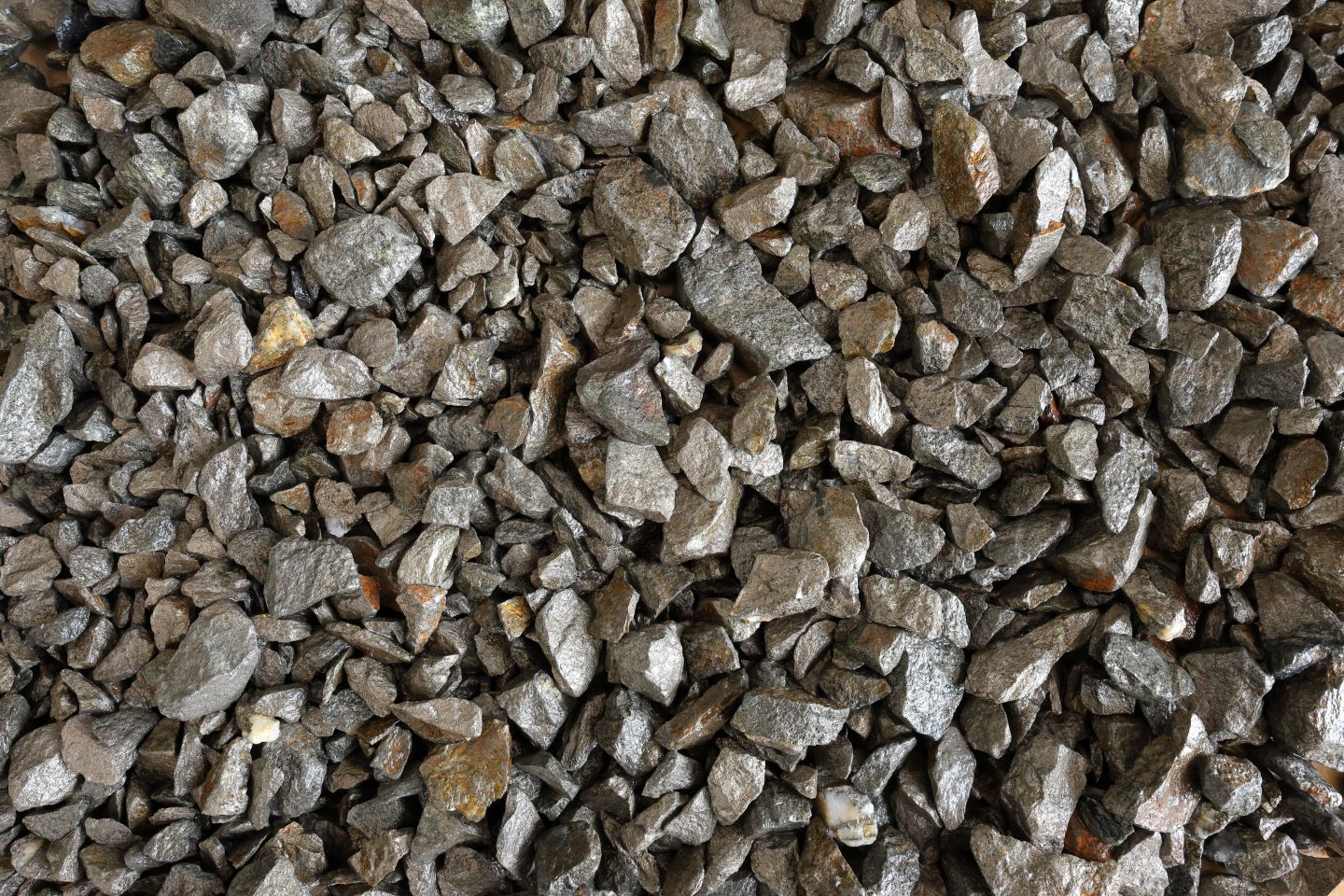
Recent political developments in Venezuela have prompted renewed speculation over whether the US could seek to leverage the country’s natural resource base. President Trump has openly signalled his intentions to exploit Venezuela’s oil reserves, but some commentators have gone further, suggesting the administration may also be eyeing the country’s deposits of critical raw materials as part of its strategy to reduce dependence on China.
In some respects, the idea is not implausible. Venezuela hosts reserves of critical minerals such as copper, nickel, silver and aluminium (via bauxite) that appear on the US 2025 List of Critical Minerals and are relevant to a suite of strategic sectors, including energy transition technologies, power grids, as well as broader electrification efforts. This has led to the hypothesis that Venezuela could become a source of critical minerals for the US at a time when supply chain diversification has become a strategic priority.

Access deeper industry intelligence
Experience unmatched clarity with a single platform that combines unique data, AI, and human expertise.
Reserves versus reality
However, three points are important to note: firstly, Venezuela’s estimated reserves rely on limited geological surveys, meaning that the true size and quality of the deposits remain uncertain. As a result, reserve figures cannot provide a reliable indication of near-term supply potential. Secondly, possessing reserves is not the same as producing readily exportable material. Developing a critical mineral supply requires surveys, permits, mine development, processing facilities and logistics – components that are largely underdeveloped in Venezuela. Lastly, even if such infrastructure were to be built, project timelines would arguably extend beyond those relevant for US supply chain diversification.
GlobalData’s critical mineral mine and project data for Venezuela reinforces this point. For example, the only existing regulated nickel mine, Los Pijiguaos, has been closed for more than a decade, and previous attempts by the Maduro Government to restart the project were abandoned in 2019. Similar dynamics apply to other commodities relevant to US supply chain diversification: the sole silver mine is in the exploration stage and, according to GlobalData methodology, carries a low likelihood of completion. Meanwhile, the only copper project is still under construction, and for bauxite, there is only one operational mine. Beyond these projects, other extractions may be occurring but largely under unregulated conditions.
Why the gap exists: structural constraints
The disconnect between geological potential and production is the result of a series of structural constraints. Modern mining infrastructure, reliable power supply, and the technical capabilities required to develop new projects at scale are largely absent. Years of underinvestment and institutional erosion have also left a system with limited legal predictability, uneven permitting processes and weak contract enforcement. The sector does not operate through the kind of consistent regulatory frameworks typically required for large-scale investment in the mineral value chain.
In addition, Venezuela’s mining industry exhibits a degree of unregulated extraction. In some of the country’s states, mining takes place through a hybrid of state-controlled and informal extraction, which undermines the ability to verify ownership, ensure compliance with basic environmental and labour standards, or guarantee that minerals are not linked to illicit finance. This poses practical barriers for potential US buyers who must navigate supply chain transparency and environmental, social and governance constraints.
US Tariffs are shifting - will you react or anticipate?
Don’t let policy changes catch you off guard. Stay proactive with real-time data and expert analysis.
By GlobalDataHistorical interactions with foreign mining companies illustrate these risks. US-headquartered company Gold Reserve saw its Las Cristinas gold project expropriated by the Chávez Government in 2009 following a protracted dispute over permits and contracts. Although the company was later awarded arbitration damages, the site remains under unregulated control today. More broadly, Venezuela’s gold sector was formally nationalised in 2011, under a decree that placed the state in control of gold mining and required majority state ownership – a move that contributed to a decline in formal and foreign investment in Venezuela’s gold. Cases like this reinforce the perception that Venezuela’s mining sector lacks enforceable property rights and legitimate commercial arrangements, discouraging investment even under more cooperative political conditions.
Strategic mismatch for Washington
These structural issues also intersect with timelines. US supply chain diversification strategies emphasise near-term access to critical raw materials. Venezuela’s mineral potential, by contrast, would require long-term sector reform, capital deployment and institutional strengthening, a horizon that does not align with either the political cycle in Washington or the urgency of energy transition supply chains.
Instead, the US should focus on expanding domestic critical mineral production and processing by leveraging its own reserves: for example, California already hosts an operational lithium mine, the 5E Boron Americas Complex, and exploration is underway to mine ten sites for copper production. Additionally, the US should work towards strengthening partnerships with allied producers such as Australia and Canada, which, together, already host more than 200 operational mines across copper, nickel, cobalt, lithium and manganese, as well as governance frameworks capable of supporting reliable, China-independent supply chains.
Therefore, the opportunity some observers imagine, where Venezuela rapidly emerges as an alternative supplier of critical minerals to the US, appears overstated. Without credible pathways to production and without the governance standards needed to attract foreign capital, mineral development remains a long-term and uncertain proposition. In practical terms, the Trump administration is likely to prioritise Venezuela’s oil sector in the near term, while critical mineral diversification will need to be sourced from elsewhere.
