
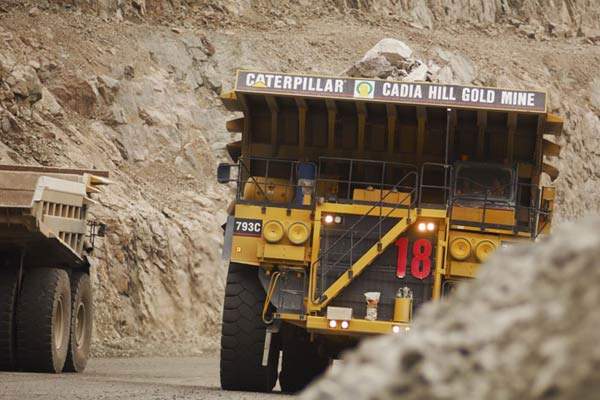
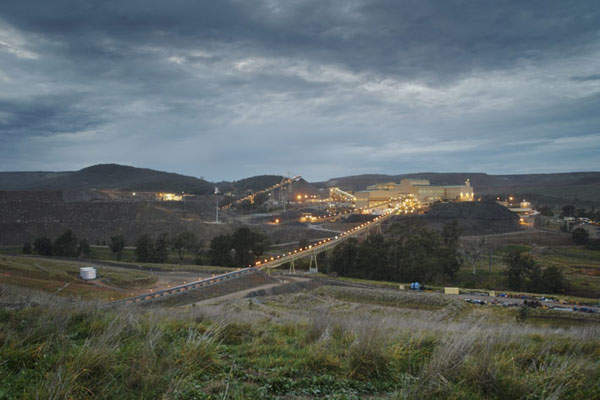
The Cadia East Underground gold and copper mine is the first Australian panel cave and the country’s largest underground mine, with significant ore reserves and a projected lifespan of more than 30 years.
It is 100% owned by Australian gold producer Newcrest Mining, which also runs the Cadia East open pit, as well as Ridgeway Deeps underground mines. All three sit within the so-called Cadia Valley Province in central New South Wales, Australia.
Recommended White Papers
Recommended Buyers Guides

Initial exploration pointed to an underground mine similar to Ridgeway Deeps, however, more recent drilling has revealed that a much larger zone of mineralisation exists, likely to support both underground and open cut mines.
The Cadia Hill gold-copper porphyry deposit was discovered by Newcrest Mining in 1992. Cadia East was then discovered in February 1994, following exploration east of the Cadia Hill prospect during the drillout of that deposit. The high-grade gold-copper (Cadia East Underground) mineralisation at depth was discovered in 1996 by drilling beneath previously outlined gold-copper mineralisation.
Drilling of the Cadia East System by Newcrest has been carried out in several phases since 1994 right up to the present day, where underground access has now been established via an exploration decline.
Newcrest expects that Cadia East sustains production in the Cadia Valley well beyond the life of the current Cadia Hill and Ridgeway underground operations. A further 2,800m of decline development was planned to reach the proposed extraction level by late 2008.
Newcrest’s 2007 annual report listed the pre-feasibility stage mineral resources of Cadia East Underground at 15.5 million ounces (Moz) of gold and 2.24 million tonnes (Mt) of copper.
The project’s feasibility study was completed by the end of 2009. In January 2010, the New South Wales government granted Newcrest Mining the approval to proceed with the construction of the A$1.91bn project.
Construction began in April 2010. First production from the underground mine was achieved in January 2013, while full production levels are expected to be reached in 2017.
Geology and reserves at Newcrest Mining’s deposit
The Cadia East project is based on a porphyry zone of gold-copper mineralisation adjacent to the eastern edge of the Cadia Hill ore-body and extending to up to 2.5km east.
Cadia East is a mineralised system located on the eastern edge of the Cadia Hill ore-body, within the Cadia mineralised corridor. The deposit is a porphyry zone of gold-copper mineralisation extending up to 2.5km east of Cadia Hill. The system is up to 600m-wide and extends to 1.9km below the surface.
Estimates for the Cadia East Underground project were revised in 2009 up to 2,347Mt, including 33.2Moz of gold and 6.59Mt of copper.
By 2009, the mineral resources of Cadia East increased by 5.2Moz of gold and 1.02Mt of copper. The ore reserves are 18.7Moz of gold and 31.6Mt of copper.
The exploration activities resulted in increase of about 2.4 million ounces of gold and 0.40Mt of copper reserves. The total mineral resources as of 2009 were 2,347Mt (including measured, indicated and inferred) graded at 0.44g/t Au and 0.28% copper.
The underground component of the Cadia East indicated resource was upgraded to probable reserves. This was updated to indicate an increase of 101Mt of ore containing around 1.7Moz of gold and 0.30Mt of copper. The Cadia East deposit contains some molybdenum.
As of December 2015, the total mineral resources were estimated at 2,800Mt graded at 0.40g/t Au and 0.26% Cu.
Cadia East Underground development
Related project
Dargues Reef Gold Mine, New South Wales (NSW), Australia
The Dargues Reef gold mine is located in New South Wales (NSW) in Australia, approximately 60km south-east of Canberra.
Cadia East Underground is the development of the underground zone of Mineral Resource which extends from 700m to 1,500m below the surface. The underground resource has a high-grade core and lower-grade halo. It is a massive deposit suited to the application of lower cost, bulk underground mining methods.
Newcrest has identified panel caving as likely to deliver the best technical and economic outcome. In October 2010, the company awarded a $20m contract to ABB to supply conveyor control systems for the six underground mines. The control system will comprise ACS 6000 multidrives and motors.
Cadia East underground is the first Australian panel cave and Australia’s largest underground mine with world-class ore reserves and an expected mine life of more than 30 years.
Ore processing at the gold and copper mine
In late 2004, the Newcrest Board approved $100m for investigation and study work on the Cadia East deposit including: development of a 6.7km underground decline to access the ore-body and 6km of underground horizontal development to provide access to the ore-body for drilling and sampling; more than 45km of resource drilling; and data collection and studies covering geotechnical, mining and metallurgical areas in order to assess the optimal mining and processing methods.
Production / costs associated with Australia’s largest underground mine
Newcrest’s pre-feasibility study into Cadia East Underground was completed in the first half of 2009. The study identified more definitive data on throughput rates, production levels and the timing of initial production.
The project will produce 700,000-800,000oz/year of gold and 75,000-100,000t/year of copper for its first ten years.
The project is being funded by internal cash flows. The cost of production for the first ten years will be less than $100 per ounce. The average production cost during the life of the mine is expected to be less than $250 per ounce.
Contractors involved
Fluor was awarded the engineering, procurement and construction (EPC) management contract for the project. It is also responsible for the commissioning of new facilities at the mine.