

The Iron Bridge magnetite project is a producing magnetite mine in Western Australia (WA). It is owned by a joint venture between FMG Fortescue (69%) and Formosa Steel (31%).
The first magnetite product at Iron Bridge was successfully produced in April 2023.
Recommended White Papers

Recommended Buyers Guides

Iron Bridge is expected to have an annualised output of 16–20 million tonnes (mt) in the first half of 2027 on a 100% basis.
The operation is forecast to reach its 22 million tonnes per annum (mtpa) nameplate capacity in 2028, following a revised timeline and further process improvements.
Iron Bridge magnetite project location
The Iron Bridge project is located in the Pilbara region of WA.
The site is 145km away from the town of Port Hedland, where Fortescue’s port facility is located, and within 25km of the company’s rail line.
The project site can be accessed from Port Hedland via the Great Northern Highway and then via gravel roads.
Geology and mineralisation
The iron ore mine is located in the East Pilbara terrane of the Pilbara craton. The regional deformation is hosted by strike-slip and reverse faulting.
The area contains two major volcano-sedimentary formations, namely the Sulphur Springs group and the Soanesville group. Sulphur Springs is a steeply dipping sequence of ultramafic to mafic volcanics overlain by Pincunah deep marine banded-iron formation (BIF), while the Soanesville group is defined by terrigenous clastic sediments.
Iron mineralisation at Iron Bridge exists within the Pincunah member, which is often concealed by cemented caps of ferruginous weathered BIF, detritus and silcrete. The primary mineralised BIF zones within the Pincunah member are characterised by a comparatively narrow mineral suite, with magnetite mineralisation overprinting the original lithology.
The main mineralisation appears as disseminated grains and aggregates of magnetite micro-bands with subordinate gangue phases.
Iron Bridge project reserves
The Iron Bridge magnetite project is estimated to contain proved and probable reserves of 938mt graded at 67.3% iron, as of June 2025.
Mining at Iron Bridge magnetite project
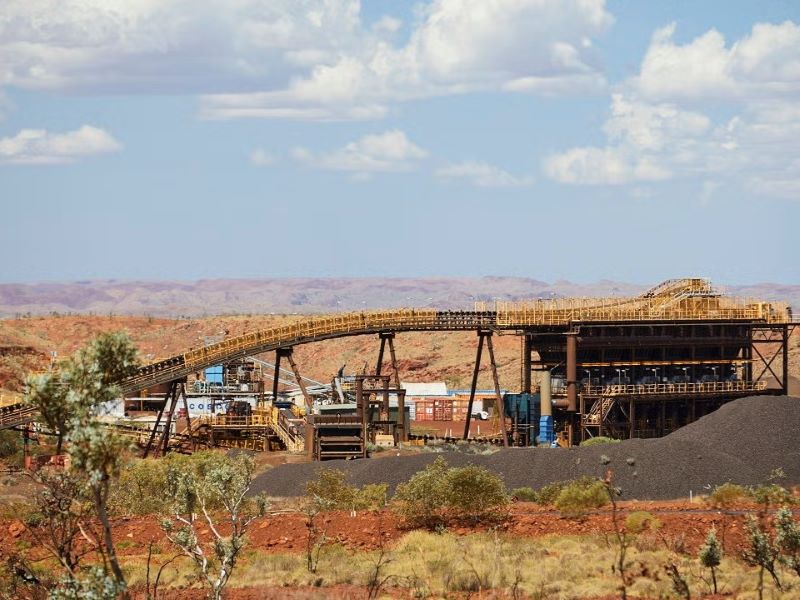
The Iron Bridge project employs a low-cost open-pit truck and shovel mining method with automated haulage and drilling systems. The deposit is mined using conventional drill and blast open-cut mining methods.
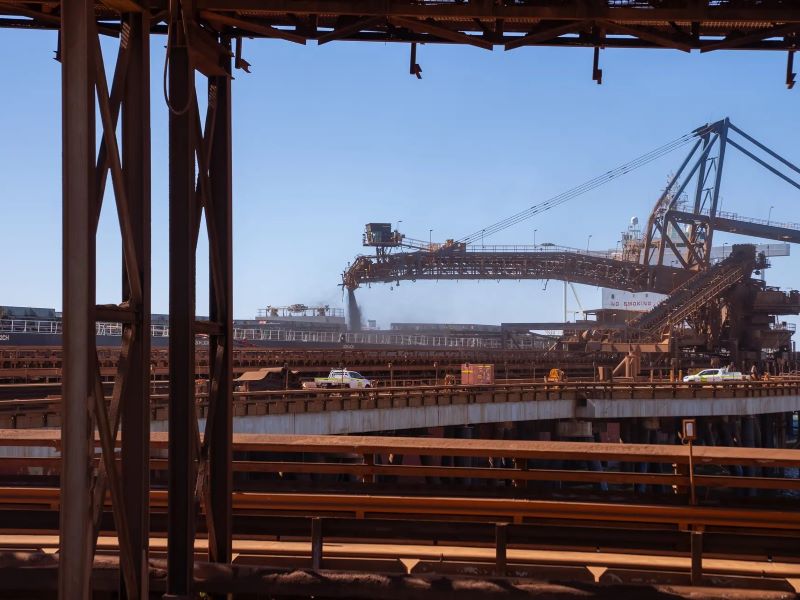
Mining and processing are performed at the site, followed by pumping of fine-grained concentrate to Port Hedland for drying and shipping through the Fortescue port facilities
Ore is being mined from the North Star, Eastern Limb, Glacier Valley and West Star deposits.
Processing details
A pilot processing facility was constructed during stage one development of the project, which was operated successfully to implement a new processing solution to reduce operational costs.
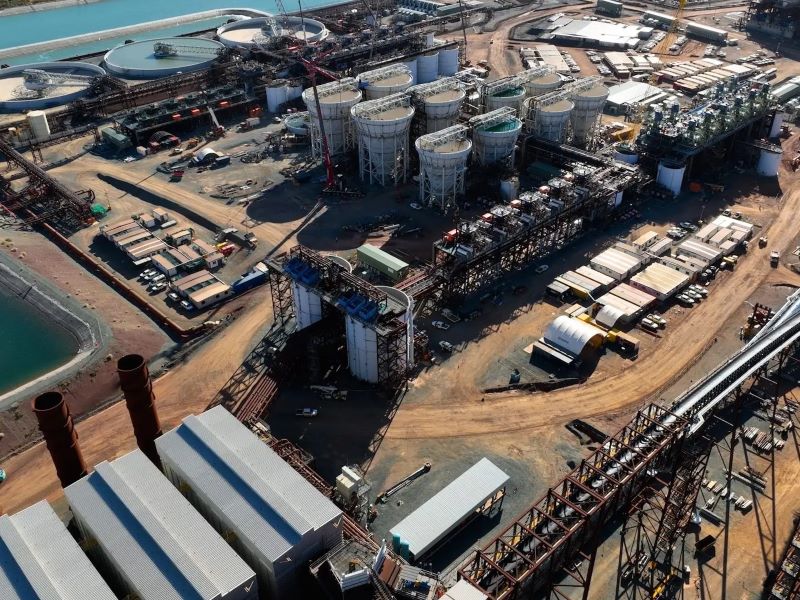
The run-of-mine ore undergoes crushing and processing at the site to produce magnetite, dry process rejects and wet tailings. The processing plant uses a dry crushing and grinding circuit.
The plant employs KB 63-130-type gyratory crushers, one of the largest crushers in the country. The crushers process raw iron ore from the pit and transfer it to the receiving conveyor. The secondary crushed magnetite iron ore is stacked onto a stockpile by a slewing and luffing radial stacker.
The plant reduces energy consumption and wet tailings waste by more than 30% compared to conventional mining technologies using Enduron® high-pressure grinding rolls and GEHO® pumps.
The concentrate produced from the ore processing facility is pumped to Port Hedland through a 135km specialist slurry pipeline.
The concentrate slurry is dried after reaching the concentrate handling facility, and the filter cake is sent to a stockyard within the Pilbara infrastructure port facility, from where it is reclaimed for export.
Infrastructure at Iron Bridge project
The Iron Bridge magnetite project is operated on a fly-in fly-out basis, with an airstrip situated 23km from the mine site.
The village of Japal was upgraded for the construction and mining operations to include a dry and wet mess, gym and other lifestyle facilities for the employees. A tailings storage facility is located north of the mine.
The project requires up to 225MW of electricity, provided by low-cost power transmitted from a combination of existing and new generation sources in Pilbara. The site utilises medium-speed gas generator sets, which have very low fuel consumption and generate fewer emissions.
Fortescue is developing the Pilbara Energy Connect (PEC) programme, a renewable power system that combines solar and wind generation, battery storage and a 629km transmission network. The infrastructure is intended to link the company’s sites in the region into a single grid supplied by lower-carbon electricity.
Phase one of PEC was completed in 2024 and included a 100MW solar facility at North Star Junction, 140km of new transmission lines and associated substations. Fortescue aims to install up to 3GW of renewable generation and storage by 2030, with the goal of removing fossil fuel use from its Australian iron ore operations.
The North Star Junction solar farm is situated around 26km from the Iron Bridge operations.
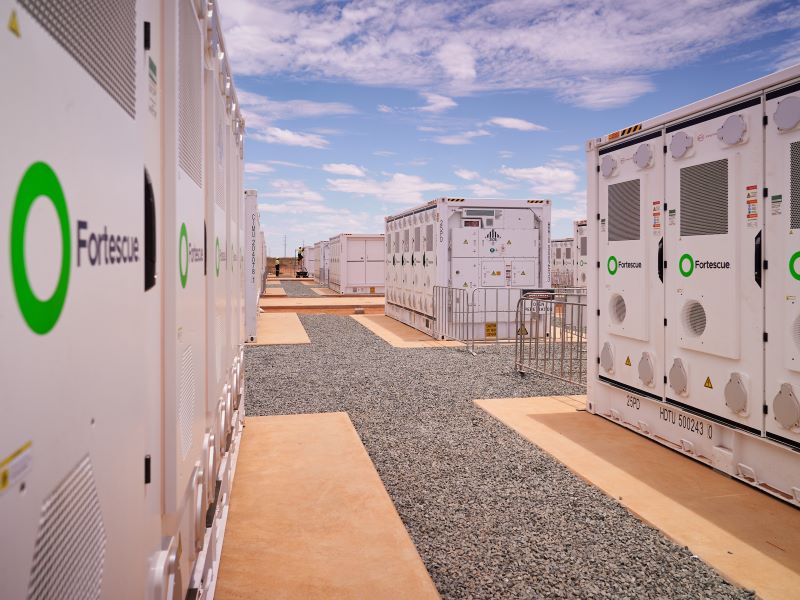
Furthermore, Fortescue deployed its first large-scale battery energy storage system at North Star Junction in December 2025, a step in its efforts to cut emissions across its Pilbara iron ore operations.
Contractors involved
Snowden Mining Industry Consultants completed the mineral resource update for the project in 2019.
MACA was contracted to conduct bulk earthworks including access roads and infrastructure at the site in October 2019.
NRW was awarded a A$70m ($47.03m) contract in February 2020 to perform bulk earthworks and construct a drainage system for the mine plant site and associated roads and infrastructure pads.
Civmec was contracted for the supply of modules and the construction of structural concrete components for the dry plant. In August 2020, CPB Contractors was selected to perform concrete and detailed earthworks for the wet processing plant.
Decmil Group was selected to undertake non-mining process infrastructure works as part of a $30m contract in September 2020. The scope of work included the construction of a bulk fuel storage and transfer facility and a mobile maintenance complex at the site.
Pindan was responsible for the design and construction of the landside airport for the Iron Bridge project. The company previously received a contract to construct office buildings at the mine site.
Monadelphous’ specialist heavy lift division, working alongside heavy lifting contractor Fagioli, delivered heavy lifting and haulage services.
Thiess is providing mining and asset management works at the project.
Other contractors involved in the project include Clover Pipelines, Sedgman Onyx, DBM Vircon, MPC Kinetics and Veris.
Suppliers involved in the Iron Bridge magnetite project include WEIR, ABB, PROK, Rolls-Royce and DALLCON.
