

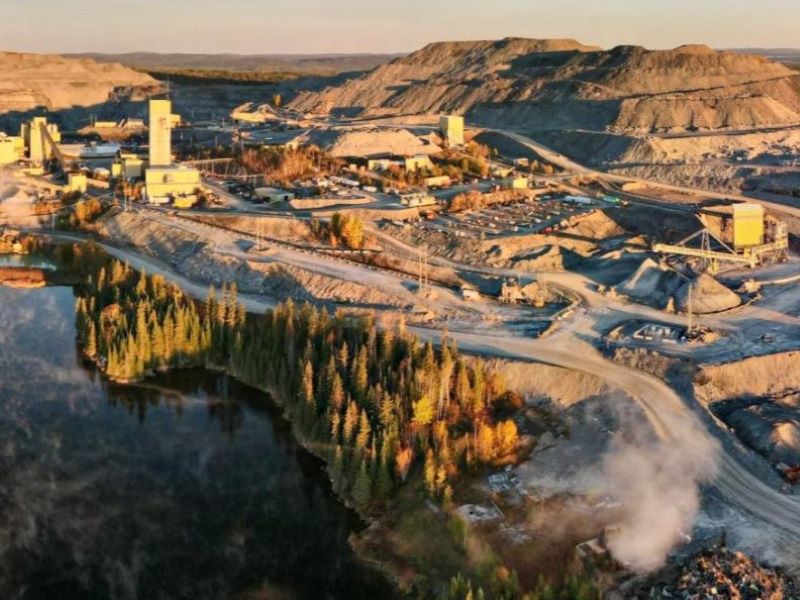
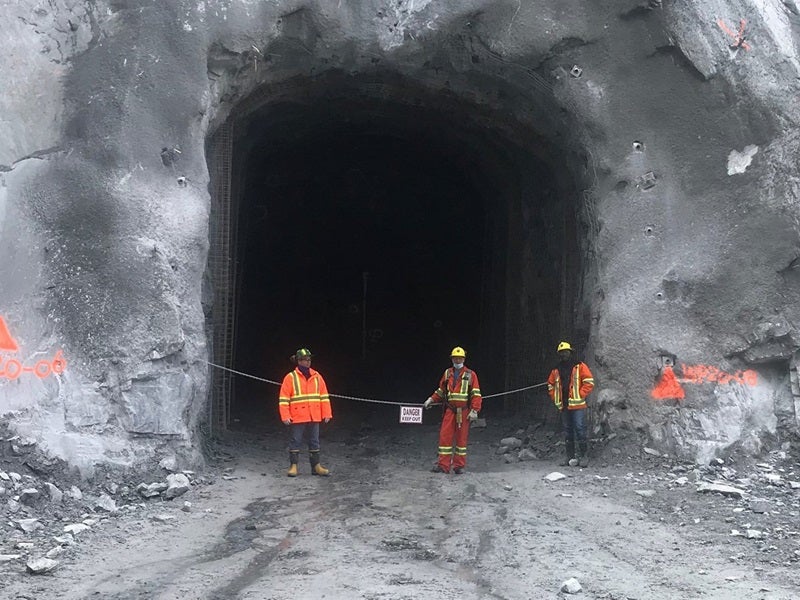
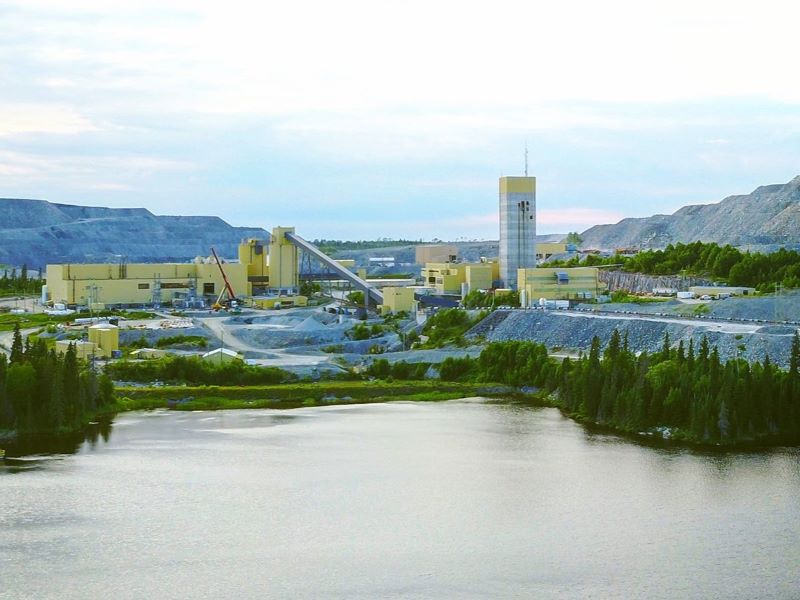

Hemlo is a fully integrated gold mining operation located in north-western Ontario, Canada.
Production at the Hemlo property mine began in 1985 at the David Bell Mine.
Recommended White Papers
Recommended Buyers Guides

The mine was developed by various companies including Cominco, Teck and Newmont, before operations were consolidated by Barrick Mining between 2009 and 2010.
Mining operations are now solely underground at the Williams underground mine.
In September 2025, Carcetti Capital entered into a definitive agreement to acquire 100% of the property from Barrick Mining for $1.09bn via its wholly owned subsidiaries.
A technical report for the project was filed in October 2025.
The acquisition was closed in December 2025, with Carcetti Capital also being rebranded as Hemlo Mining. The first gold pour was achieved during the same month.
The pour produced around 6,704oz of gold, one of the largest single pours that year from the operation.
An open-pit expansion at the mine is expected to start in 2027 and reach full capacity in 2028.
Current plans indicate reserves will be depleted by 2034, with stockpiles to be reclaimed through to 2038.
Project location
The Hemlo gold project lies in Bomby Township in north-western Ontario, just north of Lake Superior along the Trans-Canada Highway, around 35km east of Marathon.
The site covers the Williams mine and processing plant to the west, the Golden Giant mine in the central area and the David Bell mine to the east.
Geology and mineralisation
Hemlo sits in the eastern part of the Schreiber–Hemlo greenstone belt within the Wawa Subprovince of Ontario’s Archaean Superior Structural Province. It is positioned in the belt’s south-central corridor between the Pukaskwa gneiss and the Cedar Creek stock.
The volcano-sedimentary lithotectonic units in this area generally dip to the north to north-north-east and have been tightly refolded and transposed within high-strain zones.
Gold mineralisation is classed as orogenic and is typically associated with metamorphic terranes, with mineralising fluids widely interpreted to have formed through metamorphic devolatilisation.
Reserves
The probable reserves at Hemlo are estimated at 41.2 million tonnes (mt) at an average grade of 1.75 grams per tonne gold, containing 2.32 million ounces, as of December 2024.
Mining methods
Underground mining at Hemlo currently uses longhole stoping and Alimak stoping with backfill. Paste fill is used for the majority of the excavations, with selected voids using uncemented rockfill in place.
Longhole stoping with paste fill remains the primary method, while Alimak stoping is being evaluated for the upper C-Zone.
The recent technical report also includes adopting longhole stoping with pillars instead of backfilling in areas where paste fill capacity is limited or where insufficient waste is available to backfill voids.
The recent study for the restart of open-pit operations outlines a western cutback for the pit to complement underground operations.
The pit design assumes the use of conventional drill-and-blast techniques on 10m benches, with loading by 22 cubic-metre excavators and ore and waste haulage by 135–147t trucks.
Ore processing
The Williams plant is currently treating ore at a rate well below its nameplate capacity of approximately 3.65 million tonnes per annum (mtpa).
Underground ore and waste are crushed in jaw crushers located below the surface.
Grinding is carried out through two semi-autogenous grinding mills, a ball mill and a cyclone classification circuit with a capacity of roughly 225 tonnes per hour.
Pebble screen undersize is combined with ball mill discharge and sent to cyclones prior to being pumped to a 65m conventional pre-leach thickener for leaching.
The gravity circuit uses a Knelson concentrator and an intensive leach reactor to generate a high-grade solution that is transferred to the gold room, where gold is recovered by electrowinning.
Thickener underflow is cyanide leached, with screen undersize sent to the carbon-in-pulp circuit where the gold-cyanide complex is adsorbed onto activated carbon. Loaded carbon is processed through elution, including an acid wash followed by stripping.
The pregnant solution from elution and the intensive leach reactor is treated by electrowinning, producing sludge that is dried, retorted to remove mercury and smelted in an electric induction furnace to produce doré.
Site infrastructure
The Hemlo mine site is adjacent to the Trans-Canada Highway, with the main Canadian Pacific Railway line just south of the site.
Power required for site operations is supplied via a 115kV line from the Ontario grid to two 33-megavolt-ampere transformers at the main substation.
Workforce accommodation is provided at the GMS camp and facilities east of Marathon airport.
Contractors involved
The October 2025 technical report was prepared by SLR Consulting Canada, with input from Entech Mining and WSP Canada.
