

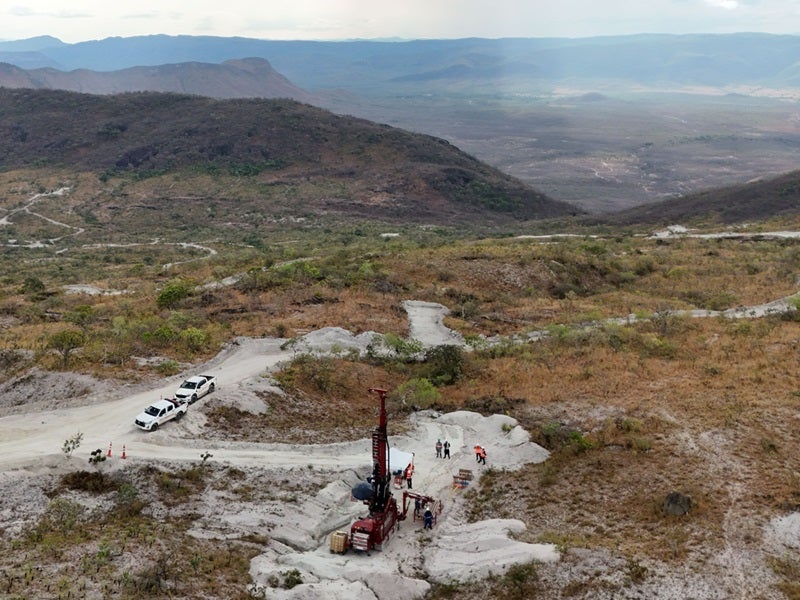
The Carina Project is a rare earth mining development in the Brazilian state of Goiás, being advanced by its 100% owner Aclara Resources.
Aclara submitted an environmental impact assessment for Carina to the Secretariat of the Environment and Sustainable Development in Goiás in May 2025.
Recommended Buyers Guides

A pre‑feasibility study for Carina, released in September 2025, outlined a projected capital outlay of about $680.5m.
The company expects to receive approval for the preliminary licence in the first quarter of 2026, with the Carina Project feasibility study targeted for completion by the second quarter of 2026.
Early construction activities are scheduled to begin by mid‑2026, with a full fast‑track construction planned for 2027.
Commissioning is anticipated to commence in the second half of 2028, followed by a production ramp‑up extending through 2029.
Carina is projected to operate for about 18 years, delivering an average of 4,265 tonnes (t) a year of total rare earth oxides.
Carina project location
The Carina property lies within the municipality of Nova Roma, about 570km north‑east of Goiânia and roughly 370km north of Brasília. It comprises six mining rights covering an area of 9,863.6 hectares. Each licence has a three‑year term and is classified as an exploration permit.
Within the project perimeter, there are 14 individual landholdings under possessory rights, one of which is an estate under succession involving multiple heirs.
Geology and mineralisation
Carina is situated in the Paranã Fold Belt in the eastern portion of the Tocantins Structural Province. The area is underlain predominantly by A‑type granites, particularly the Pedra Branca Massif, which forms the main bedrock unit. Within the project limits, A‑type granitic plutons are grouped into two principal families.
The main lithological unit within the Pedra Branca Massif is porphyritic biotite granite, which forms the primary host rock of the Carina regolith-hosted REE deposit. Additionally, Pedra Branca Massif exhibits REE enrichment in parent granite, greisens, and associated regolith.
The deposit is considered a representative example of a regolith‑hosted, heavy rare earth ion‑adsorption clay system developed above hydrothermally altered peraluminous granites. It exhibits deeply developed weathering horizons and elevated levels of readily leachable heavy rare earths, notably dysprosium and terbium.
Reserves
Carina is estimated to contain probable reserves of 165.4 million tonnes with 1,723 parts per million (ppm) total rare earth oxides, including 336ppm neodymium-praseodymium, 47ppm dysprosium and 7.5ppm terbium.
Mining method
Carina Project is planned to be operated as a conventional open‑pit mine using a standard load‑and‑haul fleet across all rock types. The operation will not involve drilling or blasting activities, due to the friable nature of the orebody.
Mining will generally take place on 4m benches, with 2m flitches employed at ore–waste contacts to improve selectivity.
Washed clay will be filtered and then transported to a purpose‑built co‑disposal facility, where it will be placed together with waste material.
A pre‑stripping phase of about six months is planned in 2028 to secure sufficient ore for initial operations. During this period, mineralised material will be stockpiled ahead of plant start‑up, which is scheduled for 2029, followed by a one‑year ramp‑up to design throughput.
Haulage will use in‑pit and ex‑pit roads engineered to maintain appropriate gradients.
The mine is planned to operate year‑round on a three‑shift basis, with mining activities to be carried out by a contracted mining services provider.
The primary fleet will comprise 95t hydraulic excavators fitted with 6.5m3 buckets and 75t off‑road trucks.
Ore processing details
The processing plant has been designed to recover REEs from ionic clays and produce intermediate-grade REE carbonates and hydroxides. It will produce 4,265 tonnes per annum of rare earth oxide equivalent on average, excluding the ramp‑up and closure periods.
Run‑of‑mine (RoM) ore will either be temporarily stockpiled on a pad or sent directly to the conditioning area, where it will be converted into slurry for feeding into the ion‑exchange circuit, where the rare earths will be leached in washing drums.
The front end of the plant will consist of four parallel washing trains, each handling roughly a quarter of the RoM feed at a nominal wet throughput of 350t per hour.
Slurry leaving the washing drums will pass through a dewatering circuit that splits the stream into a low‑moisture solid residue, which will be returned to the mine, and a rare‑earth‑rich solution forwarded to the primary precipitation stage in stirred reactors.
The rare‑earth‑bearing reactor discharge will then move to an impurity removal stage and associated polishing filtration. These stages will also receive recirculated clean solutions used for backwashing and solids washing.
The resulting clarified solution, containing dissolved rare earths with impurities largely removed, will then feed a second reactor train, where pH adjustment will trigger rare earth precipitation.
After precipitation, the slurry will undergo solid-liquid separation to produce a low‑moisture final product. This material will be packaged and stored on site for later shipment to customers.
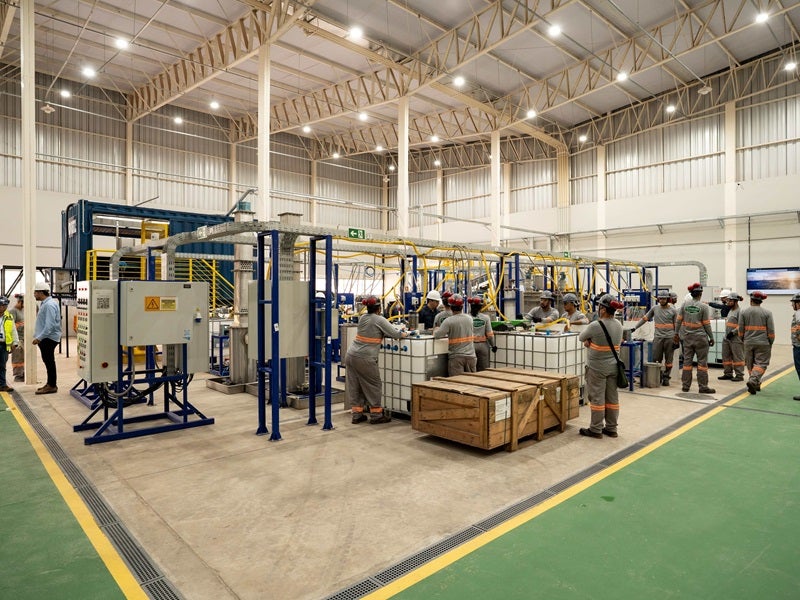
Aclara inaugurated a semi‑industrial heavy rare earths pilot plant in Aparecida de Goiânia, in the state of Goiás, in April 2025.
This facility has been designed to produce dysprosium and terbium as main products, along with a suite of other heavy and light rare earth elements. It will also enable Aclara to test and improve the extraction process it developed for the Carina clays.
Carina Project infrastructure
The Carina project site is accessible from Nova Roma via a 30km of maintained gravel road, supplemented by additional unsealed tracks suitable for four‑wheel‑drive vehicles that provide access to different parts of the property.
The operation is expected to draw about 100 litres per second of raw water from the Paranã River, situated roughly 7.5km from the site, to meet plant and general site needs.
Planned water management infrastructure includes in‑pit sumps in the mining areas, a sedimentation pond, pumping systems, a raw water storage tank, a reservoir and associated pipelines. A dedicated water treatment system is being incorporated to maximise process water recycling and reduce dependency on river abstraction.
Power for the Carina project will be supplied via a dedicated high‑voltage transmission line operating at 230kV. The single‑circuit configuration line will extend for around 100km with one conductor per phase.
A main substation will act as the central hub of the project’s electrical network, housing a transformer to step down the incoming 230kV to 138kV for distribution to a series of secondary substations located near major operational facilities.
Contractors involved
Aclara engaged Hatch to lead the pre‑feasibility study for the Carina rare earths project. Additional engineering and consulting support for the study was provided by L&M Geociencias, Promet 101 Consulting, Abelco Consulting, LOM Consultoria em Mineração, F&Z Consultoria e Projetos, ERM Consultants Canada and Argus Media.
