

In today’s mining landscape, operations are under increasing pressure to move more material, more efficiently—often with reduced manpower and slimmer margins. To meet these demands, slurry pump sizes continue to grow in order to handle higher throughputs, while pump operations become more sophisticated. In particular, operators are placing greater emphasis on streamlining pump maintenance as a means of improving productivity and reducing unplanned downtime.
In this demanding environment, traditional maintenance approaches are falling behind the needs of modern mining operations, particularly with respect to efficiency. Time-based maintenance schedules can leave usable pump life on the table, while reactive maintenance often results in extended downtime.
Digitization is reshaping how operations approach slurry pump maintenance. Emerging digital technologies allow operators to move away from reactive approaches and toward more predictive maintenance strategies informed by measured data . At KSB GIW, the development of digital slurry pump technologies is driven by the day-to-day operational challenges customers face. Technologies such as remotely adjusted mechanical suction liners (GIW® RAMSL), wear monitoring through GIW® SLYsight, and the recent launch of an IoT and Automation Lab are already helping mines operate more efficiently while laying the groundwork for the next generation of digital mining systems.
The changing slurry pump maintenance landscape
Slurry pumps are among the most critical and heavily loaded pieces of equipment in a mining system. Many are expected to run continuously while handling abrasive or corrosive slurries that accelerate wear. Historically, assessing internal pump wear and adjusting wet end parts have required scheduled shutdowns, manual inspections, or intervention after performance has already decreased. At the same time, maintenance teams are expected to align pump service cycles with plant-wide shutdown intervals.
These challenges have driven increased interest in remote monitoring and control technologies. Today, the question is no longer whether mining operations will adopt digital tools, but how effectively those tools can be integrated into their day-to-day maintenance.
GIW® RAMSL: improving precision and efficiency in a critical adjustment
One of the most difficult and impactful maintenance activities on a slurry pump is maintaining proper nose clearance between the impeller and the suction liner. While overall pump performance depends on a number of design and operating factors, hydraulic testing and field data have shown that nose clearance plays an important role. A tight nose gap reduces internal recirculation and improves hydraulic performance; as the suction liner wears and this gap grows, efficiency declines. Maintaining a small nose clearance has also been proven to reduce part wear, maximizing the useful life of hydraulic components such as the impeller and suction liner. This helps operators lower maintenance costs by extending overhaul intervals and reducing spare parts consumption rates.
While the performance losses caused by a wide nose gap appear modest, their impact becomes significant over time. Even a 2–3% drop in pump efficiency translates into higher energy consumption, particularly in continuous-duty applications. In one representative example, a single pump operating at approximately 5,000 cubic meters per hour, 45 meters of head, and a slurry specific gravity of 1.5 can incur roughly $40,000 per year in additional energy costs from a 3% efficiency loss. Across multiple pumps, sites, and years, these incremental losses can become a meaningful contributor to operating costs.
Traditionally, the nose gap has been adjusted through manual maintenance during operation or by shutting the pump down entirely, often requiring interruptions or downtime.
GIW® RAMSL was designed to make this adjustment faster and more precise. Short for remotely adjusted mechanical suction liner, this system allows operators to make remote nose clearance adjustments down to approximately a quarter of a millimeter. This simplified adjustment process significantly reduces the time and manpower needed to complete nose gap adjustments, while improving consistency and repeatability.
GIW® RAMSL features a rugged design suited to the loads associated with large slurry pumps. On KSB GIW’s MDX-750 pump, for example, the system can apply roughly 200 tons of force to reposition internal parts across the pump’s full pressure range. Maintenance personnel can perform adjustments from a control panel while accessing operational data and maintenance records. Ongoing development is focused on expanding GIW® RAMSL across additional pump platforms as part of a broader move toward IoT-ready equipment.
GIW® SLYsight: improving visibility into component wear
While GIW® RAMSL supports more precise nose gap adjustment, GIW® SLYsight provides insight into an equally critical aspect of the maintenance process: understanding when those adjustments are needed. Traditionally, wet end wear visibility has been limited to specific windows. Operators inspect the pump when it is new, during scheduled maintenance shutdowns, or after a failure has already occurred, with little to no wear data available in between.
As a result, maintenance and part replacement decisions are often made based on schedules or estimates of remaining part life, rather than on the known present condition of wear components. This can lead to one of two outcomes: components are serviced or replaced too early, resulting in unnecessary labor and lost usable life, or intervention happens after a failure has already taken place, leading to unplanned downtime.
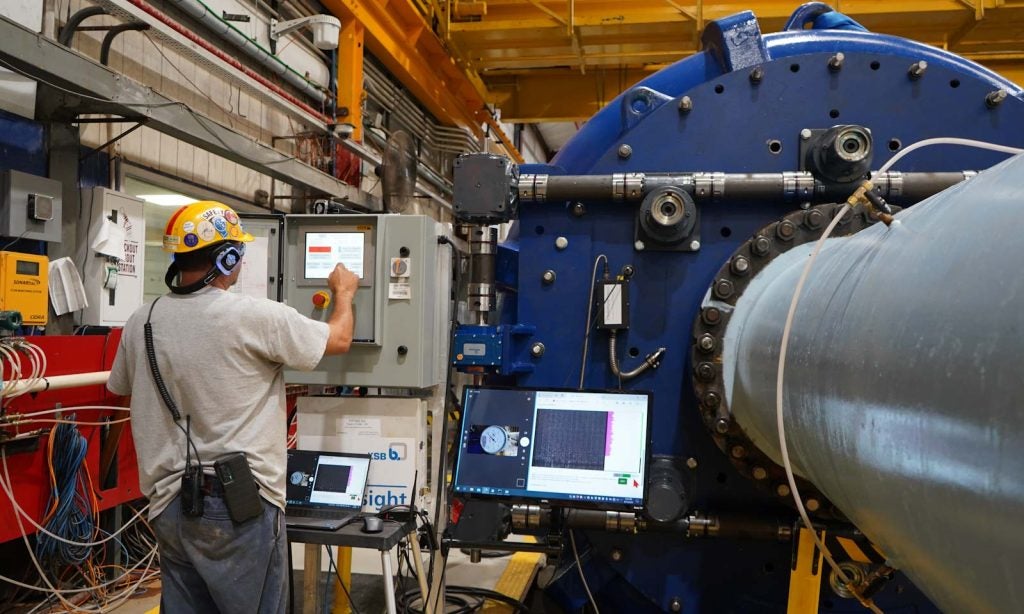
GIW® SLYsight is a wear monitoring system developed to close this information gap. The system uses sensors embedded in key wear areas to continuously monitor component thickness, wear patterns, and internal clearances while the pump is running.
Wear data is presented through a dashboard that visualizes changes over time, allowing maintenance teams to see where and how wear is occurring within the pump. Based on these measurements, the system provides estimated remaining wear life in hours to inform maintenance planning.
In terms of nose gap adjustment, GIW® SLYsight measures the clearance between the suction liner and impeller so that maintenance teams know exactly when an adjustment is needed. During the adjustment process, sensors provide audio and visual alerts as the suction liner approaches contact with the impeller, allowing technicians to fine-tune clearances with greater confidence.
The benefits of GIW® SLYsight extend beyond supporting precise nose gap adjustment. The system also helps maintenance teams make more informed decisions around planned shutdowns and equipment life. In some field trials, operators have been able to observe exactly how parts wear over time and extend maintenance cycles to match actual wear life instead of replacing components based on conservative schedules. Sites using GIW® SLYsight have reported up to 50% longer wear life by maintaining proper nose gap clearance, and have seen efficiency gains of 5–10% when maintenance intervals are extended appropriately.
GIW® SLYsight can also provide an early warning of abnormal wear that might otherwise go unnoticed. In one field example, a suction liner experienced localized gouging during operation. GIW® SLYsight detected a sudden step change in liner wear thickness, flagging a developing issue. By identifying the problem before the liner wore through, the site was able to avoid an unplanned outage and lost production time.
From insight to measurable results
Together, GIW® RAMSL and GIW® SLYsight respond to many of the pressures facing modern mining operations. In the field, these technologies have helped operators achieve significant improvements in pump wear life, runtime, and overall operational predictability.
User feedback emphasizes the value of being able to visualize internal pump conditions, particularly when making nose gap adjustments. In practice, these insights into pump performance and critical wear parts have allowed maintenance teams to make more informed decisions about equipment and maintenance schedules, while reducing unexpected issues between inspections.
These technologies also have broader implications for sustainability. Maintaining tighter internal clearances and optimizing maintenance timing leads to incremental gains in efficiency that, over time, translate into reduced power usage and operating costs for mining sites.
Engineering and support for digital slurry pump technologies
Meeting the growing demand for IoT technologies in slurry pumping applications requires investment not only in the design and development of digital tools, but also in the engineering infrastructure and support needed to operate them in the field.
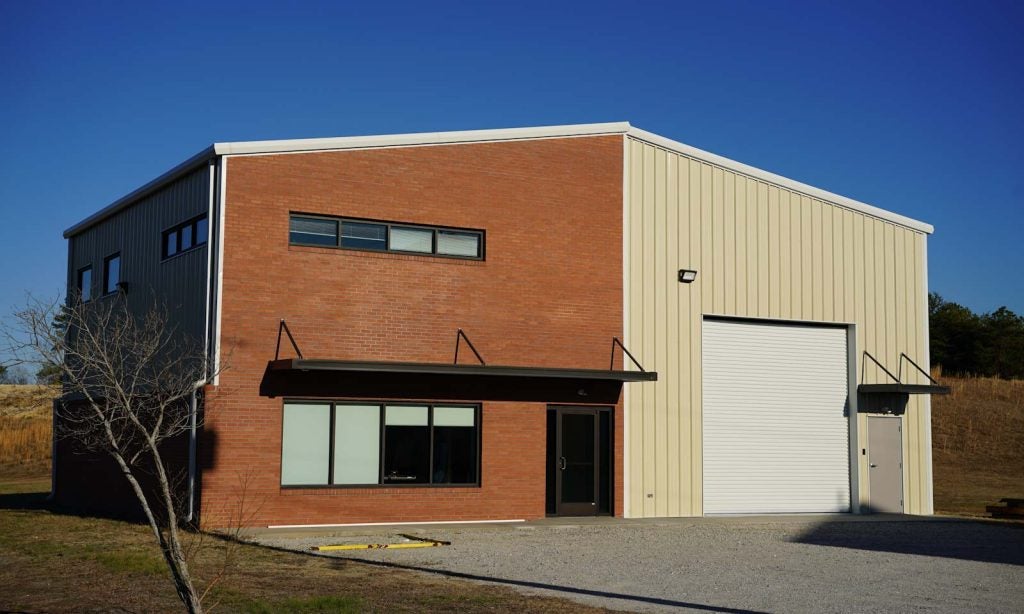
To support this growth, KSB GIW has established an IoT and Automation Lab dedicated to the design, testing, and application of IoT-enabled technologies for the mining industry. In addition to advancing KSB GIW’s existing digital tools, the lab is pursuing the next wave of operational intelligence for slurry pumping applications.
Development efforts are guided by three core principles:
- 1. Delivering insight faster. Reducing the time from data collection to decision-making is a key priority, ensuring operators have the information they need in near-real time.
- 2. Expanding system visibility. The lab is working toward a more holistic understanding of asset health by exploring ways to integrate new data streams and apply GIW® monitoring technologies across a broader range of pump components and applications.
- 3. Simplifying integration. Next-generation slurry pumps are being engineered with IoT-native provisions, allowing digital technologies such as GIW® SLYsight and GIW® RAMSL to be built directly into new designs and seamlessly integrated with plant control systems.
Equally important is the technical support structure for users of these systems. KSB GIW supports implementation of GIW® SLYsight and GIW® RAMSL through a range of approaches tailored to individual customer needs.
For GIW® RAMSL, this includes documentation on basic maintenance and adjustment practices, as well as on-site commissioning assistance where needed. For GIW® SLYsight, sensor installation and hardware maintenance are supported through KSB branches, providing customers with lifecycle support from parts supply through installation and operation. This support model is further strengthened through IoT-focused training and certification programs developed through the KSB Mining Academy.
Building toward intelligent pump systems
Looking ahead, our vision is to create intelligent pump systems that can largely manage themselves. This evolution moves beyond simple monitoring, focusing on creating an integrated digital ecosystem where technologies like GIW® RAMSL and GIW® SLYsight don’t just report data; they communicate and act on it.
The ultimate goal is to enable a pump to automatically self-adjust based on real-time wear and performance data, requiring minimal human intervention. By embedding machine learning and forward-looking analytics into this ecosystem, we are laying the groundwork for systems that don’t just predict failure but proactively optimize their own performance and maintenance schedules.
For mining operators, this progression will mean a shift away from strictly scheduled or reactive maintenance and toward continuous insight and data-driven service strategies. For KSB GIW, it means a long-term commitment to IoT-enabled solutions for the slurry pumping industry, both by developing technologies that address today’s operational challenges and laying the foundation for more intelligent, connected systems in the future.
