

The Kasiya Rutile-Graphite Project in Malawi is a major critical minerals project owned by Sovereign Metals.
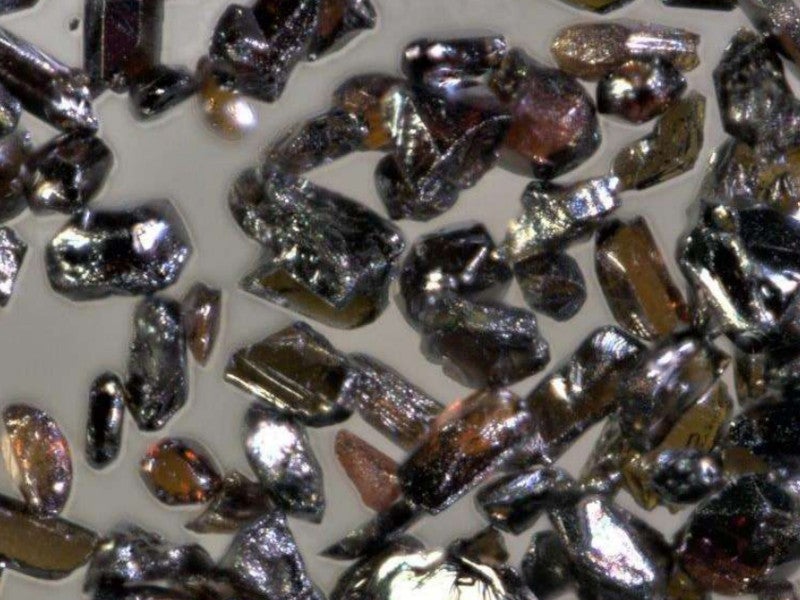
The project is regarded as the world’s preeminent natural rutile deposit. It also holds the second-largest flake graphite deposit worldwide.
Recommended Buyers Guides

In September 2023, Sovereign Metals concluded the preliminary feasibility study (PFS) for the project.
The company initiated an optimised pre-feasibility study (OPFS) for Kasiya following a strategic investment from Rio Tinto in the same year. The two companies also formed a joint technical committee to advance Kasiya development.
In July 2024, Rio Tinto announced an investment of A$18.5m ($12.37m) via the exercise of options, raising its stake in Sovereign to 19.76%.
Sovereign released the results of the OPFS in January 2025. The study optimised seven key areas compared to the 2023 PFS, including the mining method, operating model, plant configuration, plant location, power, tailings and water management.
The latest study also revised the initial capital expenditure to first production from $597m to $665m. Initial mine life remains unchanged at 25 years.
Kasiya Rutile-Graphite Project location
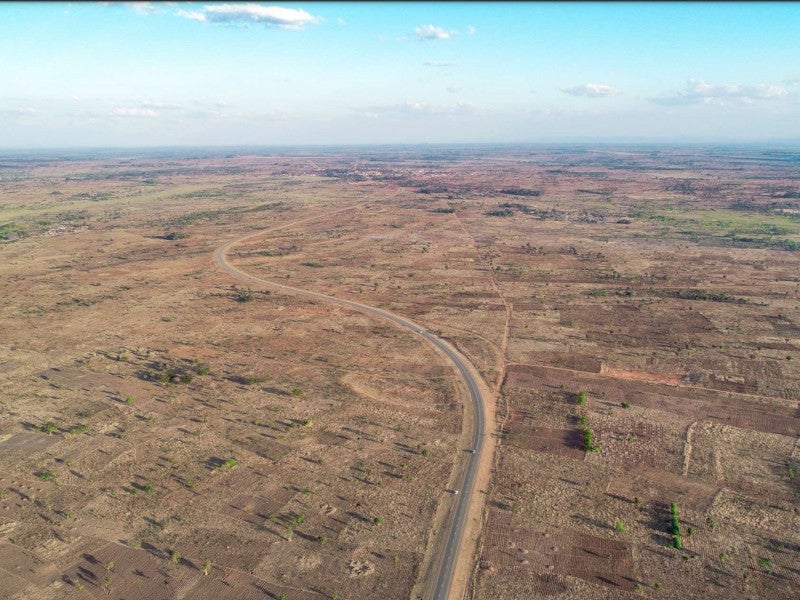
The Kasiya Rutile-Graphite Project is a greenfield mine located in the Lilongwe district in the Central Region of the Republic of Malawi in south-eastern Africa.
The project site is located approximately 40km north-west of Lilongwe, Malawi’s capital.
Geology and mineralisation of Kasiya Rutile-Graphite Project
Located in the Lilongwe plain, the Kasiya Rutile-Graphite deposit features a landscape that is either mostly flat or exhibits a gentle undulation.
The geological foundation of the area is predominantly paragneiss, comprising pelitic, psammitic, and calcareous components.
The deposit at Kasiya is recognised as a high-grade rutile of the residual placer type, which has formed through the weathering process of the primary paragneiss rock.
Rutile mineralisation at Kasiya occurs in relatively flat lateral near-surface blanket-like formations, particularly in regions where the weathering profile is intact and has not been extensively eroded. The concentration of rutile is usually highest near the surface and decreases with depth.
Graphite mineralisation is depleted near the surface, with higher grades occurring from depths of 6m and below in the mottled and saprolite units.
Kasiya Rutile-Graphite Project reserves
The probable reserves at Kasiya are estimated at 538 million tonnes (mt), grading 1.03% rutile and 1.66% total graphite carbon, containing 5.5mt of rutile and 8.9mt of graphite.
Mining method at Kasiya
The 2023 PFS outlined that Kasiya will be developed using a hydraulic system, with mineral slurry screened and pumped to the processing facilities.
In contrast, the OPFS proposes a large-scale dry, open-pit mining approach, relying on draglines and haul trucks to move material to the processing plants.
The OPFS envisages a two-stage operation aligned with the PFS, ramping run-of-mine (ROM) throughput to 12 million tonnes per annum (mtpa) in Year 1 and maintaining it through Year 4 (Stage 1), then increasing to 24mtpa by the end of Year 5 and sustaining this rate for the remainder of the life-of-mine (Stage 2).
Mining will be prioritised by developing the closest pit to each processing plant with the highest rutile grade first, completing each pit before moving to the next to minimise dragline relocations.
Production is planned using multiple draglines, each rated at 6mtpa, with ROM trucked directly to the plant.
Initial mining focuses on higher-grade rutile zones in the larger Southern Group, which is expected to supply ore for the first 12 years, following which mining will shift to the Northern Group, and from Year 20 onwards to the Eastern Group.
Mining fleet at Kasiya Rutile-Graphite Project
The Kasiya Rutile-Graphite Project mining fleet will include three 350t draglines; six 230t large excavators, 51 777-class (or equivalent) mine trucks; and eight 100t front-end loaders.
The operations will be supported by 18 dozers and graders for site preparation and maintenance; 21 40t articulated dump trucks for tasks such as drainage and water supply; and 68 light vehicles and ancillary units.
In August 2025, Sovereign Metals identified CAT, Komatsu, Liebherr, Hitachi, Volvo and Bell as potential suppliers for the equipment.
Ore processing at Kasiya Rutile-Graphite Project
The OPFS determined that the most efficient plant configuration will comprise an initial 12mtpa South Kasiya plant, followed by the construction of a second 12mtpa North Kasiya plant in Year 5. This eliminates the need for plant relocations later in the mine life, as contemplated in the 2023 PFS.
Trucks will discharge ROM either directly into plant feed tip bins or onto a stockpile. Each 12mtpa plant will have a dedicated ROM feed area with an elevated discharge and storage pad, a tip bin fitted with a static grizzly, and a belt feeder that transfers material onto the plant feed conveyor.
Under the dry-mining approach, the ROM must be pre-wet and scrubbed before entering the process plant. Accordingly, each plant is designed with a front end comprising two scrubbers and two oversize screens.
Downstream of the scrubber circuit, the wet plant will receive <2mm material from the pits and remove fine particles using cyclones and up-current classifiers. The heavy mineral concentrate (HMC) will be recovered through coarse and fine spiral circuits. The plant will also produce separate coarse and fine gravity tailings streams enriched in graphite and coarse tailings stream low in rutile and graphite.
The mineral separation unit will then use electrostatic separation to split the HMC into conductive minerals (including rutile) and a non-conductive concentrate, followed by magnetic separation to separate conductive non-magnetic rutile from magnetic mineral concentrates.
Graphite will be recovered from the combined gravity tailings via froth flotation, including polishing and stirred media milling, after which the graphite concentrate is thickened, filtered, dried, and screened. The final rutile and graphite products will be bagged for sale.
Infrastructure at Kasiya Rutile-Graphite Project
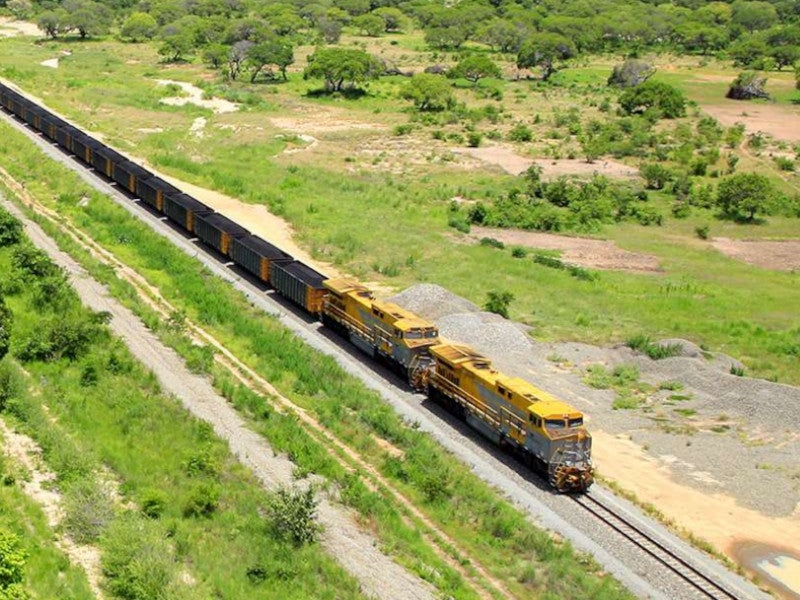
Kasiya is centrally located and close to Lilongwe, providing access to existing services and infrastructure. Rutile and graphite can be transported from the mine to seaports via either the Nacala Rail Corridor (NLC) or the Sena Rail Line to the Port of Beira (Beira Corridor).
The OPFS mining trials and material deposition tests indicate a water demand of 10.2mm³ per annum, representing an almost 40% reduction from the PFS.
Process water will be supplied from a purpose-built raw water dam to sustain operations. The dam will be developed in a low-lying area northwest of the processing plant. The project area also hosts a catchment considered capable of providing a reliable raw water supply.
Kasiya Project is slated to receive 60MW of power at Electricity Supply Corporation of Malawi (ESCOM) tariff, which is expected to be substantially lower than the Independent Power Producer (IPP) arrangement assumed in the 2023 PFS.
A 132kV overhead transmission line will be installed to connect the project to the hydro-sourced grid via the Nkhoma substation, approximately 97km from Kasiya.
Additionally, a 30MW generator farm will be built as an alternative power source to support the initial phase of the operations.
Sovereign Metals and ESCOM also entered a non-binding memorandum of understanding (MOU) in May 2025 for the long-term power supply to the rutile graphite project.
Contractors involved
DRA Global, an engineering consulting company, was associated with the preparation of the PFS study. The company carried out processing engineering and capital estimates for the process plant.
Nyeleti Consulting, an engineering business; and AGE, an expert in hydrology, were responsible for assessing and managing the project’s water resources.
Dhamana Consulting and Hearthstone Social Consulting jointly conducted the environmental and social impact assessments. Orelogy, an expert in mining economics, was responsible for ore reserve estimation, mine scheduling, and pit optimisation for the PFS.
Fraser Alexander advised on the most effective mining methods and tailings management strategies for the project. JMC Power Systems was engaged to provide power supply solutions for the PFS.
Key consultants on the OPFS include DRA, Moletech Consulting, Fraser Alexander, Paterson & Cooke, Epoch Resources, Professional Cost Consultants and Practara Metals & Mining Advisory.
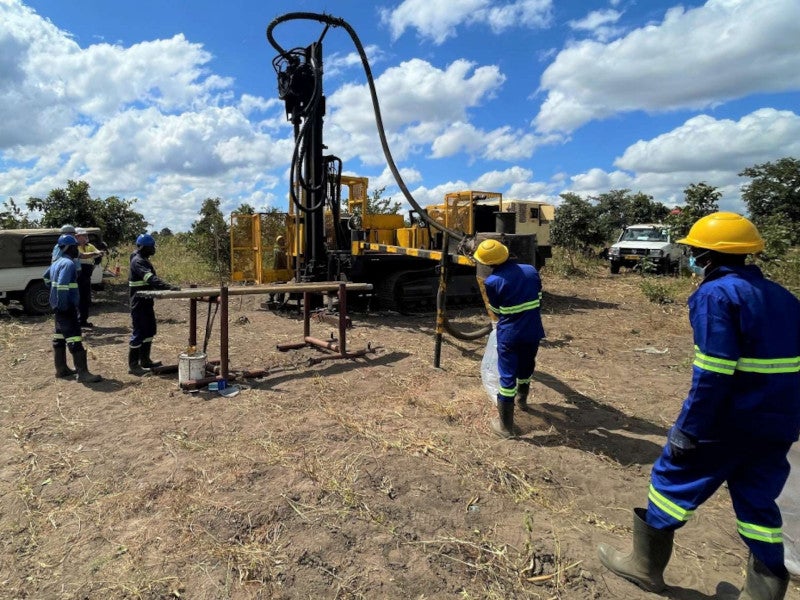
Local civil and mining contractor Mota-Engil Malawi carried out the dry mining trials.
