

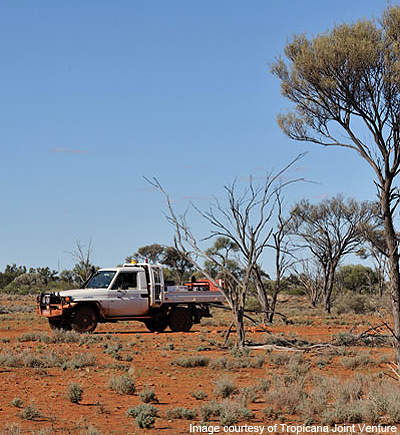
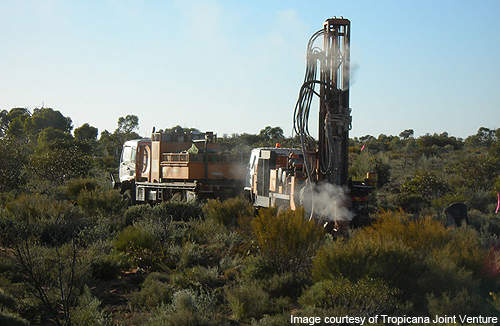
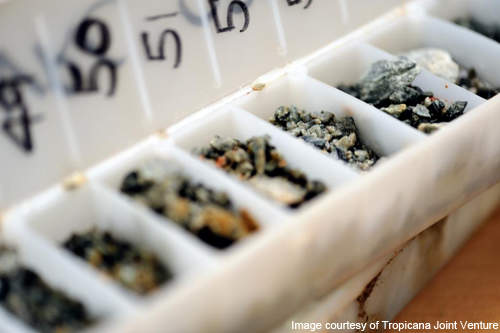
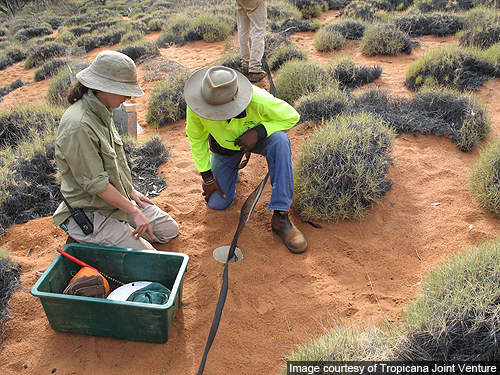
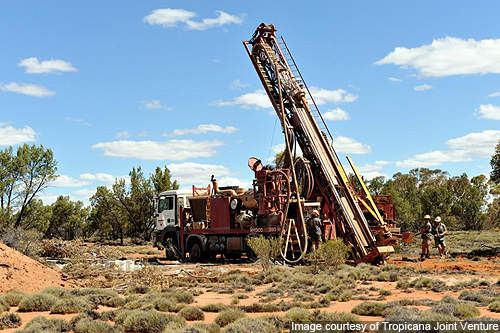
The Tropicana gold project is located in Western Australia on the edge of the Great Victoria Desert, approximately 330km east-north-east of Kalgoorlie.
Discovered in 2005, the project includes over 13,000km² of tenements extending over 300km of the historic contact zone between the Yilgarn Craton and the Albany Fraser provinces.
Recommended White Papers

Recommended Buyers Guides

The project is a joint venture between AngloGold Ashanti Australia (70%) and the Independence Group (30%).
It is expected to produce 470,000oz to 490,000oz of gold annually over the first three years of production and the average production during its mine life is expected to be 330,000 to 350,000 ounce per annum.
The project was approved by the Environmental Protection Authority (EPA) in July 2010. The feasibility study was initiated in July 2009 and completed in 2011.
The project commenced production and the first gold was poured in September 2013. The mine’s development involved a capital expenditure of A$820m to A$845m.
Reserves and resources at Tropicana gold mine
The mine holds an estimated 57.1 million tonne (mt) of proven and probable reserves graded at 2.12g/t. The measured, indicated and inferred mineral resources have been estimated at 118mt grading at 2.08g/t.
Tropicana gold mine geology
The Tropicana deposit is geologically different from other Archaean-aged, greenstone-hosted gold deposits found in the Yilgarn Craton. The Yilgarn Craton was formed following a period of intense tectonic and magmatic activity.
It is dominated by granitic igneous, volcanic and gneiss metamorphic rocks, significant faults and intrusive basic dykes.
The area is regionally characterised by the extreme weathering that resulted in the formation of a 100m thick regolith.
Towards the west, the deposit is dominated by Archaean and Proterozoic aged granitic, volcanic and metamorphic rocks of the Yilgarn Craton.
Younger sedimentary deposits that unconformably lie over the Archaean and Proterozoic rocks dominate the geology of the deposit towards the east.
A north-south trough hosts the deposits that also include alluvial, lacustrine and Aeolian deposits. These deposits, ranging in thickness between 600m and 4,300m, have been formed due to rock erosion and weathering, and stages of marine incursion.
The deposit is comparatively featureless and extends over a strike length of 4km. The three main physiographic units of the deposit include sediment dominant zones, ferruginous and siliceous duricrusts, weathered bedrock and colluvial materials.
The sediment dominant zones are characterised by Aeolian sands that form extensive areas of plains and longitudinal dunes that are on an average 10m in height and between 1.5km and 5km in length.
The width of the east-west oriented dunes ranges between 100m and 200m. The interdune areas are between 250m and 800m wide.
Due to their symmetrical shape and presence of well developed vegetation, the dunes and sand plains are considered to be relatively stable and mature. Between 1961 and 1970, the dunes exhibited no significant movement or modifications, confirming the maturity of the landscape.
The sediment dominant zones also host fluvial silts, halite deposits, and marine silts and clays that correspond to the existing and palaeo drainage systems.
Regional zones of rock exposure are observed across the project area, typically along the ridge surface and low breakaway features. These zones of exposure have developed due to physical and chemical weathering of the less strong kaolinitic areas.
Mineralisation
Mineralisation is found within Archaean aged high grade quartzofeldspathic gneiss rocks that are associated with late biotite and pyrite alteration. It occurs as one or two laterally extensive planar lenses with a moderate dip.
Mineralisation is up to 63m thick and has been drilled to a down-dip length of 600m. It remains open at depth.
Mining and processing
The deposit is mined using open pit methods including a traditional drill and blast, truck and excavator operation. The mining commenced at the Havana Starter Pit in July 2012. The pit is approximately 6km long, 1.5km wide and up to 400m deep.
The ore processing at Tropicana is carried out at a rate of 5.5mtpa. It comprises of a comminution circuit including two-phase crushing, high-pressure grinding and ball milling along with a standard carbon-in-leach (CIL) circuit.
.gif)
