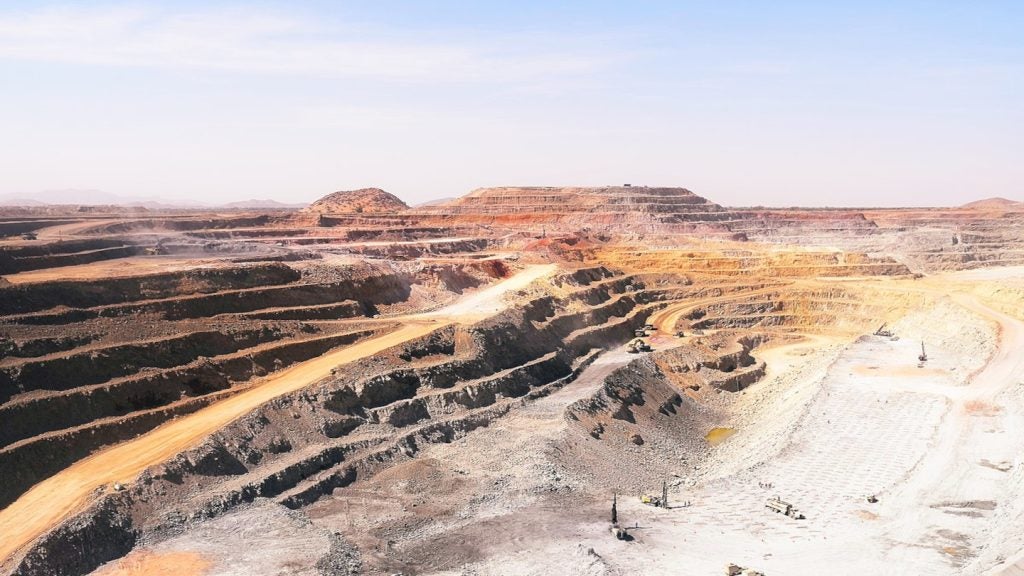

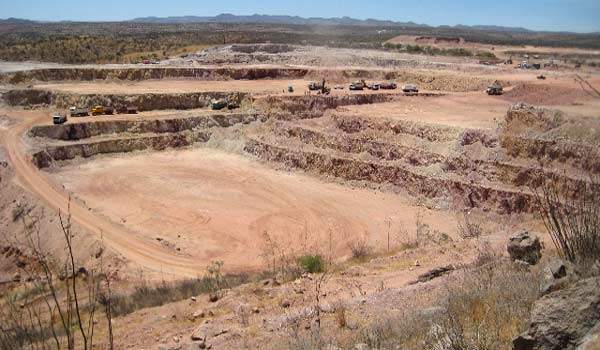
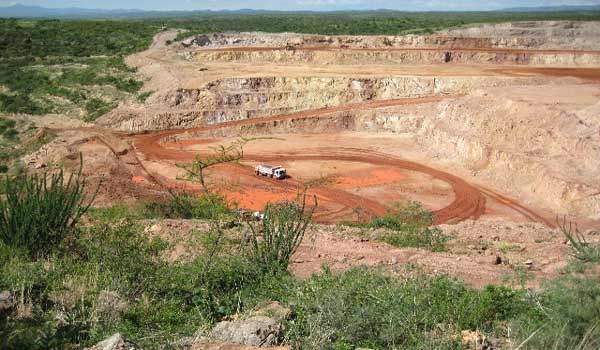
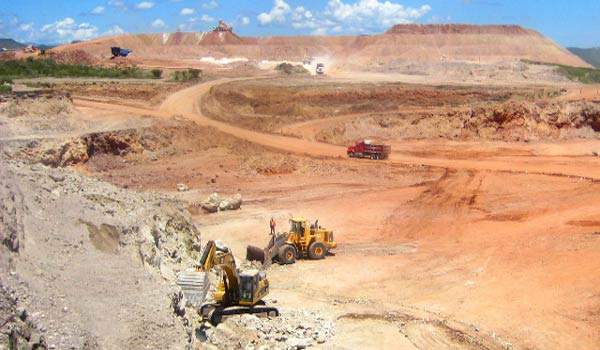
The El Castillo gold project is located in the State of Durango, one of the largest gold-producing regions in Mexico. It is situated about 100km north of the city of Durango, the state capital.
The deposit is a grass-roots discovery that resulted from a regional exploration programme initiated by Battle Mountain Gold in 1995. Battle Mountain was taken over by Newmont in 2000 but Newmont decided that the deposit was too small to meet its corporate needs, so it turned the property back to the Mexican government.
Recommended White Papers

Recommended Buyers Guides

Morgain Minerals acquired the project as a result of a lottery run by the government to dispose of the project.
In August 2007, Aurogin Resources merged with Morgain to form Castle Gold, based in Vancouver, which wholly owned the $5m project.
In October 2007, the company raised just over $1m towards the cost through a share issue. In December 2009, Argonaut Gold acquired 100% of Castle Gold through a share tender. The compulsory acquisition was achieved by the end of February 2010.
Capital costs for the project are so low because Castle Gold did not use a contractor to carry out the mining and crushing, and had designed and built much of the project itself.
A 16,250m drilling campaign aimed at the resource expansion commenced in 2010. It was completed in two phases in April 2010, ahead of the scheduled September completion. The drilling campaign resulted in an increase of the estimated gold zone dimensions by 500m to the south and about 400m to the east.
Geology
The project is underlain by massive to porphyritic andesitic rocks of the Tertiary Lower Volcanic Series. These rocks have been intruded by dacitic (dioritic) sills. The volcanics are unconformably overlain by Quaternary to recent rhyolite, conglomerate and alluvium.
An orthogonal set of faults has been mapped on the property – a northwest-striking set related to the regional horst and graben basin and range structures, and a northeast-striking set. Complex offsetting relationships between the two fault sets suggest that they are contemporaneous.
Mineralisation
Epithermal gold mineralisation is hosted in silicified, argillised and pyritised mantos within volcaniclastic rocks of the Lower Volcanic Series and adjacent dacitic sills. The mineralised zones have locally been oxidised to depths of greater than 200m below the surface but an average depth is more of the order of 150m.
The deposit has some characteristics of copper-gold porphyry settings with strong potassic, biotitic alteration in fractures and K-feldspar with some copper carbonates and oxides within the dioritic intrusive rocks.
Resources
Figures released by Castle Gold in August 2008 put the project’s measured and indicated resources at more than 1.17Moz at a cut-off grade of 0.15g/t, and proven and probable reserves at 752,000oz at an average grade of 0.5g/t. In 2011, the proven and probable gold resources were estimated to be about 1.23Moz at grade of 0.36g/t.
Production and processing
The company completed the commissioning stage of production at the open-pit mine in June 2008. Production reached 1,051,000t to give 7,655oz a year, by the third quarter of 2009. By the first quarter of 2010, initial ramp-up to production of 900,000tpm was achieved. During the quarter, installation of new equipment was completed. In 2011, the mine produced 72,000oz of gold. About 85,000oz to 95,000oz is estimated for 2012.
Most of the rock is sufficiently weathered that blasting is unnecessary, and the gold is being extracted using a conventional heap-leach pad. Heap leaching involves building a pad with an impermeable liner and heaping ore onto the pad. The heap is sprayed with an aqueous solution containing cyanide and gold is leached into solution. This "pregnant" solution drains to a pond and is then pumped to an adsorption-desorption-recovery (ADR) plant where the gold is recovered for melting and pouring into bars. The remaining "barren" solution is then recharged with cyanide and recycled to the heaps.
The gold is smelted by Metalore Resources, of Canada, who with Auramet Trading, of the US, has El Castillo offtake agreements with Castle Gold.
Castle Gold designed and built the processing plant itself, including the carbon columns, mix tanks, pumps and gold room.
Electrical power for the project is provided by on-site generators, rated at 200kW for the plant, with others for the office and well, although the company may add an extra small generator for some booster pumps if required. Power requirements for the project are so low and comparatively inexpensive, at about $25,000 per generator, because the heap leaching process uses very little power.
The other basic requirement, water, is sourced locally from bore wells.